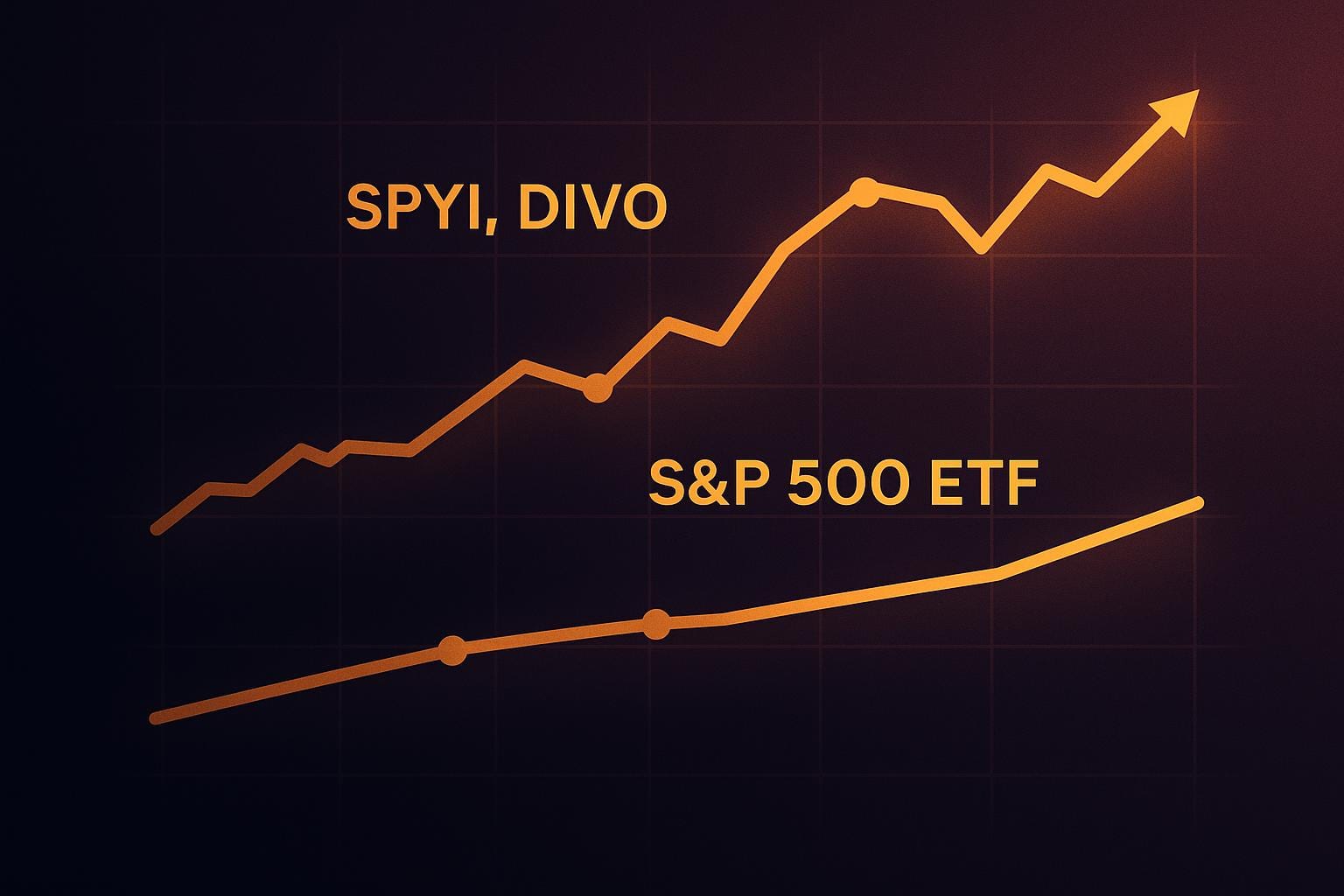
When the Federal Reserve cuts interest rates, ETFs like SPYI, DIVO, and SPY respond differently due to their unique strategies:
- SPY: Tracks the S&P 500 for growth. Gains from broad market rallies but offers minimal income (~1.3% yield).
- SPYI: Boosts income (11.6% yield) using covered calls but caps upside during strong rallies. Tax-efficient (60/40 treatment on options).
- DIVO: Focuses on dividend-paying stocks (4.59% yield) with some growth potential. Balances income and market participation.
Key takeaway: SPY thrives in bull markets, SPYI delivers high income with downside protection, and DIVO offers steady payouts with moderate growth. Your choice depends on income needs, risk tolerance, and investment goals.
Tip: Rate cuts often favor income-focused ETFs like SPYI and DIVO, but SPY remains a solid choice for long-term growth. Diversify based on your financial priorities.
The Fed Just Cut Rates: What High Yield ETF and Income Investors Need to Know
ETF Breakdown: SPY, SPYI, and DIVO Strategies
Understanding how SPY, SPYI, and DIVO generate returns is crucial for anticipating their performance during rate cuts. Each ETF employs a distinct strategy to achieve income and returns, which influences how they respond to changes in interest rates. Let’s dive into the specifics of each approach.
SPY: The Standard S&P 500 ETF
SPY is a passive ETF designed to mirror the S&P 500 index. Its simplicity is its hallmark - it tracks the index's composition and generates income solely through dividends. With an expense ratio of 0.0945%, SPY is a cost-effective choice for investors seeking broad market exposure.
SPYI: The NEOS S&P 500 High Income ETF
SPYI takes a more active approach, investing in S&P 500 companies while utilizing a call options strategy to significantly boost its income. This strategy results in an impressive yield of 11.6%, roughly nine times the S&P 500's dividend yield. The fund achieves this by selling call options on the S&P 500 Index and purchasing protective calls. However, it’s worth noting that as of September 30, 2025, 96% of SPYI's most recent distribution was categorized as a return of capital, which may have tax implications. With an expense ratio of 0.68%, SPYI also benefits from tax efficiency, as its SPX Index options are classified as Section 1256 contracts, offering favorable 60/40 tax treatment.
DIVO: The Amplify Enhanced Dividend Income ETF
DIVO focuses on high-quality, large-cap stocks with a strong track record of dividend growth. It pairs this with a covered call strategy to enhance income. With a yield of 4.59% and an expense ratio of 0.55%, DIVO aims to strike a balance between total returns and higher income.
The primary difference between these ETFs lies in their income-generation methods. SPY sticks to the dividends from its underlying stocks. SPYI amplifies its yield by layering in a call options strategy alongside dividends. Meanwhile, DIVO enhances its income potential through a combination of dividend-paying stocks and covered calls. These unique strategies play a pivotal role in shaping their performance during rate cuts, as explored further in the analysis.
How Fed Rate Cuts Affect Income-Focused ETFs
When the Federal Reserve lowers interest rates, it sets off a chain reaction that impacts ETF strategies in unique ways. This explains why funds like SPYI and DIVO may respond differently compared to a standard S&P 500 ETF during such cycles. These shifts influence dividend appeal and the income generated through options strategies.
Dividend Yields and Stock Valuations
Falling interest rates often make dividend-paying stocks more attractive to income-focused investors. As Treasury yields drop, these stocks become a popular alternative, driving up the prices of companies offering higher dividend payouts. This trend can benefit dividend-focused ETFs like DIVO, which target income-seeking investors.
Lower borrowing costs also play a role by improving companies' cash flows, which helps them maintain or even increase their dividend payouts. For a broad-market ETF like SPY, which includes many dividend-paying stocks, the benefit is more diluted. This is because SPY also holds a significant number of companies that prioritize reinvesting earnings for growth rather than distributing high dividends.
Options Premiums and Income Generation
Rate cuts can also affect funds that rely on options strategies, such as SPYI. Adjustments in monetary policy often lead to higher implied volatility, which increases the premiums on call options. For SPYI, this can enhance the income generated through its options overlay strategy.
However, there’s a trade-off. Rising stock prices during rate-cut periods may lead to the early exercise of call options, which can limit capital gains. This trade-off between generating additional income and capping potential gains is a key consideration for SPYI investors. On the upside, SPYI’s use of Section 1256 options contracts - offering a favorable 60/40 tax treatment (60% long-term and 40% short-term) - can improve net returns for investors, further shaping the fund’s overall performance.
Total Return and Risk Changes
Rate cuts typically stimulate the economy, which often supports asset prices and reduces market volatility over time. In such conditions, growth-oriented strategies, like those in a plain S&P 500 ETF, tend to thrive by capturing broad market rallies without the constraints of more specialized approaches.
SPYI, while offering high yields, may limit participation in strong market rallies due to its options strategy. On the other hand, DIVO strikes a balance by combining income generation with exposure to market growth. Its focus on high-quality dividend stocks aligns with the increased demand for yield that often occurs when interest rates fall.
Rate cuts also influence the risk profiles of ETFs. A broad-market ETF like SPY provides full market exposure, capturing both the gains and losses of the market. SPYI’s options-based strategy, however, offers some downside protection at the expense of capping upside potential. Meanwhile, DIVO offers a middle ground by blending enhanced income with partial market participation.
For investors, understanding how rate cuts impact these dynamics is essential for adjusting portfolios to align with changing monetary policies and financial goals.
Performance Comparison: SPYI vs. DIVO vs. SPY During Rate Cuts
Let's dive into how SPYI, DIVO, and SPY perform across different economic scenarios involving rate cuts. Each scenario impacts income, yield, and capital performance in unique ways, shaping how these funds respond.
Scenario 1: Gradual Rate Cuts
When rate cuts happen gradually, each ETF reacts differently. DIVO benefits from the increased appeal of dividend-paying stocks as Treasury yields drop, making dividends more attractive. SPYI, with its options overlay, continues to generate steady income, while SPY rides the wave of improved market sentiment. Lower borrowing costs and a more optimistic market environment often support SPY's potential for capital appreciation. In essence, gradual cuts create a favorable backdrop for all three, though their strengths lie in different areas.
Scenario 2: Aggressive Rate Cuts
Aggressive and rapid rate cuts often lead to heightened market volatility, creating a mixed bag of risks and opportunities. SPYI's options strategy thrives in this environment, generating additional income through higher options premiums. On the flip side, SPY may experience sharper short-term swings, even as the broader economy benefits from the stimulus. DIVO, with its focus on dividend-paying companies, offers a layer of defensive stability. However, its more conservative approach might not fully capture the upside if the market bounces back quickly after the initial turbulence. Each fund's strategy plays a key role in balancing income and market exposure, making it essential for investors to align their choices with their specific goals.
Scenario 3: Rate Cuts During Market Stress
When rate cuts occur during periods of market stress - such as an economic downturn or financial crisis - the dynamics shift significantly. SPYI's options overlay helps cushion losses, providing an income buffer. DIVO's focus on high-quality dividend stocks adds a layer of defensive stability, making it a safer choice during turbulent times. SPY, however, mirrors the full extent of market volatility. While it may suffer greater losses in the short term, it also has the potential to fully capture market recoveries over the long haul. For investors, the challenge lies in weighing these factors against their own risk tolerance and long-term financial goals.
Ultimately, the right ETF choice during rate-cut periods depends on what an investor values most - whether it's steady income, defensive stability, or exposure to broader market movements. Each fund offers a distinct approach to navigating these economic shifts.
Choosing the Right ETF for Your Investment Goals
Selecting an ETF should align with your financial objectives, whether they center on income, growth, or balancing both. Each fund is designed to meet different needs, so understanding your risk tolerance, income requirements, and overall goals is essential. Here's how to approach ETF allocation based on your investment priorities.
For Income-Focused Investors
If building a dividend income generating portfolio is your main objective, SPYI and DIVO stand out as better choices than SPY. However, they cater to different strategies:
- SPYI focuses on generating higher current income through its options overlay strategy. This makes it appealing for those needing regular cash flow. Its ability to produce income even during market downturns offers a level of protection that traditional equity ETFs can't provide.
- DIVO, on the other hand, emphasizes stability by investing in high-quality, dividend-paying companies. While its yield may not match SPYI's, the income is generally more sustainable over time. This makes DIVO a strong option for retirees or anyone prioritizing steady income over maximum yield.
Both funds are suitable if you're willing to trade some capital appreciation for more predictable income streams.
For Balanced Growth and Income Investors
Investors who aim to balance growth with income should consider diversifying their ETF allocations. A suggested mix could be 50% SPY, 30% DIVO, and 20% SPYI to capture a range of market opportunities:
- SPY offers exposure to market rallies, especially during rate cuts.
- DIVO provides stability and steady dividends.
- SPYI ensures consistent income regardless of market conditions.
Your exact allocation should reflect your age, risk tolerance, and income needs. For instance:
- Younger investors might lean more heavily toward SPY (60-70%) for growth potential, with smaller allocations to DIVO and SPYI.
- Near-retirees or those in retirement may prefer a reverse weighting, emphasizing DIVO and SPYI for more predictable returns.
Adjust your allocations based on market conditions. For example, during periods of market stress, increasing DIVO holdings can add stability. Conversely, in bullish markets, a higher SPY allocation may help you capitalize on growth opportunities.
For Growth-Oriented Investors
If your primary focus is on long-term capital appreciation, SPY is the clear choice. It provides full market exposure without the trade-offs associated with income-focused funds. SPY particularly shines during rate cuts, when market rallies can drive capital gains.
This fund is also a smart option for tax-advantaged accounts, as it avoids annual tax consequences from dividends. If you're comfortable with market volatility and don't require current income, SPY can help maximize growth.
For growth-focused investors, it’s important to consider your broader portfolio. If you already have income sources or bond holdings, concentrating your equity investments in SPY can enhance growth potential while maintaining overall balance.
Ultimately, your ETF selection should reflect your timeline and financial priorities. Whether you're seeking income, stability, or growth, rate cuts often create opportunities across all three funds. The key is to align your choice with what matters most to you - be it current income, reliable stability, or maximizing long-term returns.
Conclusion: ETF Strategy Optimization During Rate Cuts
Federal Reserve rate cuts bring both opportunities and challenges for ETFs. SPY stands out for its potential to deliver strong capital growth during these periods, as lower borrowing costs often drive market rallies. On the other hand, SPYI and DIVO offer more consistent income streams, which can help stabilize portfolios when rate cuts overlap with economic uncertainty.
No single ETF is a perfect fit for every situation. SPY thrives when rate cuts occur in a healthy economic environment, while SPYI’s options-based income approach provides a buffer during market volatility. DIVO offers a balanced mix, combining dividend growth with defensive features.
Your investment goals and timeline should guide your ETF selection. If you're focused on long-term wealth building, such as saving for retirement decades from now, SPY’s growth potential during rate cuts might be the best fit. For those nearing retirement or seeking steady income, SPYI and DIVO may be more appealing, even if their upside is limited. This highlights the importance of adapting your strategy to shifting market conditions.
Active portfolio management becomes critical during rate cuts. Markets can shift quickly, requiring timely analysis and tax-efficient adjustments across your accounts.
In this context, tools like Mezzi can be game-changers. Mezzi’s AI-powered platform provides real-time portfolio insights, flags wash sale risks, and offers tax-efficient rebalancing strategies. Its X-Ray feature identifies hidden exposures, helping you fine-tune your ETF allocations.
Ultimately, success during rate cut cycles depends on aligning your ETF choices with both market conditions and your personal financial objectives. Flexibility is key. Whether you prioritize SPY’s growth, SPYI’s income, or DIVO’s balanced approach, understanding how each ETF fits into your overall strategy - and using tools to optimize that strategy - can make all the difference.
FAQs
How could a Federal Reserve rate cut affect the performance of SPYI and DIVO compared to a standard S&P 500 ETF?
When the Federal Reserve lowers interest rates, income-focused ETFs like SPYI and DIVO can react differently compared to a standard S&P 500 ETF. These income-focused funds emphasize generating returns through dividends or option strategies. A rate cut can work in their favor as it reduces borrowing costs, potentially allowing companies to boost their payouts.
On the other hand, a standard S&P 500 ETF is designed to mirror the overall market's performance, with little emphasis on income generation. While it might see gains from broader market momentum during a rate cut, it typically doesn’t offer the same level of income consistency as SPYI or DIVO. For investors looking to strike a balance between growth potential and steady income, SPYI and DIVO might stand out as more suitable options in this scenario.
How do the tax implications of SPYI's use of call options impact its returns compared to DIVO and a standard S&P 500 ETF?
SPYI's use of call options introduces some distinct tax considerations. Unlike traditional dividend income, the income derived from these options might be taxed differently. For instance, call option income is often categorized as short-term capital gains, which are generally subject to higher tax rates compared to qualified dividends. This difference could influence your after-tax returns when comparing SPYI to alternatives like DIVO or a standard S&P 500 ETF such as SPY.
To fully understand how these tax distinctions might affect your investment strategy and net returns, it's wise to consult with a tax professional. By weighing both the income potential and tax implications, you can make a more informed decision about how SPYI fits within your financial objectives compared to other ETFs.
How could SPYI and DIVO perform differently from a standard S&P 500 ETF during a Fed rate cut, and when might they align better with specific investment goals?
When the Federal Reserve cuts rates, investments like SPYI and DIVO can offer unique benefits compared to a traditional S&P 500 ETF. The appeal of each depends on what you're looking to achieve with your portfolio.
SPYI is designed to generate high monthly income in a tax-efficient manner while still offering exposure to market growth. This makes it an attractive choice for investors prioritizing income. On the other hand, DIVO combines dividends and option premiums, creating a diversified income stream that can perform well even in environments with lower yields.
If your focus is on generating income with some potential for growth, SPYI might align with your goals. Meanwhile, DIVO could be a better option for those seeking a mix of income and stability, especially during times of market uncertainty. Both strategies are well-suited for investors aiming to adjust their portfolios for income and performance as interest rate dynamics evolve.
Related Blog Posts
- How does JEPI’s yield and risk profile compare to SCHD and DIVO for an income portfolio?
- SPYI vs QYLD vs XYLD: covered-call income tradeoffs for a taxable account.
- DIVO vs SCHD: fees, dividend stability, and total-return differences.
- BND vs AGG: duration, credit quality, and historical behavior in rate cycles.
When the Federal Reserve lowers interest rates, income-focused ETFs like SPYI and DIVO can react differently compared to a standard S&P 500 ETF. These income-focused funds emphasize generating returns through dividends or option strategies. A rate cut can work in their favor as it reduces borrowing costs, potentially allowing companies to boost their payouts.
On the other hand, a standard S&P 500 ETF is designed to mirror the overall market's performance, with little emphasis on income generation. While it might see gains from broader market momentum during a rate cut, it typically doesn’t offer the same level of income consistency as SPYI or DIVO. For investors looking to strike a balance between growth potential and steady income, SPYI and DIVO might stand out as more suitable options in this scenario.
SPYI's use of call options introduces some distinct tax considerations. Unlike traditional dividend income, the income derived from these options might be taxed differently. For instance, call option income is often categorized as short-term capital gains, which are generally subject to higher tax rates compared to qualified dividends. This difference could influence your after-tax returns when comparing SPYI to alternatives like DIVO or a standard S&P 500 ETF such as SPY.
To fully understand how these tax distinctions might affect your investment strategy and net returns, it's wise to consult with a tax professional. By weighing both the income potential and tax implications, you can make a more informed decision about how SPYI fits within your financial objectives compared to other ETFs.
When the Federal Reserve cuts rates, investments like SPYI and DIVO can offer unique benefits compared to a traditional S&P 500 ETF. The appeal of each depends on what you're looking to achieve with your portfolio.
SPYI is designed to generate high monthly income in a tax-efficient manner while still offering exposure to market growth. This makes it an attractive choice for investors prioritizing income. On the other hand, DIVO combines dividends and option premiums, creating a diversified income stream that can perform well even in environments with lower yields.
If your focus is on generating income with some potential for growth, SPYI might align with your goals. Meanwhile, DIVO could be a better option for those seeking a mix of income and stability, especially during times of market uncertainty. Both strategies are well-suited for investors aiming to adjust their portfolios for income and performance as interest rate dynamics evolve.