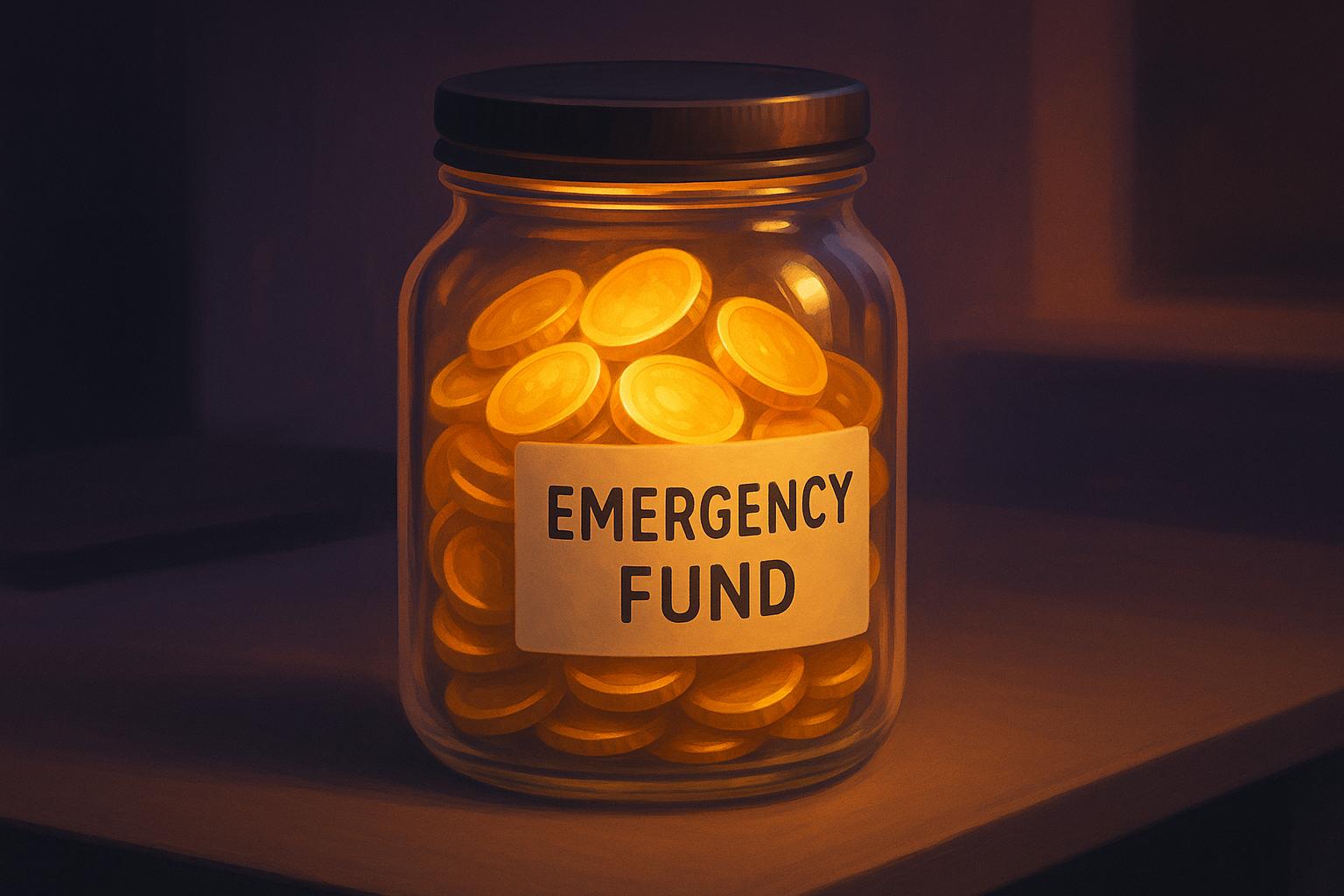
When planning an emergency fund, aim to save 3–6 months' worth of essential expenses. This range provides a financial cushion for unexpected events like job loss, medical bills, or urgent repairs. Here's how to calculate your target:
- List Monthly Essentials: Include rent/mortgage, utilities, groceries, insurance, and transportation.
- Choose a Timeframe: Decide whether you need 3, 4, 5, or 6 months of coverage based on factors like job stability and income variability.
- Multiply: Monthly essentials × chosen months = your emergency fund target.
For example, if your essentials total $4,000/month and you want 5 months of coverage, your target is $20,000.
Quick Tips to Start Saving:
- Begin with a small goal, like $500–$1,000, for minor emergencies.
- Automate savings transfers from your paycheck.
- Use windfalls (tax refunds, bonuses) to boost your fund.
Keep your emergency fund in a high-yield savings account for easy access and to earn interest. Regularly reassess your fund as your life changes (e.g., new job, kids, or major purchases) to ensure it meets your needs.
Start today - even small steps can build a safety net that protects your financial future.
How Big Should Your Emergency Fund Be? (3/6/12 Rule)
How to Calculate Your Emergency Fund Target
Figuring out how much to set aside for an emergency fund is a personal decision. It depends on your financial situation and how much risk you're comfortable taking.
The 3-6 Month Rule Explained
A common guideline is to save enough to cover three to six months of essential expenses. For instance, if your monthly essentials - like rent, utilities, groceries, and insurance - total $4,000, a four-month emergency fund would mean setting aside $16,000. While this rule offers a helpful starting point, your ideal amount might differ based on your needs and financial outlook.
To make this more specific to your situation, you can use a simple calculation.
Step-by-Step Calculation Method
- Tally Up Your Monthly Essentials: Start by using a budget planner tool to list your must-have expenses, such as housing, transportation, food, and insurance.
- Pick Your Timeframe: Decide how many months of expenses you want to cover - anywhere from 3 to 6 months.
- Do the Math: Multiply your monthly essentials by the number of months you’ve chosen. For example, if your essentials cost $3,500 per month and you decide on a 5-month fund, your target should be $17,500.
This straightforward approach helps you build an emergency fund tailored to your financial needs and peace of mind.
How to Build and Maintain Your Emergency Fund
Creating an emergency fund takes time, but with a clear plan, you can steadily work toward your goal while ensuring your savings are ready when you need them most. Here’s how to get started and keep your fund in good shape.
Start Small and Build Gradually
Instead of aiming for the full amount right away, focus on smaller, manageable goals. For instance, if your ultimate target is $15,000 to cover five months of expenses, begin with a modest goal of $500–$1,000. This initial amount can handle many typical emergencies, like unexpected car repairs or a medical bill.
Once you’ve hit that first milestone, aim for one month of expenses, then two, and so on. Breaking your goal into smaller chunks makes the process less overwhelming and gives you a sense of achievement at each step. Celebrate when you reach $2,000, then $5,000, and keep building from there. These smaller victories not only keep you motivated but also help establish consistent saving habits.
Smart Ways to Build Your Savings
To make progress faster, automate your savings. Set up automatic transfers from your checking account to your savings account every time you get paid. Even small amounts, like $100 or $200 per month, can add up over time - saving $150 monthly adds up to $1,800 in just a year.
Another effective strategy is to use windfalls wisely. Anytime you receive extra money - like a tax refund, work bonus, or cash gifts - direct it straight to your emergency fund. Selling items you no longer need can also give your savings a boost.
Cutting back on non-essential spending temporarily can also help you save faster. Consider cooking meals at home, pausing underused subscriptions, or choosing free entertainment options. Even trimming $200 a month from your budget can help you reach your savings goal months sooner.
Treat your emergency fund like any other must-pay expense. Transfer money into it as soon as you get paid, before you’re tempted to spend it elsewhere.
Best Places to Keep Your Emergency Fund
Your emergency fund should be easy to access but kept separate from your daily spending. A high-yield savings account is an excellent option. It keeps your emergency money distinct from other savings while earning interest over time.
Look for accounts with no minimum balance requirements or withdrawal penalties, so you can avoid unnecessary fees. Many online banks offer competitive interest rates and no monthly charges, making them a good choice for your fund.
Avoid the temptation to invest your emergency savings in stocks, bonds, or other market-based options. While these might offer higher returns, they also come with the risk of losing value just when you need the money most. The priority for your emergency fund should always be stability and quick access.
To further protect your savings, consider keeping your emergency fund in a high-yield savings account at a different bank than your checking account. This separation helps prevent accidental withdrawals while still allowing you to access the funds during a real financial emergency.
Some people prefer to split their emergency savings. For example, they might keep the majority in a high-yield savings account and a smaller portion in a checking account for immediate access. This approach provides a balance between convenience and safeguarding the bulk of your funds.
Using Mezzi's AI Tools for Emergency Fund Planning
Mezzi's AI-driven platform takes the stress out of emergency fund planning by examining your financial situation in detail and delivering personalized recommendations that adapt as your life evolves.
A Holistic View of Your Finances
Mezzi brings all your financial accounts together in one place, offering a clear, consolidated view of your income, expenses, and savings potential. This unified dashboard simplifies the process of understanding your financial habits and capacities.
Having this complete picture is especially important for emergency fund planning, as it can reveal overlooked spending patterns. For instance, you might realize your monthly expenses are higher than expected once recurring charges like subscriptions, insurance premiums, and other automated payments - often scattered across multiple accounts - are accounted for. Mezzi organizes these expenses into categories, making it easier to estimate the right size for your emergency fund.
This comprehensive snapshot not only helps you pinpoint how much you need to save but also provides a realistic timeline for building your fund based on your cash flow. With this groundwork in place, Mezzi’s AI can deliver precise, actionable recommendations tailored to your situation.
Tailored Emergency Fund Recommendations with AI
Building on your financial overview, Mezzi’s AI fine-tunes your emergency fund target by considering your unique financial habits and circumstances. It factors in key elements like job stability, income variability, debt obligations, and even the current economic climate to suggest a savings goal that’s aligned with your needs.
The AI also adapts to your spending patterns. If your expenses spike during certain months or your income fluctuates seasonally, these trends are reflected in its recommendations. For example, someone with stable employment might need a fund covering three months of expenses, while a freelancer with irregular income might be advised to aim for a larger safety net.
Mezzi’s recommendations also align with your broader financial goals. If you’re prioritizing paying off high-interest debt, the AI might suggest starting with a smaller emergency fund and gradually increasing it as your debt decreases. On the other hand, if your finances are steady, the system might recommend a larger fund to provide extra security.
Monitoring Your Progress
Once your personalized target is set, Mezzi helps you stay on track. The platform monitors your savings progress and alerts you to any changes in income or expenses that may require adjustments to your plan.
Life events - whether major milestones like buying a home or having a child, or smaller shifts like an increase in utility costs - can affect your budget and your emergency fund needs. As noted by the Financial Consumer Agency of Canada in March 2025, these changes often call for updates to your financial planning. Mezzi’s AI recalculates your recommended fund size when such events occur, ensuring your financial safety net remains relevant.
If you ever need to dip into your emergency fund, Mezzi’s progress tracking helps you rebuild it without derailing your other financial priorities. By creating a balanced savings plan, the platform ensures your emergency fund stays strong, no matter what stage of life you’re in.
Updating Your Emergency Fund Over Time
Your emergency fund should grow and adapt as your life evolves, ensuring it stays in sync with your current financial needs and responsibilities.
When Life Changes, Adjust Your Fund
Life’s big moments - marriage, having kids, changing jobs, buying a home, divorce, or facing health challenges - can significantly impact your financial safety net. These shifts often require recalculating your emergency fund to reflect new realities.
For example, job changes often demand immediate attention. Moving to a less stable industry, starting freelance work, or taking a commission-based role might increase income uncertainty, meaning your fund may need to cover six months or more of expenses instead of the usual three. On the other hand, landing a secure, stable position might allow for a smaller buffer.
Rebuilding After Tapping Into Your Fund
Using your emergency fund when needed isn’t a setback - it’s proof of its purpose. Once you’ve dipped into it, the priority becomes rebuilding. Start by reassessing your current expenses and redirecting any available money, such as tax refunds or bonuses, toward replenishment. Set a fixed monthly goal, aiming for a timeline that aligns with your cash flow.
Having a clear plan keeps you motivated. For instance, if you know how much you need to save and can commit a specific amount each month, you can track your progress and stay on course.
Regular Reviews with Mezzi
Your emergency fund should evolve alongside your life. As you transition through different stages - whether as a newlywed, a parent, or someone nearing retirement - your financial needs shift. Traditional savings rules may no longer apply as your wealth grows, and it’s essential to reassess how your money supports your broader financial goals.
This is where Mezzi’s AI tools come in handy. The platform continuously monitors your financial activity, including spending habits, income changes, and account balances, to identify when it’s time to update your emergency fund. Instead of manually reviewing your budget every few months, Mezzi alerts you to significant changes and offers tailored suggestions.
Quarterly check-ins with Mezzi can help you stay ahead of any shifts in income or expenses. The platform also balances your emergency fund needs with other financial priorities. For instance, if you’re focusing on paying down debt, Mezzi might recommend temporarily maintaining a smaller fund and increasing it later as your debt decreases. This flexible approach ensures you’re addressing all your financial goals without rigidly sticking to outdated rules.
During rebuilding phases, Mezzi’s progress tracking can keep you motivated with a personalized replenishment plan. By regularly reviewing your fund with Mezzi’s insights, you can ensure it remains a reliable financial safety net, adapting to your life and providing the right level of protection at every stage.
Conclusion: Your Financial Safety Net Action Plan
Building an emergency fund is all about tailoring it to fit your unique circumstances. From setting a realistic target to maintaining the fund over time, thoughtful planning and the right tools can make all the difference. Let’s connect the dots between your earlier planning steps and an actionable roadmap.
Key Takeaways
The widely recommended 3–6 months of expenses is just a starting point. Adjust this based on factors like job security, family size, health considerations, and your comfort with financial risk. For example, freelancers or those with irregular income may need a larger safety net compared to salaried employees.
Choose a high-yield savings or money market account for your fund. These options offer quick access to your money while earning a modest return.
Starting small is better than not starting at all. Even saving $500 can shield you from minor emergencies - like a sudden car repair - without resorting to credit cards. Automating savings transfers ensures your fund grows steadily as your income or expenses change.
"A financial plan is a smart way to document your goals... But... these plans are worthless unless you actually review them to make sure you are staying on track." - Gabrielle Olya for GOBankingRates
Regularly reviewing your fund is crucial. Life changes - such as getting married, having children, switching jobs, or facing health challenges - can shift your financial needs. What worked last year might not be enough today.
Steps to Take Next
Here’s how to turn these strategies into action:
- Calculate your essential monthly expenses (housing, utilities, groceries, insurance, debt payments, and transportation) to determine your emergency fund target.
- Set up automated transfers - whether it’s $100 or $1,000 a month - to build your fund consistently.
If managing this feels overwhelming, tools like Mezzi's AI can simplify the process. Mezzi’s platform analyzes your financial data to provide tailored emergency fund recommendations. By aggregating all your accounts, it shows exactly how much you’re spending each month and helps you adjust your savings goals as your situation evolves. Plus, quarterly reviews with Mezzi can help you balance emergency savings with other priorities, like paying off debt or saving for retirement.
The most important step? Start today. Your emergency fund will grow and adapt over time, but the habit of saving is what sets the foundation for long-term financial security.
FAQs
How many months of living expenses should I save in an emergency fund based on my job and income situation?
The size of your emergency fund largely hinges on how steady your job is and whether your income varies. A widely accepted guideline is to save 3 to 6 months' worth of essential living expenses. If your job offers consistent income, saving for 3 months might suffice. On the other hand, if your job is less secure or your earnings are unpredictable, building a cushion of 6 months or more can offer greater reassurance.
To figure out how much you need, calculate your essential monthly expenses - things like rent or mortgage payments, utilities, groceries, and insurance. Then, multiply that total by the number of months you aim to cover. As your job stability or financial circumstances shift, revisit and adjust your savings goal to ensure your emergency fund continues to meet your needs.
What’s the fastest way to build an emergency fund from scratch?
To build an emergency fund quickly, start by setting a clear target - typically three to six months' worth of living expenses. Base this amount on your monthly costs so you have a solid safety net. Open a high-yield savings account specifically for this purpose, and set up automatic transfers from your checking account. This way, saving becomes a routine part of your financial habits without requiring extra effort.
Find ways to free up money by trimming non-essential expenses, like cutting back on dining out or canceling unused subscriptions. Whenever you receive extra income - like a tax refund, bonus, or monetary gift - use it to give your fund a boost. Even small, consistent deposits can build momentum over time, strengthening your financial cushion.
Starting with small amounts is perfectly fine. The most important thing is to stay consistent and increase your contributions as your finances allow.
How should I update my emergency fund when my life circumstances change, like having kids or switching jobs?
Life events - like starting a family or switching careers - often bring new financial obligations. That’s why it’s crucial to revisit your emergency fund regularly to make sure it reflects your current situation. For instance, if your monthly expenses grow due to childcare costs or a shift in income, you might need to adjust your savings to cover 3 to 6 months of these updated essential expenses.
When recalculating your target, take into account things like higher bills, less predictable income, or additional dependents. By reviewing your finances periodically, you can keep your safety net strong and stay ready to handle unexpected challenges.
Related Blog Posts
- 12 Steps to Building Wealth
- How AI Simplifies Automated Savings
- Social Security vs. Retirement Savings: Balancing Income Sources
- Do I need an emergency fund?
The size of your emergency fund largely hinges on how steady your job is and whether your income varies. A widely accepted guideline is to save 3 to 6 months' worth of essential living expenses. If your job offers consistent income, saving for 3 months might suffice. On the other hand, if your job is less secure or your earnings are unpredictable, building a cushion of 6 months or more can offer greater reassurance.
To figure out how much you need, calculate your essential monthly expenses - things like rent or mortgage payments, utilities, groceries, and insurance. Then, multiply that total by the number of months you aim to cover. As your job stability or financial circumstances shift, revisit and adjust your savings goal to ensure your emergency fund continues to meet your needs.
To build an emergency fund quickly, start by setting a clear target - typically three to six months' worth of living expenses. Base this amount on your monthly costs so you have a solid safety net. Open a high-yield savings account specifically for this purpose, and set up automatic transfers from your checking account. This way, saving becomes a routine part of your financial habits without requiring extra effort.
Find ways to free up money by trimming non-essential expenses, like cutting back on dining out or canceling unused subscriptions. Whenever you receive extra income - like a tax refund, bonus, or monetary gift - use it to give your fund a boost. Even small, consistent deposits can build momentum over time, strengthening your financial cushion.
Starting with small amounts is perfectly fine. The most important thing is to stay consistent and increase your contributions as your finances allow.
Life events - like starting a family or switching careers - often bring new financial obligations. That’s why it’s crucial to revisit your emergency fund regularly to make sure it reflects your current situation. For instance, if your monthly expenses grow due to childcare costs or a shift in income, you might need to adjust your savings to cover 3 to 6 months of these updated essential expenses.
When recalculating your target, take into account things like higher bills, less predictable income, or additional dependents. By reviewing your finances periodically, you can keep your safety net strong and stay ready to handle unexpected challenges.