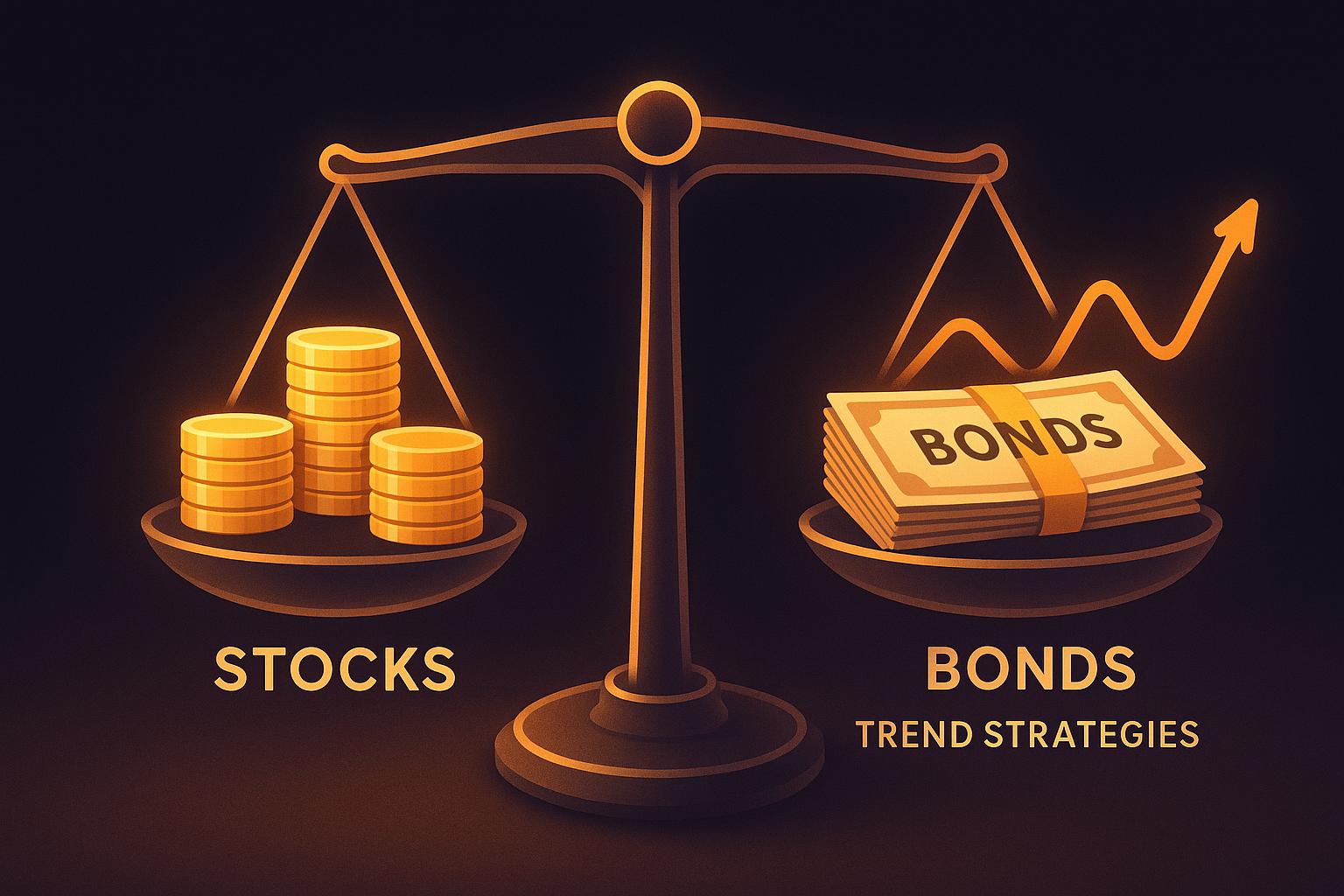
In today’s volatile financial world, diversification is more than a buzzword - it’s an essential strategy for protecting and growing your wealth over time. While many investors focus primarily on stocks, a deeper look into the interplay between asset classes like bonds, real estate, and alternative strategies reveals that a well-rounded portfolio can withstand market turbulence and capitalize on long-term opportunities.
This article draws insights from a deep-dive discussion featuring industry experts, touching on the evolving dynamics of markets, the critical role of diversification, and how behavioral pitfalls can derail even the most well-intentioned investment strategies. Here's what you need to know.
The Importance of Diversification in a Global Market
Diversification isn’t just about reducing risk; it’s about positioning your portfolio to thrive in diverse economic conditions. While U.S. stocks have garnered much of the limelight in recent years, history shows that no single asset class dominates forever.
Stocks Don’t Always Outperform
One surprising revelation for many investors is that stocks can underperform for extended periods. Historically, there have been decades where other assets outshined equities. For example:
- During certain periods, real estate investment trusts (REITs), gold, and long-term bonds have delivered better returns than stocks.
- In some countries, stocks have not been the reliable wealth generators we assume them to be. For example, nations like Japan and Russia have faced prolonged periods of poor stock market performance.
This underscores the importance of looking beyond your home market and considering other asset classes. When U.S. stocks are soaring, it’s tempting to believe the trend will persist indefinitely, but markets are cyclical. Preparing for downturns requires broad exposure.
Bonds: The Overlooked Giant
Many investors undervalue bonds, especially international bonds. Yet, foreign bonds represent one of the largest asset classes globally. Vanguard, for instance, has recommended that U.S. investors allocate a significant portion of their bond investments internationally. Despite this, allocations to international bonds remain near zero for most U.S.-based portfolios. Hedging currency exposure with foreign sovereign bonds can be a stabilizing force in a diversified portfolio.
Beyond the Basics: Farmland and Alternative Assets
Farmland and single-family housing often fly under the radar. While they may not be as accessible to retail investors, these assets historically offer inflation-hedged, steady returns. However, owning and managing farmland comes with significant operational challenges, from fluctuating yields to unpredictable disasters like fires and hurricanes.
For most investors, broad exposure to diversified funds, including REITs or farmland investment vehicles, could provide a simpler way to incorporate these less-liquid assets into their portfolios.
Trend Following: A Premier Diversifier
Trend following, often synonymous with managed futures, has gained attention as an effective tool for diversifying portfolios. Unlike traditional long-only equity strategies, trend-following strategies can take both long and short positions based on prevailing market trends. However, this approach requires patience and a tolerance for periods of underperformance.
Trend following has its critics, especially after a tough 12-month stretch. But its value lies in its ability to perform during market dislocations. For instance:
- Managed futures often thrive in chaotic markets, such as during the 2008 financial crisis or the COVID-19 market crash.
- They can deliver returns that are uncorrelated with traditional assets like stocks and bonds, providing much-needed balance. Modern tools like AI-powered correlation analysis can further refine this process by identifying shifting relationships between assets.
As one expert noted, "It’s the premier diversifier", even though it requires a long-term lens to appreciate its benefits fully.
Behavioral Traps: The Silent Portfolio Killers
Diversification and discipline are only effective if investors can resist common behavioral mistakes. Here are two pitfalls that plague even seasoned investors:
Performance Chasing
It’s human nature to gravitate toward what’s currently performing well. This tendency leads investors to pour money into funds and strategies that have already delivered strong returns, often right before a reversal. The result? They buy high and sell low, eroding long-term gains.
One expert explained, "Performance chasing is the single greatest destroyer of wealth. Even the smartest investors fall into this trap." To counter this, investors should establish objective, process-driven rules for portfolio adjustments and avoid making decisions based on short-term performance.
Sitting on the Sidelines
Another major mistake is holding excessive cash, especially in inflationary environments. While cash can feel safe during times of market uncertainty, its purchasing power erodes over time. Investors often struggle to re-enter the markets after exiting, waiting for the elusive "perfect moment."
Instead, adopting a dollar-cost averaging strategy or deploying capital into diversified assets can help investors stay invested through market cycles.
The Role of Institutions and Complexity in Investing
Institutional investors, with their vast resources and access to elite talent, would seem primed to outperform. Yet, many institutions fail to beat a basic buy-and-hold allocation. CalPERS, one of the largest U.S. pension funds, has historically underperformed relative to simple globally diversified portfolios, largely due to high fees and operational inefficiencies.
In contrast, institutions like Yale have demonstrated the potential of disciplined, innovative strategies, leveraging alternative assets like private equity. However, replicating such success requires focus and a willingness to deviate from conventional strategies - something most institutions struggle with due to internal politics and conflicts of interest.
Lessons from Market History
Understanding market history provides essential context for today’s investment decisions. Stock markets, though powerful wealth generators over time, are not immune to prolonged stagnation. For instance:
- The Colombian stock market suffered a 78% decline from 2011 until the COVID-19 bottom, despite its recent recovery.
- The U.S. market’s current valuations are reminiscent of the late 1990s bubble, leading some experts to warn of potential fragility.
Periods of outperformance often end when most investors least expect it. That’s why diversification across geographies and asset classes is so critical.
Key Takeaways
- Diversify Beyond U.S. Stocks: Consider international stocks, bonds, REITs, and alternative assets like farmland to balance your portfolio.
- Stocks Can Underperform for Decades: Don’t assume equities will always be the best-performing asset. History suggests otherwise.
- Consider Managed Futures: Trend-following strategies remain valuable diversifiers, particularly in volatile markets.
- Avoid Chasing Performance: Base decisions on a disciplined process, not recent returns.
- Don’t Sit on Excess Cash: Inflation erodes cash’s value over time. Invest strategically and stay committed.
- Institutional Investors Aren’t Infallible: Even well-funded organizations struggle to beat simple buy-and-hold strategies.
- Leverage Market History: Understanding historical cycles can help you avoid overconfidence and common mistakes.
Conclusion
The path to becoming a successful, self-directed investor requires discipline, knowledge, and an appreciation for diversification. By understanding the limitations of any single asset class and avoiding behavioral traps like performance chasing, you can build a resilient portfolio that thrives across market cycles. Remember: successful investing isn’t about predicting the future - it’s about preparing for it. Armed with these insights, you can optimize your financial strategy and achieve long-term growth.
Source: "The Diversification Bull Market (with Meb Faber) | Alpha Architect Round Up" - Alpha Architect, YouTube, Sep 6, 2025 - https://www.youtube.com/watch?v=x1-T_Yc9F_E
Use: Embedded for reference. Brief quotes used for commentary/review.