If you're planning to retire in the next few years, your investment strategy needs a shift. The focus should move from aggressive growth to protecting your wealth and generating steady income. Here's a quick breakdown of what to prioritize:
- Safety and Liquidity: Use cash, CDs, or short-term Treasury bills to cover immediate expenses.
- Income Generation: Dividend-paying stocks, REITs, and bonds can provide reliable income streams.
- Moderate Growth: Balance your portfolio with assets like TIPS and investment-grade bonds to keep up with inflation.
- Tax Efficiency: Maximize 401(k)s, IRAs, and HSAs while using strategies like tax-loss harvesting and deferral to reduce your tax burden.
AI tools like Mezzi can simplify planning by analyzing your portfolio, highlighting risks, and optimizing taxes. Start now by reviewing your portfolio, adjusting your asset allocation strategy, and leveraging these tools to secure a comfortable retirement.
What’s the Smartest Investment Mix for Retirees Right Now?
What You Need to Know About Short-Term Retirement Planning
Short-term retirement planning calls for a shift in priorities compared to the traditional long-term approach. With less than five years until retirement, your focus should move toward safety, liquidity, and income generation, rather than chasing high-growth investments.
The main challenge here is managing sequence risk - the risk of experiencing negative returns during your final working years or early retirement. Unlike younger investors, you don’t have decades to recover from potential market downturns, so your strategy must adapt accordingly.
At this stage, your investments need to achieve two critical goals: protecting your wealth and generating enough growth to offset rising living costs throughout your retirement. This balancing act is essential, especially when you consider that retirement could span 20, 30, or even more years.
How Your Time Frame Affects Investment Choices
If you’re within three to five years of retirement, your investment decisions should prioritize stability and liquidity over growth. This marks a significant departure from the more aggressive strategies that may have worked earlier in your career.
One effective method to align your investments with your timeline is the retirement bucket strategy. This approach organizes your savings into three distinct categories based on when you’ll need access to the funds:
- Liquidity bucket: Designed to cover your immediate expenses during the first three to five years of retirement. Investments here should have minimal market exposure and high liquidity, such as certificates of deposit (CDs), money market accounts, or short-term government bonds.
- Lifestyle bucket: Focused on funding years three through ten of retirement. This bucket can handle a balanced mix of assets to allow for moderate growth while managing risk.
- Legacy bucket: Aimed at long-term growth for expenses beyond year ten. This portion can take on more market risk to potentially achieve higher returns.
This strategy helps ensure you won’t need to sell investments at a loss during market downturns, as your immediate needs are covered by the liquidity bucket. By segmenting your portfolio, you can better manage risk while still positioning yourself for financial security throughout retirement.
Managing Risk While Still Growing Your Money
The key to navigating short-term retirement planning is finding the right balance between reducing risk and maintaining growth potential. Your portfolio must generate enough returns to support your retirement lifestyle and keep up with inflation, which can significantly erode purchasing power over time.
Diversifying your income sources is a smart way to reduce reliance on market performance. Consider options like dividend-paying stocks from established companies, real estate investment trusts (REITs) that provide rental income, or Treasury Inflation-Protected Securities (TIPS), which adjust with inflation.
The goal isn’t to eliminate all risk - doing so could leave you unable to maintain your purchasing power over time. Instead, aim to manage risk effectively. Secure stable income streams for your immediate needs while keeping growth-oriented investments in your portfolio to ensure long-term financial stability.
Inflation is an ever-present factor, and incorporating growth assets is vital to preserving your financial health throughout retirement.
Using AI Tools to Improve Your Retirement Planning
Managing risk while ensuring steady retirement income is essential for a successful retirement plan. AI tools have stepped in to make this process more efficient, offering a new level of precision and speed in analyzing financial data. For those nearing retirement, these tools provide insights that can help you make informed investment decisions quickly and confidently.
Traditional methods often struggle with the complexity of juggling multiple accounts and optimizing taxes. AI tools, however, excel at simplifying this chaos. They process intricate financial details and deliver tailored recommendations based on your unique situation and timeline. This real-time analysis bridges the gap between old-school planning and the fast-paced decision-making needed as retirement approaches.
How Mezzi's AI Improves Portfolio Management
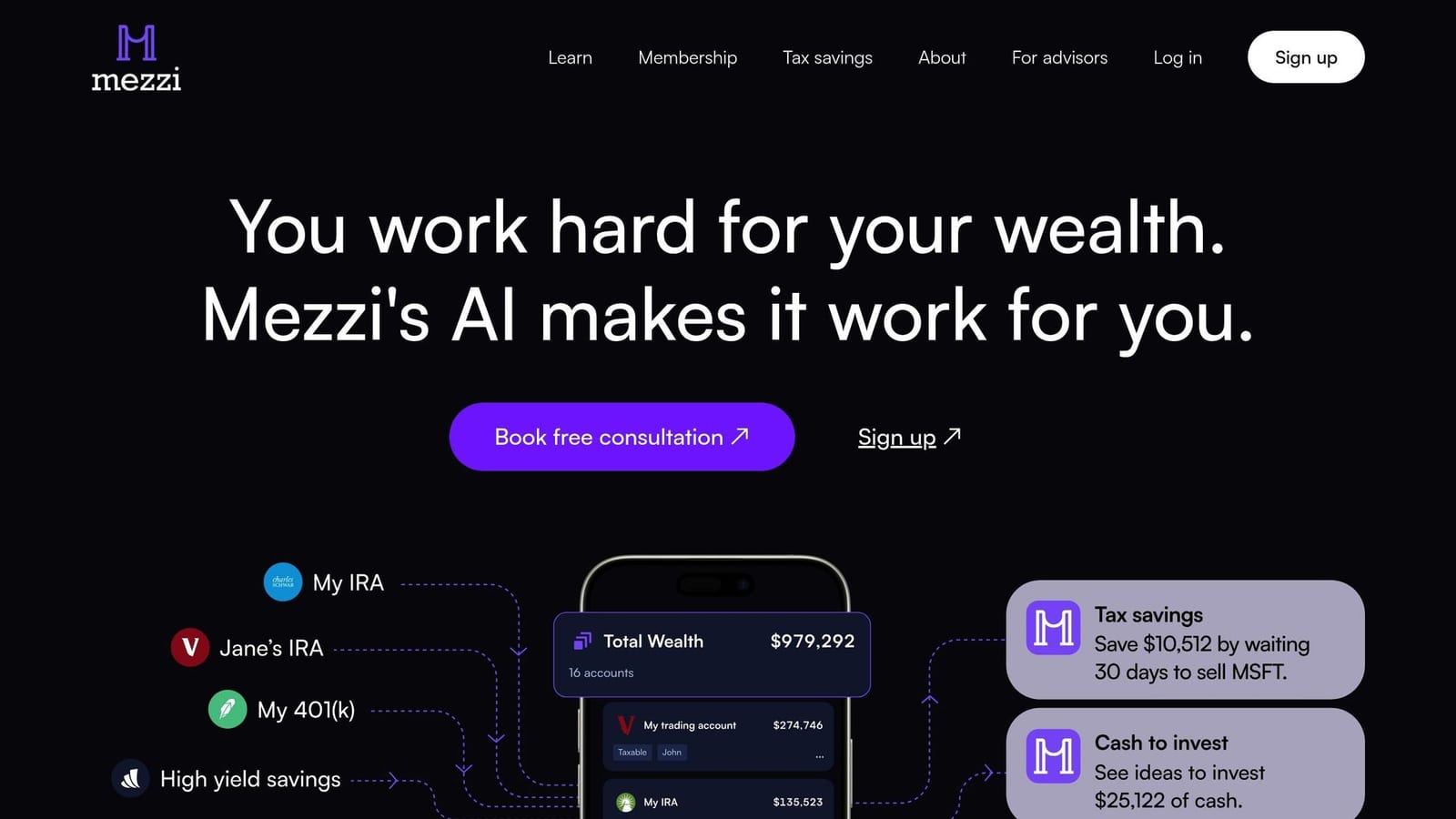
Mezzi's platform solves a common problem for near-retirees: managing investments spread across multiple accounts while minimizing taxes and fees. By aggregating all your accounts, Mezzi offers a clear, unified view of your financial landscape.
This consolidated view isn't just for show - it powers Mezzi's advanced analysis. The AI doesn't just present raw data; it highlights opportunities, flags risks, and enables you to take immediate, informed action. For example, Mezzi's tax optimization tools help you avoid wash sales, a tricky tax rule that can eat into your returns if not handled properly.
Another standout feature is the X-Ray tool, which uncovers hidden risks and unintended portfolio concentrations. Meanwhile, Mezzi’s Financial Calculator estimates your retirement savings by factoring in your portfolio value, annual contributions, expected returns, and management fees. This level of detail ensures you’re not just planning but actively optimizing for a secure future.
For those seeking even more personalized advice, Mezzi offers Advisory options. These tiers provide tailored guidance, aligning with tax strategies and helping protect both your portfolio’s value and its tax efficiency.
On top of all this, Mezzi’s AI continuously refines risk management by keeping a close eye on market fluctuations, ensuring your investments stay aligned with your goals.
How AI Helps Analyze and Adjust Investment Risk
AI brings a dynamic approach to managing investment risk by constantly monitoring your portfolio and adjusting allocations as markets shift. Unlike static strategies, AI-powered tools adapt in real time to changing conditions.
For instance, AI examines correlations between your holdings, spots concentration risks, and suggests adjustments that align with your retirement timeline. If one sector in your portfolio grows too dominant due to market gains, the system can recommend diversification strategies that also take tax implications into account.
Near-retirees face the added challenge of managing market volatility, especially in the critical years just before and after retirement. AI tools model various market scenarios, offering strategies like gradual allocation shifts or hedging measures to protect your investments as retirement nears.
This continuous monitoring is invaluable. Markets can change quickly, and the risk level that was appropriate six months ago might not work today. AI platforms provide ongoing analysis and timely alerts, ensuring your portfolio stays on track with your goals and adapts to evolving conditions.
Top Investment Types for Short-Term Retirement Goals
When retirement is just a few years away, your investment priorities should shift. Instead of chasing aggressive growth, the focus moves to generating income and protecting your savings. The challenge is finding investments that offer steady returns while safeguarding your principal. With retirement on the horizon, balancing risk and stability becomes essential. Here are some investment options that align with these goals.
Dividend Stocks and REITs: Steady Income Streams
Dividend stocks are a reliable way to generate income while still offering modest growth. Look for companies with a long history of consistently increasing their dividends. These businesses often provide a dependable income stream, which can be particularly valuable as you approach retirement.
Real Estate Investment Trusts (REITs) are another solid choice. REITs are required to distribute most of their income to shareholders, often delivering attractive yields. Plus, they offer some protection against inflation since both rental income and property values tend to rise over time. To reduce risk, consider a diversified REIT fund that invests in various property types - such as residential, commercial, healthcare, and industrial properties. Pairing these investments with fixed-income assets can provide additional stability.
Bonds and Fixed-Income Investments: Security and Predictable Returns
Bonds are a cornerstone of any retirement portfolio focused on preserving capital. U.S. Treasury bonds, for example, are among the safest investments available. Treasury Inflation-Protected Securities (TIPS) go a step further by adjusting their principal to keep pace with inflation, ensuring your purchasing power is protected.
For higher yields, investment-grade corporate bonds can be a good option, though they come with slightly more credit risk. Municipal bonds also deserve consideration, especially for investors in higher tax brackets, as they offer tax-free interest income. A bond laddering strategy - investing in bonds with staggered maturity dates - can help manage interest rate fluctuations while ensuring regular access to funds. Alongside bonds, maintaining liquid assets is critical for flexibility.
Cash and Short-Term Investments: Flexibility and Peace of Mind
As retirement approaches, having liquid assets becomes increasingly important. Readily accessible funds can cover unexpected expenses and allow you to seize new opportunities. High-yield savings accounts, money market funds, certificates of deposit (CDs), and short-term Treasury bills are all excellent options for maintaining liquidity.
Experts often suggest keeping an emergency fund that covers several months of living expenses. This reserve not only provides peace of mind but also reduces the need to sell long-term investments during market downturns.
Tax Strategies to Keep More of Your Retirement Income
When your investment portfolio is set up for short-term retirement needs, the next step is tackling taxes. Taxes can eat into your returns, so having a solid plan to manage them is crucial as you approach retirement. Here are some strategies to help you keep more of your hard-earned income.
Using Tax-Advantaged Retirement Accounts
Tax-advantaged accounts like 401(k)s and IRAs are powerful tools for reducing your tax burden. Contributions to traditional 401(k)s and IRAs lower your taxable income, and if you're 50 or older, catch-up contributions can boost your savings even more.
Roth IRAs, on the other hand, work differently. Contributions are taxed upfront, but qualified withdrawals are tax-free. This can be especially useful if you expect to be in a higher tax bracket later or if tax rates increase. Plus, Roth IRAs don’t require minimum distributions during your lifetime, giving you more flexibility with your funds.
Another account to consider is a Health Savings Account (HSA), which offers triple tax perks: deductible contributions, tax-free growth, and tax-free withdrawals for medical expenses. After age 65, you can use HSA funds for non-medical expenses, though they’ll be taxed as ordinary income. Given that healthcare costs often rise in retirement, maximizing HSA contributions can be a savvy move.
Choosing between traditional and Roth accounts depends on your current tax bracket and what you expect in retirement. Weigh these factors carefully to optimize your tax-advantaged accounts and align your choice with your long-term goals.
Tax-Loss Harvesting and Avoiding Wash Sales
Beyond choosing the right accounts, active strategies like tax-loss harvesting can help minimize your tax bill. This involves selling investments that have lost value to offset gains elsewhere, reducing your taxable income.
However, beware of the wash sale rule. If you sell a stock at a loss and buy the same or a similar security within 30 days - before or after the sale - the IRS won’t allow you to claim the loss. This rule applies across all your accounts, so if you hold similar investments in multiple places, careful coordination is key.
Tools like Mezzi's AI can simplify this process by monitoring your accounts for potential wash sales. It can also suggest alternative investments that maintain your portfolio’s balance while preserving tax benefits. Plus, it helps time tax-loss harvesting throughout the year, so you can offset gains as they happen and even carry forward unused losses.
Handling Required Minimum Distributions
Once you turn 73, the IRS requires you to take Required Minimum Distributions (RMDs) from traditional 401(k)s and IRAs. Missing an RMD can result in steep penalties - 50% of the amount you failed to withdraw.
To minimize the tax hit, consider spreading out your RMDs strategically. For instance, you might take smaller withdrawals earlier to avoid larger taxable amounts later.
Another option is Qualified Charitable Distributions (QCDs). If you’re 70½ or older, you can donate directly from your IRA to a qualified charity, and the amount counts toward your RMD while staying out of your taxable income. Just check the annual limit, which is usually around $100,000.
An asset location strategy can also help. Placing tax-inefficient investments, like certain bonds, in tax-advantaged accounts and keeping tax-efficient ones, like index funds, in taxable accounts can improve your after-tax returns.
Lastly, if you think you’ll be in a higher tax bracket down the road, converting some traditional IRA funds to a Roth IRA might make sense. While you’ll pay taxes on the conversion now, it can reduce future RMDs and allow for tax-free growth - benefiting both you and your heirs over time.
Action Steps for a Comfortable Retirement Soon
To get closer to a secure and comfortable retirement, consider these practical strategies. Using smart investments, advanced tools, and tax planning can make a big difference in your readiness.
Start by evaluating your current portfolio. If retirement is just a few years away, focus on income-generating assets like dividend-paying stocks, REITs, and bonds, while keeping a portion of your portfolio geared toward growth. Adjust your asset allocation to match your timeline and risk tolerance. Once your investments align with your goals, you can enhance them further by incorporating AI-driven insights.
Tap into AI technology for smarter planning. Tools like Mezzi's X-Ray feature can help you uncover hidden risks in your portfolio, while the Financial Calculator evaluates whether your savings rate and portfolio value are on track to meet your retirement needs. These tools also account for often-overlooked fees, such as those charged by asset managers.
Maximize your tax-advantaged accounts. If you're 50 or older, make catch-up contributions to your 401(k) and IRA. Consider Roth conversions if you anticipate higher tax rates in the future. Don’t forget about Health Savings Accounts (HSAs), which offer triple tax benefits and can be a valuable resource for covering healthcare expenses during retirement.
UseAI-driven tax-loss harvestingwisely. As you near retirement, this strategy can help offset gains and reduce your tax burden. AI tools like Mezzi can monitor for wash sale risks and suggest suitable replacement investments, helping you stay compliant while protecting your gains.
Plan ahead for Required Minimum Distributions (RMDs). Even if you're not yet 73, it’s smart to include RMD planning in your strategy. Options like Qualified Charitable Distributions can help if you intend to donate to charity, while spreading withdrawals over time may reduce your tax liability.
Take action within the next 30 days. Open any missing tax-advantaged accounts, review your portfolio allocation, and use AI tools to fine-tune your strategy. These steps can put you on the path to a more comfortable and confident retirement.
FAQs
What is the retirement bucket strategy, and how can it help me manage my investments as I get closer to retirement?
The retirement bucket strategy is a method of organizing your investments into three distinct "buckets" based on when you'll need access to the funds. These buckets typically cover immediate needs, short-term expenses, and long-term growth. The idea is to ensure you have cash set aside for current costs while allowing other investments more time to grow.
This strategy strikes a balance between liquidity and growth, helping to ease financial worries as retirement approaches. It provides a clear framework for managing risk, ensuring that your day-to-day expenses are taken care of while still working toward your bigger financial goals.
How can Mezzi's AI tools help me optimize my retirement investments and reduce taxes?
Mezzi's AI tools are designed to help you build a tailored retirement plan by analyzing your financial situation and pinpointing ways to boost growth while keeping risks in check. With real-time portfolio tracking, these tools can fine-tune your strategy as needed, ensuring it stays aligned with your evolving short-term retirement goals.
On top of that, Mezzi makes tax-smart planning easier by offering guidance on optimized withdrawal strategies and cross-account evaluations. This approach reduces tax burdens and helps you get the most out of your investments, providing peace of mind as you move closer to retirement.
What’s the difference between traditional and Roth IRAs, and how do I choose the right one for my retirement goals?
The key distinction between a traditional IRA and a Roth IRA lies in how taxes are managed. With a traditional IRA, you may get an upfront tax deduction on your contributions, and your investments grow tax-deferred. However, you'll owe taxes on withdrawals during retirement. A Roth IRA works differently - while you don't get an upfront tax break, your contributions grow tax-free, and qualified withdrawals in retirement are also tax-free.
Choosing the right option depends on your current and future tax situation. A Roth IRA might make sense if you believe you'll be in a higher tax bracket during retirement since the withdrawals are tax-free. On the other hand, a traditional IRA could be a better fit if you expect to be in a lower or similar tax bracket, as it allows you to defer taxes now. Consider your income, long-term savings goals, and how you prefer to handle taxes both today and down the road.
Mezzi is free to get started. Choose Advisory for unlimited advice and advanced features at $39/month or $399/year. Concierge includes the same, plus hands-on support, at $99/month or $999/year.