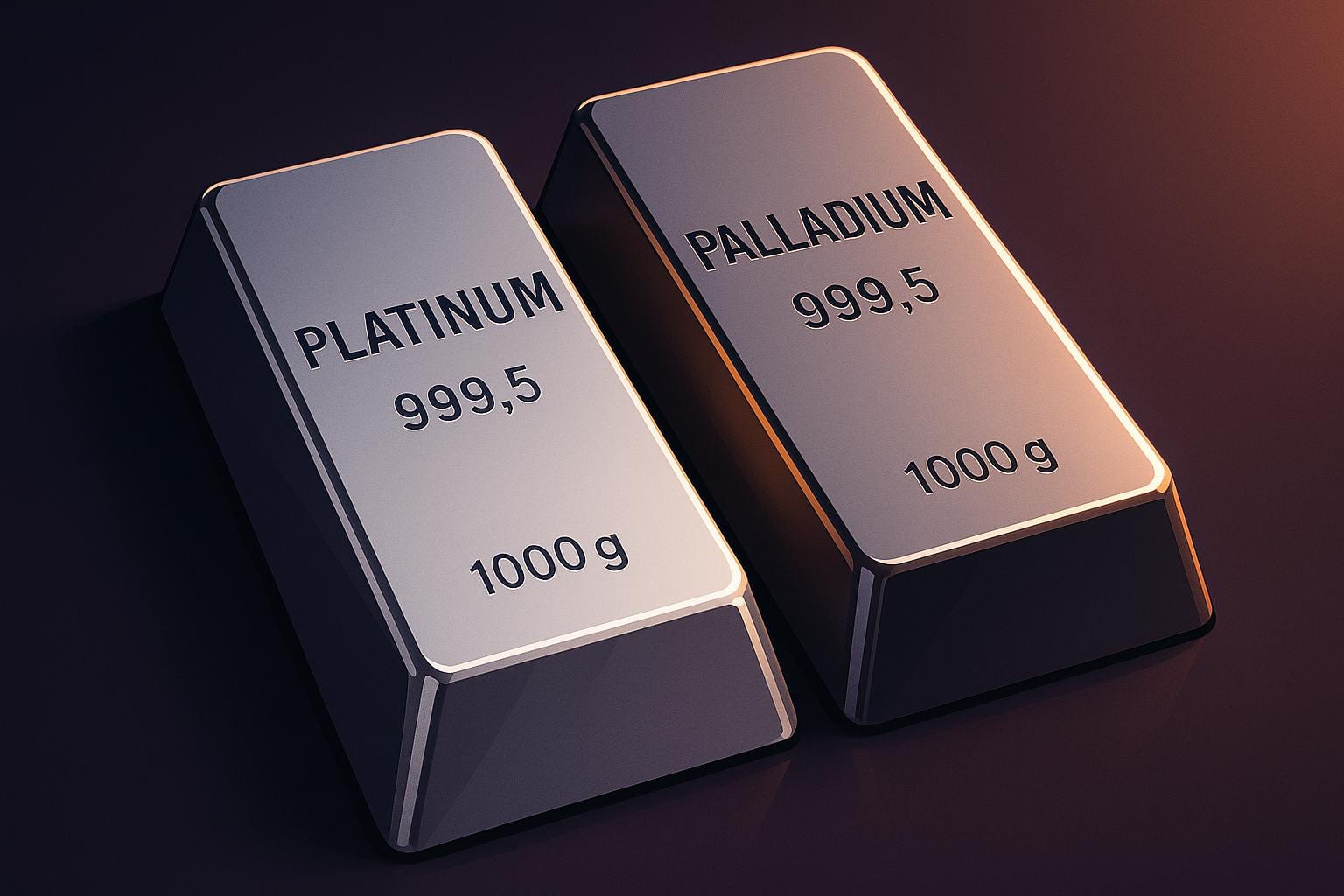
If you're deciding between PPLT, PLTM, and PALL for long-term investing, here's the bottom line:
- PPLT: Best for platinum exposure with a strong track record and high liquidity. Expense ratio: 0.60%.
- PLTM: A cost-efficient platinum ETF with a lower 0.50% expense ratio but smaller size and trading volume.
- PALL: Focused on palladium, offering strong liquidity and exposure to automotive demand trends. Expense ratio: 0.60%.
Quick Comparison
Key Takeaways:
- Choose PPLT for reliability in platinum investing.
- Opt for PLTM if minimizing costs is your priority.
- Select PALL for palladium-focused exposure with excellent liquidity.
For diversification, consider combining all three ETFs. To maximize returns, hold these ETFs in tax-advantaged accounts like IRAs to offset high collectibles tax rates.
Precious Metals Breakout: Platinum, Palladium & Silver Surge!
PPLT: abrdn Physical Platinum Shares ETF
The abrdn Physical Platinum Shares ETF (PPLT) stands out as the largest platinum-focused ETF, managing $1.6 billion in assets as of September 2025. Since its launch in 2010, it has offered investors a straightforward way to gain exposure to platinum prices.
Fund Overview and Structure
PPLT provides direct exposure to platinum by holding 11,410 physical platinum bars securely stored in a JPMorgan Chase vault in London. Each share represents fractional ownership of these bars, allowing the ETF to closely track the spot price of platinum. Unlike derivatives-based funds, this structure ensures that PPLT's value is tied directly to the physical metal. Abrdn, the fund provider, oversees storage and security logistics, offering transparency into the precise holdings. This setup makes PPLT a compelling option for those seeking a more tangible connection to platinum prices.
Performance, Volatility, and Market Trends
Platinum's price - and, by extension, PPLT's performance - is heavily tied to industrial demand cycles. With its large asset base, PPLT effectively handles heavy trading activity, contributing to pricing stability. In 2025 alone, the ETF experienced net inflows exceeding $100 million, reflecting growing investor interest. Its high daily trading volume, averaging 357,000 shares, supports narrow bid-ask spreads and keeps transaction costs low, making it an attractive choice for both short-term traders and long-term investors.
Expense Ratio, Liquidity, and Tax Treatment
When evaluating PPLT, it’s essential to consider its costs and tax implications. The ETF charges an annual expense ratio of 0.60%, meaning investors pay $6 for every $1,000 invested. While this fee is higher than those of many stock ETFs, it accounts for the expenses involved in storing and securing physical platinum.
For U.S. investors, tax treatment is another critical factor. Gains from PPLT are subject to the higher collectibles tax rate rather than the more favorable long-term capital gains rates applied to stocks and bonds. As a result, holding PPLT in tax-advantaged accounts like IRAs or 401(k)s can help bypass these higher tax rates, making it a more cost-effective option for long-term investing.
PLTM: GraniteShares Platinum Trust
The GraniteShares Platinum Trust (PLTM), introduced in 2018, provides investors with another option to gain direct exposure to platinum prices. With around $81 million in assets under management, PLTM offers a straightforward way to invest in platinum through its physically backed structure.
Fund Structure and Physical Platinum Exposure
PLTM operates as a physically backed ETF, much like PPLT, holding actual platinum ingots instead of relying on derivatives or futures contracts. This approach eliminates the counterparty and credit risks tied to derivative-based funds, giving investors direct ownership of the metal.
The trust stores its platinum reserves in secure vaults in London, similar to PPLT's storage arrangements. GraniteShares further ensures transparency by conducting biannual audits, with inspection reports made publicly available. While its smaller asset base means fewer platinum holdings compared to PPLT, each share still reflects proportional exposure to spot platinum prices.
Performance and Cost Considerations
PLTM's physical structure is complemented by its performance and cost efficiency, making it an appealing choice for certain investors considering the impact of fees on long-term growth. One standout feature is its lower annual expense ratio - 0.50% compared to PPLT’s 0.60%. This difference translates to a savings of about $10 annually for every $10,000 invested, which can enhance long-term returns. With platinum prices surging nearly 50% year-to-date in 2025, such cost savings can help preserve more of the returns.
That said, PLTM's smaller size results in lower daily trading volumes and wider bid-ask spreads, which can increase trading costs for active investors. However, these factors have minimal impact on long-term holders. Although PLTM has a shorter track record, having launched in 2018 compared to PPLT’s 2010 debut, both funds have delivered similar performance during overlapping periods due to their identical physical exposure to platinum.
Tax Implications for U.S. Investors
Tax treatment for physically backed ETFs like PLTM can be more complex than for stocks or bonds. Gains from these ETFs are subject to different tax rules, which apply equally to PLTM and PPLT due to their similar structures. For U.S. investors, holding these funds in tax-advantaged accounts such as traditional IRAs, Roth IRAs, or 401(k)s could help mitigate tax burdens. Given the intricacies of tax laws, consulting a tax professional is advisable to fully understand how these rules might apply to your specific situation. When combined with PLTM’s performance and cost profile, these tax considerations provide a complete picture for potential investors.
PALL: abrdn Physical Palladium Shares ETF
The abrdn Physical Palladium Shares ETF (PALL) provides direct investment in palladium, a critical metal used in automotive catalytic converters. Launched on January 6, 2010, PALL is the largest palladium-focused ETF, managing $794.68 million in assets as of November 14, 2025.
Fund Structure and Palladium Investment
PALL operates as a Grantor Trust, holding around 503,738 troy ounces of palladium bullion securely stored in London vaults. This structure allows it to closely mirror the spot price of palladium. As a "pure play" ETF, PALL exclusively invests in palladium, offering precise exposure to the metal's price fluctuations. FactSet categorizes PALL under both "Physically Held" and "Single Asset" strategies, emphasizing its straightforward and focused design. This makes it an ideal choice for investors looking to track palladium's market performance.
Performance and Industrial Demand
Palladium’s value is heavily influenced by demand from the automotive sector, which accounts for roughly 80% of its consumption. The metal is primarily used in catalytic converters for gasoline engines, making its price highly sensitive to changes in automotive production trends.
Costs, Liquidity, and Tax Considerations
PALL combines its structural benefits with competitive costs and liquidity. It has an annual expense ratio of 0.60%, and its significant size ensures strong liquidity, with an average daily trading volume of 443,709 shares. This high trading activity, coupled with its substantial asset base, facilitates smooth and efficient transactions for investors.
However, U.S. investors should be mindful of the tax implications. Gains from PALL are taxed as collectibles, with long-term capital gains taxed at 28% and short-term gains at 40%. These rates are higher than those for standard equity investments, making tax-advantaged accounts like IRAs a practical option for holding PALL.
As of November 14, 2025, PALL manages $794.68 million in assets and averages 443,709 shares traded daily. Gains are reported on Form 1099, with U.S. investors facing a 40% short-term capital gains rate and a 28% long-term rate.
With its physical palladium holdings, strong liquidity, and focused strategy, PALL is a compelling choice for investors seeking exposure to palladium. However, the higher tax rates remain a consideration for those weighing its overall appeal.
Side-by-Side Comparison: PPLT vs PLTM vs PALL
This section breaks down key metrics and trade-offs to help you evaluate these precious metals ETFs for long-term investment strategies.
Comparison Table of Key Metrics
Pros and Cons of Each ETF
Here’s a closer look at the strengths and weaknesses of each ETF to help refine your decision-making process:
PPLT
PPLT is a well-established platinum ETF with a proven track record. It offers a balanced liquidity profile and closely tracks platinum prices. However, its 0.60% expense ratio is higher than PLTM's, making it less appealing for cost-conscious investors.
PLTM
PLTM stands out with its low 0.50% expense ratio, offering a cost-effective way to gain platinum exposure. While its smaller size and lower trading volume may deter some, long-term holders can benefit from the fee savings over time.
PALL
PALL shines with its superior liquidity, boasting nearly $800 million in assets and an average daily trading volume of over 440,000 shares. Its focus on palladium provides exposure to unique industrial demand drivers, particularly in the automotive sector. However, palladium prices can be more volatile compared to platinum.
Recommendations for Different Investor Goals
Your choice of ETF will depend on your specific investment priorities, such as cost efficiency, liquidity, or diversification. Here’s how these ETFs align with different goals:
- Cost-conscious, long-term investors: PLTM's lower expense ratio (0.50%) makes it an attractive option for those seeking to minimize fees while gaining platinum exposure.
- Liquidity-focused investors: PALL’s high trading volume and large asset base make it ideal for those prioritizing ease of trading and market efficiency.
- Diversification seekers: Combining PLTM and PALL can provide exposure to both platinum and palladium, offering a broader approach to precious metals investing.
- Tax-sensitive investors: Holding any of these ETFs in tax-advantaged accounts like IRAs or 401(k)s can help mitigate the impact of higher capital gains tax rates.
Ultimately, your decision should balance cost, liquidity, and diversification needs. While PLTM is appealing for its low fees and PALL for its liquidity, PALL’s combination of strong trading efficiency and exposure to palladium’s distinct market drivers makes it a versatile choice for a well-rounded portfolio.
Using Mezzi for ETF Selection and Wealth Optimization
When managing investments in precious metals ETFs like PPLT, PLTM, and PALL, having a clear, unified view of your overall portfolio is critical. Selecting the right ETF isn't just about individual performance; it's about how it fits into your broader financial picture, optimizes tax outcomes, and supports long-term wealth growth. Mezzi's AI-driven platform delivers insights that were once only accessible through costly financial advisors, helping you grow your wealth efficiently while minimizing expenses and avoiding complex tax pitfalls.
Tax Optimization for ETF Investments
Taxes can significantly affect your returns, especially when dealing with precious metals ETFs, which are taxed differently than traditional stocks or bonds. Knowing how to navigate these tax nuances and applying smart strategies can make a big difference in preserving and growing your wealth.
Mezzi actively monitors your accounts to help you sidestep costly mistakes like wash sale violations. For instance, if you sell an ETF at a loss in a taxable account and unintentionally purchase a similar ETF in another account within 30 days, you could trigger a wash sale, making the tax deduction invalid. Mezzi flags these issues before they happen, saving you from potential headaches.
The platform also identifies tax loss harvesting opportunities throughout the year. Imagine one of your ETFs drops in value while your overall portfolio gains. Mezzi might suggest selling the underperforming ETF to realize the loss for tax benefits, then recommend a similar - but not identical - ETF to maintain your exposure to precious metals. Over time, these strategies can result in substantial tax savings, boosting your overall returns.
Portfolio Insights with the X-Ray Feature
Managing a diversified portfolio spread across multiple accounts can feel overwhelming. Mezzi's X-Ray feature simplifies this by uncovering risks and gaps in diversification that standard brokerage reports might miss.
For example, when reviewing ETFs like PPLT, PLTM, and PALL, the X-Ray tool can pinpoint whether your exposure to platinum and palladium is balanced or skewed. If your portfolio leans too heavily toward one metal, you can make adjustments to better align with your investment goals.
Additionally, the tool identifies overlapping ETF exposures. If you own a general commodities ETF in another account that also includes platinum and palladium, the X-Ray aggregates these holdings, helping you avoid unintentional over-concentration in these metals. This level of detail gives you a more complete understanding of your portfolio and ensures your strategy stays on track.
Account Aggregation and Financial Planning
To make informed ETF decisions, you need a complete picture of your financial situation - not just fragmented glimpses of individual accounts. Mezzi's account aggregation feature connects all your investment, retirement, and bank accounts into a single, unified view, enabling comprehensive financial planning.
This consolidated approach ensures that your ETF selections align with your broader portfolio strategy. For example, Mezzi can show you how much of your portfolio is already allocated to precious metals, whether there's room for more exposure, and which accounts might offer the most tax-efficient placement for new investments.
The platform's Financial Calculator takes things further by modeling how different ETF choices could influence your retirement timeline. It factors in your current portfolio value, projected contributions, expected returns, and even asset manager fees. By showing how expense ratios could impact your savings over time, Mezzi removes the guesswork from your decisions, helping you make choices that support long-term growth.
Plus, by tracking performance across all your accounts, Mezzi provides insights into how your precious metals ETFs are contributing to your overall investment strategy. If an ETF is falling short or outperforming, you can make evidence-based decisions to adjust your exposure, ensuring your portfolio evolves with your goals.
Final Recommendation: Choosing the Best ETF for Long-Term Holding
Deciding between PPLT, PLTM, and PALL comes down to your personal investment goals, risk appetite, and tax situation. Each ETF has its own strengths, so the right choice depends on how it fits into your broader financial strategy.
If you're looking to focus on platinum, PPLT stands out for its strong liquidity and reliable track record. For those prioritizing lower fees, PLTM offers a cost-effective option, though it trades within a narrower range. Meanwhile, PALL caters to investors interested in palladium, benefiting from its industrial demand, particularly in the automotive sector.
For a more balanced approach, you might consider combining all three: PPLT for stable platinum exposure, PLTM to keep costs in check, and PALL for diversification. This mix can help optimize your portfolio while spreading your exposure across different metals.
It's also important to keep in mind the tax implications of investing in precious metals ETFs, which require careful planning to manage effectively.
To make the most of these ETFs, tools like Mezzi can play a key role. Its X-Ray feature offers a detailed view of how these ETFs integrate into your overall portfolio, helping you identify and reduce over-concentration risks in any single asset class. Mezzi's tax optimization tools simplify managing the tax aspects of your metals allocation, while its Financial Calculator and account aggregation features let you evaluate expense ratios and their impact on your long-term wealth strategy.
Ultimately, the key to success with these ETFs is to take a long-term perspective and incorporate them thoughtfully into your investment plan. With the help of Mezzi's tools, you can track performance, manage taxes, and fine-tune your precious metals allocation to align with your financial goals. This comprehensive approach ensures your investments stay on track for the future.
FAQs
What are the key differences between PPLT, PLTM, and PALL, and which is better for long-term investing?
PPLT and PLTM are all about platinum, while PALL focuses on palladium. Both PPLT and PLTM are supported by physical platinum holdings, making them a solid choice for those who prefer investing in tangible assets. Meanwhile, PALL offers a straightforward way to tap into the palladium market.
When choosing between these ETFs for a long-term strategy, it comes down to your perspective on each metal. Platinum is widely used in industrial processes and jewelry, whereas palladium is essential for automotive catalytic converters. Weigh your investment objectives, current market trends, and the expense ratios of these ETFs to determine which one fits best with your portfolio.
What are the tax considerations for investing in platinum and palladium ETFs, and how might they impact long-term investors?
When considering investments in platinum and palladium ETFs such as PPLT, PLTM, or PALL, it's crucial to factor in the tax implications, particularly for long-term investors. These ETFs are typically set up as grantor trusts, which means they are taxed as collectibles under U.S. tax law. This classification comes with a maximum capital gains tax rate of 28%, noticeably higher than the 20% maximum rate applied to most stocks and standard ETFs.
For investors holding these ETFs in taxable accounts, this elevated tax rate can take a significant bite out of long-term returns. However, there’s a way to soften the blow: holding these investments in tax-advantaged accounts like IRAs. This strategy can help reduce the tax burden and improve overall returns. To ensure you fully understand how these tax rules might impact your specific financial situation and goals, it’s wise to consult a qualified tax professional.
How can investors balance costs and diversify their portfolio when choosing between PPLT, PLTM, and PALL ETFs?
To manage costs and achieve a diversified portfolio using PPLT, PLTM, and PALL ETFs, start by examining their expense ratios. Choosing ETFs with lower expense ratios can significantly cut down long-term costs, making it easier to maximize your returns. It's also important to look at the specific holdings within each ETF to ensure they align with your diversification strategy, as these funds target different segments of the platinum and palladium markets.
If you're aiming for broader diversification, consider combining ETFs that specialize in individual metals or exploring funds that include a mix of precious metals like platinum, gold, silver, and palladium. This strategy can help spread out risk while maintaining exposure to the precious metals sector.
Related Blog Posts
- GLD vs IAU vs SGOL vs BAR: which gold ETF is best for long-term holding?
- Is it better to hold gold ETFs in a taxable brokerage or inside an IRA?
- SLV vs SIVR vs DBA vs DBC - Best silver exposure ETF for an inflation hedge
- For a Vanguard brokerage, GLD vs IAU 5-year total return and tracking difference (include expense ratio effect and premium/discount history).
PPLT and PLTM are all about platinum, while PALL focuses on palladium. Both PPLT and PLTM are supported by physical platinum holdings, making them a solid choice for those who prefer investing in tangible assets. Meanwhile, PALL offers a straightforward way to tap into the palladium market.
When choosing between these ETFs for a long-term strategy, it comes down to your perspective on each metal. Platinum is widely used in industrial processes and jewelry, whereas palladium is essential for automotive catalytic converters. Weigh your investment objectives, current market trends, and the expense ratios of these ETFs to determine which one fits best with your portfolio.
When considering investments in platinum and palladium ETFs such as PPLT, PLTM, or PALL, it's crucial to factor in the tax implications, particularly for long-term investors. These ETFs are typically set up as grantor trusts, which means they are taxed as collectibles under U.S. tax law. This classification comes with a maximum capital gains tax rate of 28%, noticeably higher than the 20% maximum rate applied to most stocks and standard ETFs.
For investors holding these ETFs in taxable accounts, this elevated tax rate can take a significant bite out of long-term returns. However, there’s a way to soften the blow: holding these investments in tax-advantaged accounts like IRAs. This strategy can help reduce the tax burden and improve overall returns. To ensure you fully understand how these tax rules might impact your specific financial situation and goals, it’s wise to consult a qualified tax professional.
To manage costs and achieve a diversified portfolio using PPLT, PLTM, and PALL ETFs, start by examining their expense ratios. Choosing ETFs with lower expense ratios can significantly cut down long-term costs, making it easier to maximize your returns. It's also important to look at the specific holdings within each ETF to ensure they align with your diversification strategy, as these funds target different segments of the platinum and palladium markets.
If you're aiming for broader diversification, consider combining ETFs that specialize in individual metals or exploring funds that include a mix of precious metals like platinum, gold, silver, and palladium. This strategy can help spread out risk while maintaining exposure to the precious metals sector.