If you're deciding between QQQM and VGT, here's the key takeaway: QQQM offers broader sector diversification, while VGT focuses heavily on technology. Over the past 5 years, VGT outperformed with an annualized return of 19.9%, but it comes with higher volatility.
QQQM tracks the NASDAQ-100, allocating 56.2% to technology and spreading the rest across sectors like Communication Services (15.8%) and Consumer Cyclicals (12.7%). VGT, however, dedicates 98.0% of its holdings to tech, providing concentrated exposure to the sector.
Quick Comparison
MetricQQQMVGTExpense Ratio0.15%0.09%5-Year Annualized ReturnN/A (launched 2020)19.9%Technology Allocation56.2%98.0%Number of Holdings103–104310–316Forward P/E27.829.0**Price/Book (P/B)6.97.1Dividend Yield (TTM)**0.49%0.39%
Key Insights:
- QQQM is better for diversified growth exposure across multiple sectors.
- VGT is ideal for investors bullish on tech and willing to accept sector-specific risks.
- VGT's lower expense ratio and higher returns make it attractive for tech-focused portfolios, but its concentrated nature can amplify losses during downturns.
Your choice depends on whether you want a balanced portfolio (QQQM) or concentrated tech exposure (VGT). Both ETFs include big names like Apple, Microsoft, and NVIDIA, so owning both could lead to overlapping holdings.
VGT vs QQQ: the 2 Best Growth ETFs in Comparison
QQQM vs VGT: Basic Facts
Understanding how each ETF tracks its respective index is crucial when deciding between the two. While both provide access to technology companies, their strategies and scopes vary significantly. These distinctions lay the groundwork for evaluating their performance and how expense ratios impact returns.
QQQM: NASDAQ-100 Tracking ETF
QQQM is designed to follow the NASDAQ-100, offering exposure that extends beyond just technology. The fund allocates 56.2% of its holdings to the technology sector, with additional exposure to Communication Services (15.8%), Consumer Cyclicals (12.7%), and smaller allocations to Consumer Defensive and Healthcare (4.4% each).
At least 90% of QQQM's assets are invested in the securities that make up the NASDAQ-100 Index. This index is rebalanced quarterly and reconstituted annually to ensure it captures the largest eligible companies. With around 103–104 holdings, QQQM focuses on large-cap growth stocks across multiple industries, making it a more diversified option compared to a pure tech fund.
The fund’s expense ratio is 0.15%, which equals $15 annually for every $10,000 invested. Its average spread is minimal at 0.00% ($0.01).
For investors looking for a mix of technology exposure with a broader growth-oriented portfolio, QQQM could be an appealing choice.
VGT: Technology Sector Focus
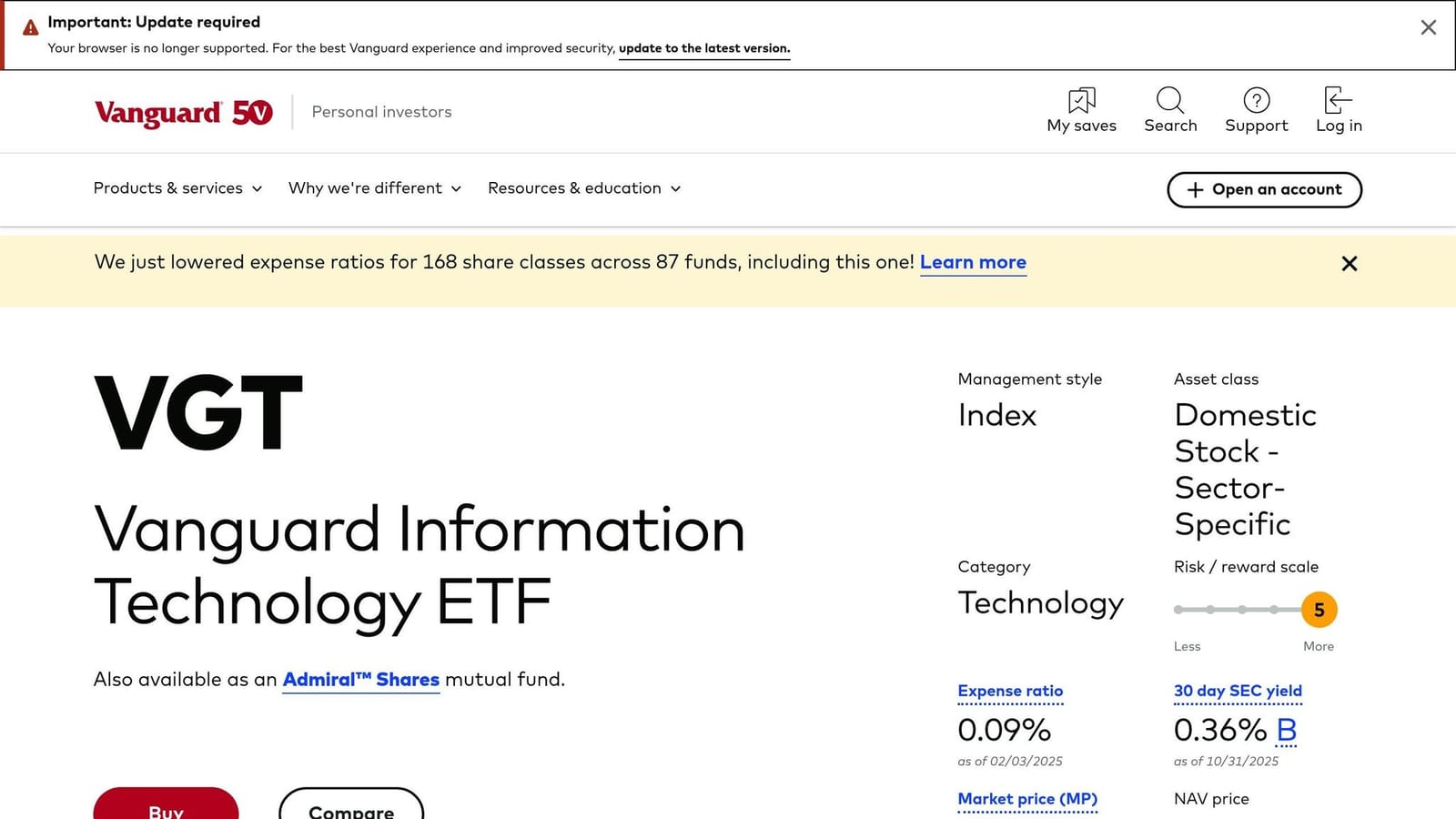
VGT, on the other hand, targets the MSCI US Investable Market Information Technology 25/50 Transition Index, focusing almost exclusively on information technology. An impressive 98.0% of its portfolio is allocated to this sector.
The fund employs full replication or sampling as needed, and its holdings include companies involved in electronics, computer industries, and applied science-based manufacturing. With 310–316 holdings, VGT provides more diversification within the tech sector compared to QQQM's narrower approach.
VGT is also cost-efficient, with an expense ratio of 0.09%, amounting to $9 per year for every $10,000 invested. Its average spread is 0.04% ($0.31). Additionally, VGT oversees $50.02 billion in assets and has a 1-month average daily volume of $206.92 million, showcasing its strong liquidity.
MetricQQQMVGTExpense Ratio0.15%0.09%Number of Holdings103–104310–316Technology Allocation56.2%98.0%Average Spread0.00% ($0.01)0.04% ($0.31)Assets Under Management$14.24 billion$50.02 billion
When choosing between these ETFs, the decision largely depends on whether you value sector diversification (QQQM) or a pure technology focus (VGT). Cost sensitivity and the level of exposure you’re seeking will also play a role in determining the best fit for your portfolio.
5-Year Performance Results
Looking at a five-year span, we can see how QQQM and VGT have performed under different market conditions. Here's a breakdown of the returns and risk factors that set these two ETFs apart.
Returns and Risk Analysis
Both ETFs have delivered impressive returns over the past five years. VGT, with its heavy focus on technology, has shown stronger returns but comes with higher volatility and more significant drawdowns. On the other hand, QQQM, with its broader diversification, offers a more balanced approach by reducing risk. These differences align closely with the strategies outlined in the earlier sections.
Implications for Investors
These results underline the classic balance between risk and reward. Investors willing to take on more risk for potentially higher gains might lean toward VGT. Meanwhile, those who prioritize stability and diversified exposure may find QQQM to be the better choice for their portfolios.
Sector Mix and Top Holdings Changes
Examining how these ETFs allocate their investments across sectors and adjust their top holdings provides a clearer picture of their potential risks and performance patterns over time. These allocation shifts, when paired with performance data, shed light on each ETF's overall risk exposure.
Sector Allocation Breakdown
QQQM spreads its investments across various sectors, including technology, consumer discretionary, communication services, and healthcare. This broader diversification helps cushion against market volatility compared to a portfolio that’s heavily concentrated in one area. On the other hand, VGT focuses exclusively on technology. This narrow focus can deliver impressive gains during market upswings but also magnifies losses when the tech sector faces challenges.
During volatile markets, these sector differences become even more critical. QQQM's diversified approach can provide some level of stability when technology stocks falter. In contrast, VGT’s reliance on a single sector means its performance is more likely to experience sharp swings, for better or worse.
Top 10 Holdings Weight Changes
Recent market trends have affected the weighting of top holdings in both ETFs. In QQQM, heavyweights like Apple and Microsoft remain dominant, though their exact proportions shift with changing market conditions. In VGT, the concentrated nature of the fund means that a handful of leading tech companies, such as NVIDIA, play an outsized role in driving performance. For example, NVIDIA’s growing weight in VGT reflects the evolving dynamics within the tech industry.
This level of concentration has real-world implications for investors. A concentrated portfolio may see significant gains if a major holding performs well, but it also risks substantial losses if that same holding underperforms.
To help investors stay on top of these changes, Mezzi’s X-Ray feature offers real-time monitoring of ETF holdings. It alerts users when an ETF becomes overly concentrated in specific companies or sectors, which is particularly important for technology-focused funds. Since market sentiment can shift quickly, this tool aids in managing risk and highlights the importance of active monitoring and timely portfolio adjustments.
Valuation and Cost Comparison
This section takes a closer look at QQQM and VGT, focusing on valuation metrics and fee structures to help investors make informed decisions. Building on the earlier performance and sector breakdowns, it highlights how differences in valuation and costs can influence long-term returns.
Key Metrics Side-by-Side
When comparing valuation, VGT trades at a higher premium with a forward P/E of 29.0, slightly above QQQM's 27.8. The same trend is evident in the price-to-book ratio, where VGT stands at 7.1, compared to QQQM's 6.9. These numbers suggest that VGT commands a higher valuation relative to its expected earnings and book value.
MetricQQQMVGTForward P/E27.829.0Price/Book (P/B)6.97.1Dividend Yield (TTM)0.49%0.39%Expense Ratio0.15%0.10%
The expense ratio is another critical factor. VGT’s lower ratio of 0.10% translates to $10 per $10,000 invested annually, compared to QQQM’s 0.15%, or $15 per $10,000. While the difference may seem small, it can impact long-term investment growth significantly, especially for long-term investors.
For those managing multiple ETFs, tools like Mezzi's account aggregation feature can provide a consolidated view of all portfolio costs. This kind of insight can be invaluable in identifying areas to minimize fees and enhance returns through smarter ETF choices and portfolio adjustments.
Costs and Trading Considerations
When evaluating ETFs, it's essential to look beyond just the annual fees. Factors like liquidity and trading costs also play a role in shaping your overall investment experience.
Fees and Trading Volume
VGT stands out with a lower expense ratio of about 0.10%, compared to QQQM's approximately 0.15%. While the difference may seem small, it can add up significantly over time, especially for long-term investors with substantial holdings.
Both ETFs are considered liquid, but trading volumes can influence how efficiently your trades are executed. For those who regularly contribute to their investments or frequently rebalance their portfolios, these factors could impact transaction costs. Understanding these nuances can help you manage ETFs more effectively, particularly when using tools like Mezzi.
Using Mezzi for Better ETF Management
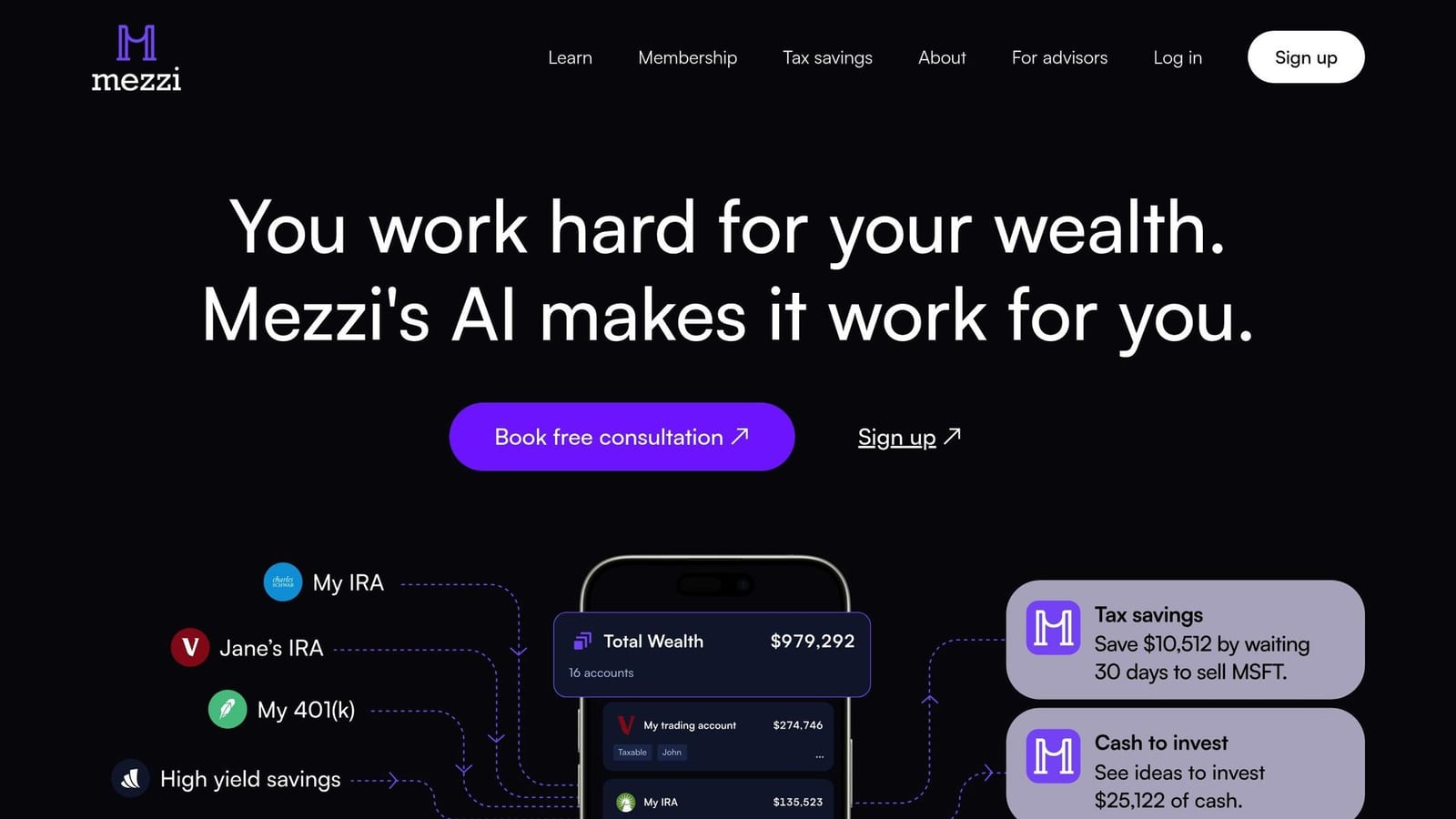
Once you’ve analyzed costs and liquidity, leveraging management tools can further enhance your ETF strategy. Managing multiple ETF positions across different accounts can get complicated, but Mezzi simplifies this by consolidating your holdings into a single, easy-to-navigate view.
One standout feature of Mezzi is its X-Ray tool, which is especially helpful if you own both QQQM and VGT. It automatically highlights overlapping exposures in major holdings like Apple, Microsoft, and NVIDIA. This helps you avoid unintentional concentration in your portfolio, ensuring better diversification.
Mezzi also offers advanced tax tools that flag potential wash sale risks. For instance, if you sell VGT at a loss in a taxable account, the platform alerts you before you accidentally repurchase a similar ETF in another account within the 30-day wash sale period. This proactive approach can save you from costly tax complications.
Additionally, Mezzi’s Financial Calculator provides a clear picture of how fees impact your long-term returns. By factoring in asset manager fees, it helps you see how even small differences in expenses can influence your wealth accumulation. For active investors who make regular contributions, Mezzi’s AI-driven insights can recommend the best times to buy or rebalance, aligning your actions with your broader financial goals.
The Advisory, priced at $39/month or $399/year, unlocks unlimited access to these optimization tools. While it’s an upfront cost, the potential savings from reduced taxes and better fee management can more than make up for the membership price over time.
Final Comparison and Recommendations
When it comes to choosing between QQQM and VGT, the decision largely hinges on your investment goals and risk tolerance. QQQM provides broad exposure to the NASDAQ-100, offering a mix of large-cap companies across various sectors. On the other hand, VGT focuses specifically on technology, making it a more concentrated option for those confident in the tech sector's growth potential.
For investors seeking a balanced approach to tech exposure within a diversified portfolio, QQQM could be a better fit. Its holdings span multiple industries, giving it a more stable profile compared to VGT. However, if you're bullish on the tech sector and comfortable with higher volatility, VGT stands out. Its concentrated portfolio of software, semiconductor, and hardware companies has the potential for higher returns during tech bull markets but also comes with elevated risks tied to the sector.
Both ETFs include major players like Apple, Microsoft, and NVIDIA, so owning both might lead to overlapping fund holdings unless there's a specific tactical allocation strategy in place. You can use a portfolio overlap checker to see how much these funds intersect.
FAQs
How do QQQM and VGT's expense ratios affect long-term returns?
Expense ratios are a key factor in determining the long-term success of your investments. The lower the expense ratio, the more of your money stays invested, giving it the chance to grow and compound over time. Even seemingly minor differences in fees can add up to substantial differences in returns over the years.
When comparing ETFs such as QQQM and VGT, it’s important to weigh their expense ratios along with their performance and diversification. Choosing a fund with a lower expense ratio can help you keep costs down while giving your portfolio more room to grow.
What are the potential advantages and risks of investing in a technology-focused ETF like VGT compared to a more diversified option like QQQM?
Investing in a tech-focused ETF like VGT can be appealing for those looking to tap into the growth potential of the technology sector. When tech performs well, VGT often shines, offering the chance for higher returns. But with that potential comes a trade-off: greater volatility. Being concentrated in technology means the fund is more vulnerable to risks like regulatory shifts or downturns in the tech market.
On the other hand, QQQM takes a broader approach, spreading investments across multiple sectors. This diversification helps to reduce risk and create a steadier performance over time. While it might not match VGT's growth during tech surges, its balanced strategy makes it a solid choice for long-term investors looking for stability alongside exposure to various industries.
How does VGT's focus on the technology sector impact its performance during market downturns compared to QQQM?
VGT's focus on the technology sector means its performance is heavily influenced by the ups and downs of that industry. In times of market downturns, particularly when tech stocks take a hit, VGT is likely to see steeper declines compared to QQQM, which benefits from being spread across various sectors.
However, this concentration works both ways. When the tech sector thrives, VGT often delivers stronger returns. Investors should weigh their comfort with risk and their long-term objectives when deciding how this sector-specific exposure fits into their overall portfolio strategy.
Mezzi is free to get started. Choose Advisory for unlimited advice and advanced features at $39/month or $399/year. Concierge includes the same, plus hands-on support, at $99/month or $999/year.
Related Blog Posts
- What are the top NASDAQ-100 ETFs/mutual funds available at Charles Schwab?
- VOO vs IVV: why might an investor choose one over the other?
- How do VPU and XLU compare on dividend yield, dividend growth, fees, and sector concentration?
- Provide 10-year and 20-year returns for two selected funds and list their top holdings (at latest disclosure).