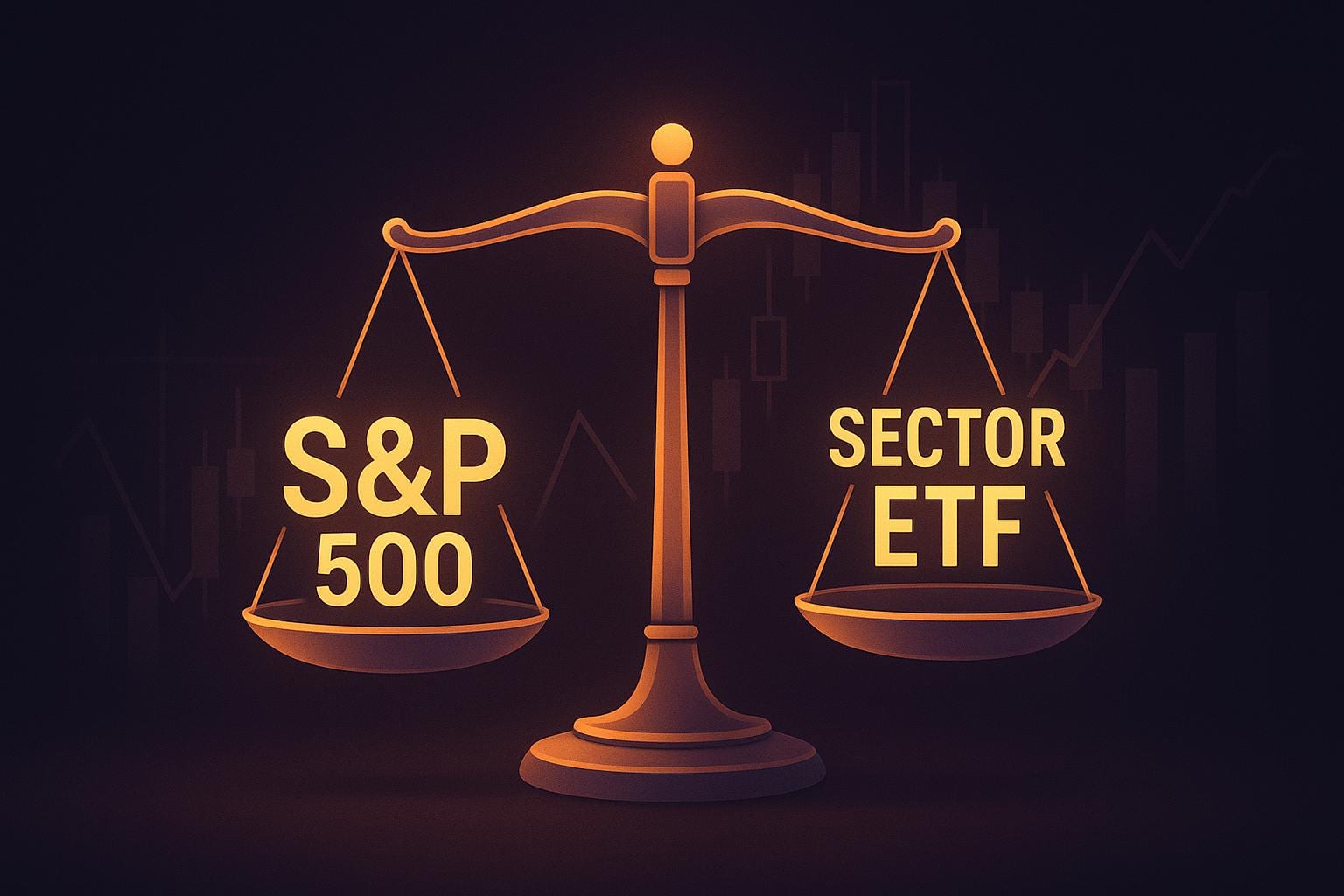
If your sector ETF is consistently underperforming, switching to an S&P 500 fund may offer better diversification, reduced volatility, and steadier long-term growth. However, before making the move, consider these key points:
- Performance: Sector ETFs focus on specific industries, which can mean higher risks and rewards. S&P 500 funds spread risk across multiple sectors, providing more balanced performance.
- Costs: S&P 500 funds typically have lower fees and are more tax-efficient, making them a cost-effective choice for many investors.
- Tax Implications: Selling a sector ETF in a taxable account could trigger capital gains taxes. Holding for over a year qualifies for lower long-term capital gains rates.
- Portfolio Balance and Rebalancing: Switching may lower volatility but could reduce exposure to growth opportunities in specific sectors. Ensure the move aligns with your financial goals and risk tolerance.
Tools like Mezzi can simplify the decision by analyzing performance, tax impacts, and long-term effects on your portfolio. Always base your decision on data, not short-term trends.
Mastering Sector ETFs: Smarter Investing Beyond the S&P 500
Sector ETFs vs S&P 500 Funds: Key Differences
Understanding the trade-offs between sector ETFs and S&P 500 funds is essential for balancing risk and optimizing long-term returns.
Sector ETFs: Focused Risk and Potential Rewards
Sector ETFs zero in on specific industries, offering the chance for high returns but also exposing investors to heightened risk and volatility. When a particular sector thrives, these funds can deliver impressive gains.
However, this concentration also makes them vulnerable. For instance, technology ETFs are highly influenced by industry trends and regulatory changes. Healthcare ETFs often react sharply to FDA decisions or the outcomes of drug trials. Similarly, energy sector funds mirror oil price fluctuations, which can lead to significant daily price swings.
Timing is another challenge with sector ETFs. Industries go through cycles of growth and decline, and accurately predicting these shifts is difficult - even for seasoned investors. What might appear to be short-term underperformance can sometimes signal a prolonged downturn. This makes sector ETFs a high-risk, high-reward option compared to the broader stability of S&P 500 funds.
S&P 500 Funds: Diversification and Stability
S&P 500 funds provide exposure to a broad range of large U.S. companies across various industries. This diversification helps spread risk, offering a more stable investment experience.
One of the key features of S&P 500 funds is their built-in rebalancing. As market conditions shift, the index adjusts sector weightings automatically. For example, if the technology sector grows rapidly, its representation in the index increases naturally. Conversely, declines in one sector are typically offset by gains in others, helping to smooth out overall returns.
These funds also require minimal active management. Instead of frequent market monitoring or precise timing, they are well-suited for a buy-and-hold strategy. This makes S&P 500 funds a reliable choice for long-term goals like retirement savings or wealth building, thanks to the market’s historical resilience.
Performance and Cost Comparison
The differences between sector ETFs and S&P 500 funds become clear when comparing their performance and costs:
AspectSector ETFsS&P 500 FundsDiversificationTargets a single industryCovers multiple industriesVolatilityHigher due to concentrated holdingsLower and more balancedExpense RatiosTend to have higher feesKnown for low-cost structuresLiquidityGenerally liquid, but can vary in volatile marketsHighly liquid in most conditionsTax EfficiencyLess efficient due to frequent rebalancingMore efficient with lower turnoverResearch RequiredRequires in-depth industry analysisMinimal ongoing research needed
Even small differences in fees can add up over time and impact overall returns. S&P 500 funds, known for their low fees and tax efficiency, often have an edge here, particularly in taxable accounts.
Liquidity is another advantage of S&P 500 funds. While sector ETFs generally perform well in stable markets, they may face wider bid-ask spreads during turbulent times, leading to higher transaction costs when adjusting your portfolio. This makes S&P 500 funds a more reliable option during periods of market stress.
What to Consider Before Making the Switch
Switching from a sector ETF to an S&P 500 fund involves more than just comparing performance. You’ll need to think about market timing, tax implications, and how the change fits into your portfolio’s overall structure to ensure it aligns with your long-term financial goals.
When to Make the Move
The timing of your switch should consider both the broader market environment and your regular rebalancing schedule. If your sector ETF has consistently underperformed the broader market, it might be time to reassess. However, avoid trying to perfectly time the market - it’s a risky game. Instead, align your decision with your usual rebalancing routine, whether that’s quarterly or semi-annually, to help you avoid emotional reactions to short-term market swings.
Tax Costs and How to Minimize Them
Switching ETFs in a taxable account can create a taxable event, cutting into your net returns. If you’ve held the investment for a year or less, any gains will be taxed as short-term capital gains, which are taxed at your ordinary income rate - up to 37% for high earners. However, holding the ETF for more than a year allows you to benefit from long-term capital gains rates, which are generally lower. Depending on your income, these rates are 0%, 15%, or 20%, with an additional 3.8% Net Investment Income Tax for higher-income taxpayers. Timing your sale to qualify for long-term capital gains can make a big difference in your tax bill.
How This Affects Your Portfolio Balance
Switching to an S&P 500 fund will shift your portfolio’s risk profile and sector exposure. A sector ETF focuses on a specific industry, so moving to a broad market fund reduces your exposure to one concentrated area. This can help lower your portfolio’s overall volatility but might also mean missing out on potential gains from that specific sector.
If you already own other broad market funds, like target-date or total stock market funds, adding an S&P 500 fund could increase your concentration in large-cap stocks. At the same time, areas like small-cap or international markets might remain underrepresented. Regular rebalancing is key to maintaining the diversification you need for effective risk management.
For instance, even if you move from a technology-focused ETF to an S&P 500 fund, you’ll still have significant exposure to tech giants like Apple, Microsoft, and Google. But you’ll also gain exposure to other sectors, including healthcare, financials, and consumer goods. Make sure this shift matches your risk tolerance and aligns with your financial timeline, especially if you’ll need access to these funds in the near future. Once you’ve weighed these factors, you’ll be ready to explore how Mezzi can streamline this transition.
How Mezzi Makes This Decision Easier
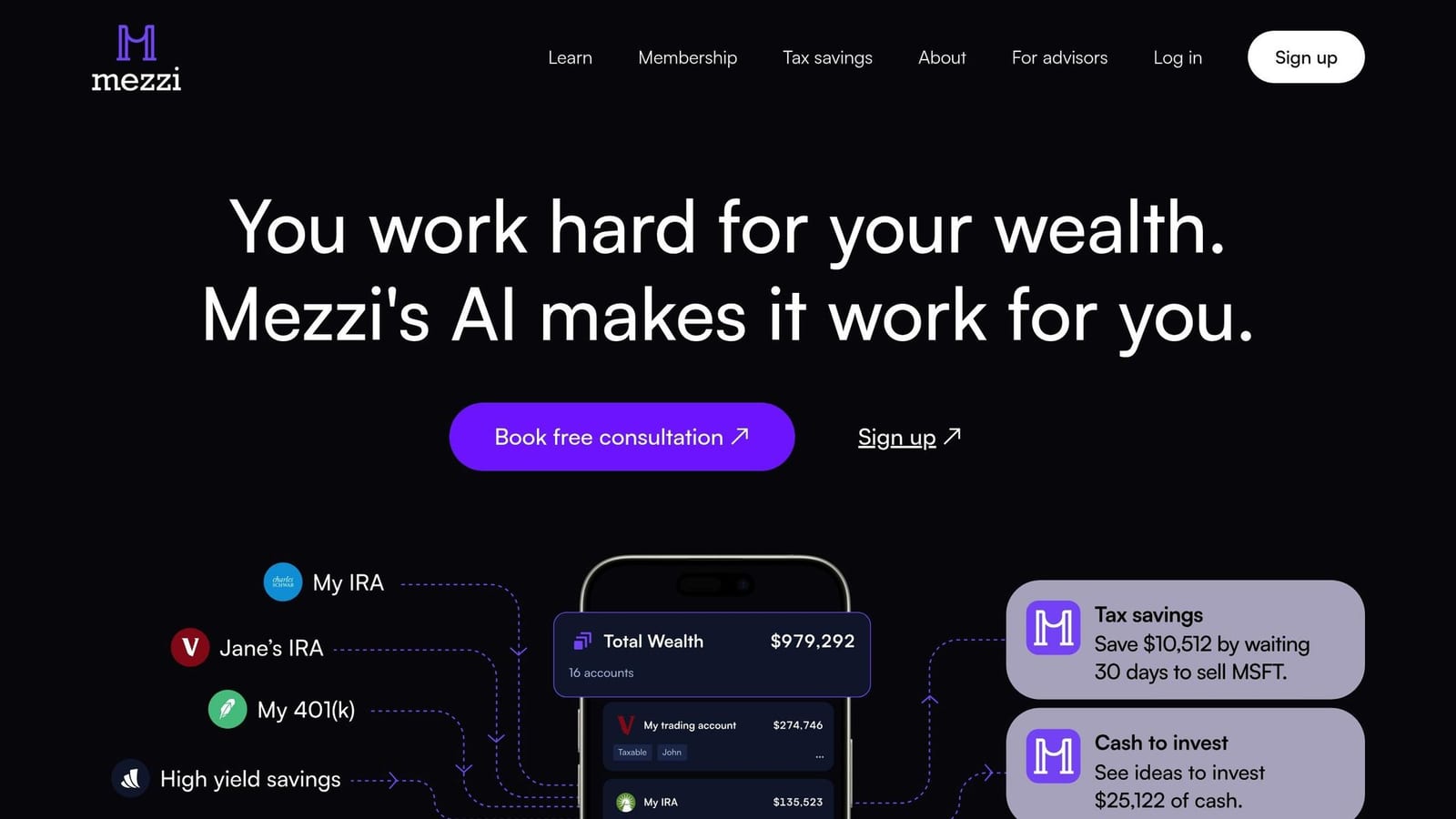
Mezzi takes the complexity out of ETF rotation by using advanced AI tools to streamline the process. Whether you're transitioning from a sector ETF to an S&P 500 fund, Mezzi removes the guesswork. Its AI-powered platform provides real-time insights, automates strategies to save on taxes, and helps you understand the long-term effects of your financial decisions.
Real-Time Performance and Risk Tracking
Mezzi transforms data into actionable strategies, continuously monitoring your portfolio and comparing your sector ETF's performance to benchmarks like the S&P 500. It accounts for factors like volatility, economic changes, and risk, giving you a detailed view of how your investments stack up. Instead of manually tracking trends or questioning whether underperformance is temporary, Mezzi evaluates market conditions and risk factors to provide meaningful insights. Its X-Ray feature digs deeper, identifying hidden exposures and portfolio overlap that could lead to unintentional concentration risks in your portfolio.
Simplified Tax Efficiency
Navigating the tax implications of rotating investments can be tricky, but Mezzi makes it easier. By monitoring all your linked accounts, it automates tax-saving strategies and ensures compliance with wash sale rules, which can complicate tax reporting. For instance, if you're selling an underperforming sector ETF in a taxable account, Mezzi checks for overlapping holdings in accounts like your IRA or 401(k) to prevent triggering wash sale rules. This streamlined process helps you manage taxes more efficiently.
Understanding Long-Term Impact
Making changes to your portfolio requires a clear understanding of how those adjustments will affect your financial future. Mezzi's Financial Calculator models scenarios by considering your portfolio's current value, annual contributions, estimated returns, and fees. This tool helps you compare the outcomes of rotating now versus waiting, so you can see how your decisions might influence your retirement timeline and overall wealth growth.
Should You Switch to an S&P 500 Fund?
Choosing whether to transition from a sector ETF to an S&P 500 fund depends on your investment goals, risk tolerance, and overall portfolio strategy. S&P 500 funds provide broad diversification and have a history of steady returns, but sector ETFs can still be valuable if they align with your long-term vision and you’re prepared for greater volatility.
Base your decision on data, not short-term market fluctuations. Factors like tax implications in taxable accounts, your portfolio's diversification, and the sector’s underlying fundamentals should guide your choice. Let’s break down the key considerations for DIY investors.
Key Points for DIY Investors
Timing and tax considerations are critical. Timing matters more than attempting to predict the market perfectly. In taxable accounts, swapping investments may lead to capital gains taxes, which can erode returns. On the flip side, if you’re dealing with losses, tax-loss harvesting could work to your advantage - just watch out for wash sale rules.
Portfolio balance is more important than chasing individual performance. Before making the switch, consider how it impacts your overall diversification. While moving entirely to an S&P 500 fund might reduce volatility, it could also mean losing exposure to growth opportunities or defensive sectors that align with your strategy.
Costs go beyond expense ratios. While S&P 500 funds generally have lower fees than sector ETFs, you should also account for other costs, like the potential missed opportunity of a sector recovery. Sometimes, the decision that feels safest could end up costing you more in the long run.
These insights can help guide your decisions, and tools like Mezzi make the process even easier.
Getting Started with Mezzi
Mezzi’s AI tools simplify portfolio management, taking the stress out of tracking performance or navigating tax complexities. With features like X-Ray, you can identify hidden concentrations in your portfolio, while automated tax optimization ensures you avoid wash sale triggers across accounts. The Financial Calculator helps you model long-term outcomes, making it easier to see how changes like adding S&P 500 exposure might affect your risk profile - especially if you’re already heavily invested in large-cap growth stocks.
For $39/month or $399/year, Mezzi’s Advisory offers real-time AI insights, unlimited portfolio analysis, and tax-saving recommendations. If you manage a complex portfolio or frequently rebalance, this membership can be a game-changer. The platform’s ability to help you avoid costly mistakes and improve tax efficiency often offsets the cost within the first year, making it a smart choice for investors looking to streamline their strategies.
FAQs
What tax considerations should I keep in mind when moving from a sector ETF to an S&P 500 fund in a taxable account?
When you sell a sector ETF in a taxable account to switch to an S&P 500 fund, you could trigger a taxable event. If the ETF is sold at a profit, you’ll owe taxes on the capital gains. The tax rate hinges on how long you’ve held the ETF: short-term gains (held for one year or less) are taxed at your regular income tax rate, while long-term gains (held for more than a year) benefit from lower capital gains rates.
For high-income earners, there’s an additional consideration: the 3.8% net investment income tax may apply to these gains. Factoring in these potential tax obligations is crucial to ensure this decision fits within your broader investment strategy and financial objectives.
How can I tell if my sector ETF's poor performance is just temporary or part of a longer-term trend?
When your sector ETF underperforms, it’s essential to figure out whether this is just a short-term setback or part of a more lasting trend. To do this, take a closer look at factors like market conditions, the ETF's composition, and the current phase of the economic cycle.
Start by assessing how overall market trends are influencing the sector. Sector ETFs can struggle if they’re heavily weighted toward industries or companies that are currently out of favor. Dive into the ETF’s holdings - are there specific assets dragging it down? Also, check the expense ratio; higher fees can chip away at returns, especially when performance is already lagging. Remember, sectors don’t perform equally across all economic phases. For example, some thrive during periods of growth, while others hold up better in a downturn.
By aligning these insights with your long-term investment strategy, you’ll be better equipped to decide whether to stick with the sector ETF or shift to something broader, like an S&P 500 ETF.
What are the best strategies to manage risk and diversification when switching to an S&P 500 fund?
When moving to an S&P 500 fund, it's important to focus on managing risk and keeping your portfolio diversified to stay aligned with your financial goals. The S&P 500 gives you exposure to large-cap U.S. companies, but relying solely on it could leave gaps in your investment strategy. To create a more balanced portfolio, consider including mid-cap or small-cap funds. This approach spreads your investments across different market segments, reducing the risk of being too dependent on one area.
Take a close look at your asset allocation to ensure it reflects both your risk tolerance and your investment timeline. A thoughtful mix of stocks, bonds, and cash can help cushion against market volatility while still aiming for long-term growth. Also, don’t overlook the importance of regular rebalancing. Adjusting your portfolio periodically helps maintain your desired allocation, especially as market movements can shift your original balance.
Lastly, adopt a long-term mindset. Markets will have ups and downs, but staying invested through these fluctuations often pays off. This patience allows you to take advantage of recoveries and the power of compound growth over time.
Mezzi is free to get started. Choose Advisory for unlimited advice and advanced features at $39/month or $399/year. Concierge includes the same, plus hands-on support, at $99/month or $999/year.