
If you're grappling with credit card debt, you're likely asking yourself: Should I pay it off now or focus on other financial priorities? The answer depends on your unique financial situation, including your income, expenses, and goals. Here's the good news: AI tools like Mezzi can analyze your finances and provide tailored strategies to help you decide.
Key Takeaways:
- Credit card debt often carries high interest rates, with the average rate at 24.20% as of May 2025. Paying it off can save you from compounding interest.
- Tools like Mezzi assess your financial data - income, expenses, and debts - to recommend the best repayment strategy.
- Popular repayment methods include the Debt Avalanche (paying off high-interest debts first) and Debt Snowball (focusing on smaller balances for quick wins).
- Mezzi also considers your cash flow, offering dynamic repayment plans that adjust as your financial situation changes.
Whether you're aiming to eliminate debt, build an emergency fund, or invest for the future, Mezzi's AI can guide you with real-time, personalized insights to help you make smarter financial decisions.
How To Pay Off Debts Quickly (Step-By-Step Tutorial)
How Credit Card Debt Affects Your Finances
Credit card debt can weigh heavily on your finances, thanks to compounding interest and the way it limits your ability to save and invest. This can make building long-term wealth feel like an uphill battle.
Breaking Down High-Interest Debt
By May 2025, the average credit card interest rate climbed to 24.20%. To put that in perspective, a $1,000 balance racks up about $242 in annual interest if you're only making minimum payments. What makes this even more challenging is compound interest, which adds charges on both the original balance and previously accrued interest. In total, Americans hold a staggering $1.21 trillion in credit card debt.
Understanding these steep costs is essential for deciding whether to focus on paying off debt or keeping cash on hand.
Debt Payoff vs. Cash Reserves: Finding the Balance
Nearly 60% of U.S. adults rank paying off credit card debt as a top financial goal. And it’s easy to see why - eliminating high-interest debt gives you a guaranteed return that matches the high interest rate you’re paying. For comparison, while paying off such debt offers a return at those rates, the historical average returns of the S&P 500 sit between 10–12%.
Striking the right balance between tackling debt and maintaining sufficient cash reserves requires a close look at your personal finances. This is where AI tools for balancing debt and savings can provide helpful insights tailored to your situation.
How AI Tools Review Your Financial Picture
Managing high-interest debt while keeping cash flow in check can feel overwhelming. Making smart decisions about debt requires a clear and complete view of your finances. AI-powered platforms like Mezzi simplify this process by analyzing your financial situation and offering personalized recommendations. This comprehensive perspective ensures accurate data collection and tailored insights.
Collecting and Reviewing Your Financial Data
Mezzi pulls together data from all your financial accounts to create a unified snapshot of your money. Using trusted aggregators like Plaid and Finicity, the platform securely connects to your accounts, providing an accurate and up-to-date overview.
This consolidated approach allows the AI to analyze everything from your checking and savings accounts to credit card balances, investment portfolios, and retirement accounts. By doing so, it aligns your credit card payoff strategy with your broader financial goals.
Mezzi also automatically organizes your expenses and monitors income patterns. It categorizes spending and tracks cash flow, giving you a clear picture of your monthly financial habits. This real-time tracking eliminates the hassle of manual updates, ensuring that recommendations reflect your actual financial behavior.
AI Recommendations for Debt Management
Once Mezzi has a complete view of your finances, its AI dives into the data to craft strategies for managing your credit card debt. These recommendations are tailored to your unique situation, helping you balance debt repayment with other financial priorities.
For those with a Advisory, Mezzi offers real-time prompts and unlimited AI chat. You can ask specific questions about your debt strategy and get responses based on your current financial data. As life events - like a raise, tax refund, or unexpected expense - alter your financial landscape, the AI adjusts its suggestions to stay relevant. This dynamic approach ensures that your strategies evolve alongside your circumstances, empowering you to make informed, real-time financial decisions.
AI-Powered Credit Card Payoff Methods
When it comes to tackling credit card debt, AI-powered tools offer a smarter, more personalized approach. Platforms like Mezzi dive deep into your financial details - analyzing debt balances, interest rates, minimum payments, and cash flow patterns - to recommend strategies that save you both time and money. By aligning debt repayment with your broader financial goals, these tools provide a clearer path to financial freedom.
Unlike traditional, one-size-fits-all advice, AI-powered platforms adapt to your unique financial situation. Mezzi, for instance, factors in details like fluctuating monthly income, upcoming expenses, and long-term goals. This tailored approach ensures your repayment plan fits seamlessly into your lifestyle, making it easier to stick with.
Debt Avalanche vs. Debt Snowball Methods
Two popular debt repayment strategies are the debt avalanche and debt snowball methods:
- Debt Avalanche Method: This method prioritizes paying off credit cards with the highest interest rates first while continuing to make minimum payments on others. Over time, it minimizes the total interest you pay. For example, if one card has a 24.99% APR and another has an 18.50% APR, the avalanche method directs extra payments to the higher-rate card, saving you more money in the long run.
- Debt Snowball Method: Here, the focus shifts to paying off the smallest balances first, regardless of their interest rates. This approach gives you quick wins, helping to build momentum and motivation as you eliminate entire debts faster.
Mezzi’s AI goes beyond just the numbers. It evaluates your spending habits and financial behavior to recommend the method that suits you best. If you’re someone who thrives on small victories, the AI might lean toward the snowball method, even if it’s not the most cost-effective. On the other hand, if you’re disciplined and focused on saving as much as possible, the avalanche method may be the better fit.
For added flexibility, Mezzi can even suggest hybrid approaches. For example, if you have two small balances with high interest rates, the platform might recommend tackling those first. This way, you enjoy the psychological boost of quick wins while also addressing costly debt.
Payment Plans That Adapt to Your Cash Flow
Choosing a repayment method is just the beginning - how you implement it depends on your cash flow. Unlike static calculators that assume fixed monthly payments, Mezzi’s AI creates dynamic payment plans that adjust to your income and spending patterns.
If your income increases due to a raise, bonus, or unexpected windfall, Mezzi’s AI recalculates your plan instantly. It might suggest putting a portion of that extra cash toward debt repayment while ensuring you maintain your emergency fund and other priorities. Similarly, during leaner months, the AI adjusts payments to keep things manageable without derailing your progress. This flexibility ensures you’re always making the most efficient use of your resources.
For Advisory users, Mezzi offers an unlimited AI chat feature to explore different repayment scenarios in real time. You can ask questions like, “What happens if I use my entire tax refund to pay off credit cards?” or “How much faster can I pay off my debt by adding $200 a month?” The AI provides instant, data-driven answers, helping you make informed decisions as your circumstances evolve.
Additionally, Mezzi’s real-time alerts keep you on track. For instance, if you have extra cash sitting idle in a low-yield checking account while carrying high-interest credit card debt, the platform will prompt you to redirect those funds toward repayment. These timely suggestions ensure you’re consistently making progress while maintaining your overall financial health.
Mezzi's Features for Debt and Wealth Management
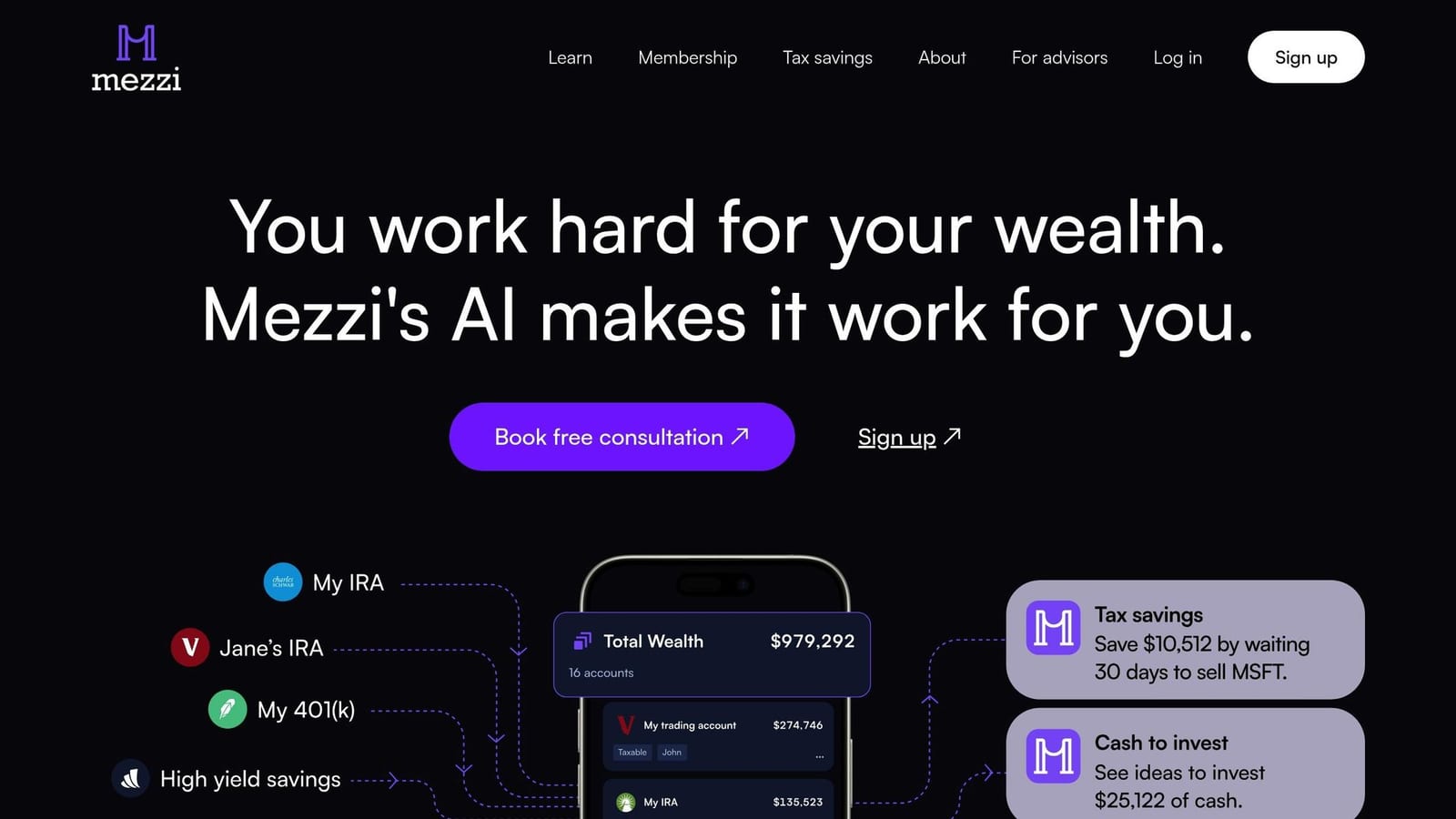
Mezzi combines debt repayment tools with cutting-edge financial management features, helping you take control of your finances. By offering insights into your portfolio, future planning, and tax strategies, it equips you to make smarter decisions for managing debt and building wealth. These tools expand Mezzi's AI-driven debt strategies into a broader financial management platform.
X-Ray Feature: Spotting Hidden Financial Risks
The X-Ray feature digs deep into your portfolio, uncovering risks you might not notice at first glance. Even if your investments seem diversified, this tool can reveal overlapping exposures in specific sectors and highlight areas where high management fees may be eating into your returns. With this information, you can fine-tune your asset allocation to align more effectively with your overall financial goals.
Financial Calculator for Smarter Planning
Mezzi's Financial Calculator goes beyond debt solutions by helping you understand how reducing high-interest debt can impact your future finances. It factors in details like your current portfolio value, expected contributions, projected returns, and the effect of management fees. The interactive design allows you to experiment with different scenarios, showing how redirecting funds from debt payments into investments can accelerate growth over time.
Tax Efficiency Through Debt Reduction
Tax optimization is another crucial piece of Mezzi's platform. It provides targeted advice to help ensure your financial strategies are tax-efficient. For example, it can monitor your transactions to flag potential tax issues, such as wash sales, and offer actionable insights to refine your portfolio. This proactive approach ensures that managing debt and building wealth work hand in hand, minimizing tax burdens while maximizing returns.
Credit Card Payoff vs. Other Financial Strategies
Deciding whether to focus on paying off credit cards or pursuing other financial strategies depends on your unique situation, including interest rates and personal goals. Balancing debt repayment, investing, and maintaining cash reserves requires a clear understanding of the trade-offs.
Paying off high-interest credit card debt often provides a guaranteed return that’s hard to beat. For example, eliminating a credit card with a 24% interest rate effectively gives you a 24% return - something most investments can’t match. This makes paying down high-interest debt a smart move in many cases.
However, there are situations where other strategies might take priority. If your credit card rates are low and your employer offers a 401(k) match, it may make sense to take advantage of that "free money" first. The decision often hinges on identifying the critical interest rate - the point where paying off debt becomes more advantageous than investing.
For many financial experts, that tipping point is around 6% for a balanced portfolio. If your debt carries an interest rate of 6% or higher, focusing on repayment is usually the better choice. This threshold can vary depending on your investment strategy: 5% for conservative investors with 20% in stocks, 6% for balanced portfolios with 50% stocks, and 7% for aggressive investors fully invested in stocks. The table below provides a snapshot of these options.
Comparison Table: Financial Strategy Options
StrategyKey BenefitsMain DrawbacksBest WhenAI Insights from MezziCredit Card PayoffGuaranteed return equal to interest rate; improves credit score; reduces financial stressReduces liquidity; opportunity cost if rates are lowInterest rate ≥6%; high credit utilizationX-Ray feature identifies which debts impact portfolio risk mostEmergency FundProvides financial security; prevents new debt; offers peace of mindLow returns; vulnerable to inflationNo emergency savings; income is unstableFinancial Calculator shows optimal emergency fund size based on expensesRetirement InvestingEnables compound growth; offers tax advantages; captures employer matchingMarket risk; less liquidity; no guaranteed returnsEmployer match available; debt rates <6%; long investment horizonTax optimization prevents wash sales across retirement accountsTaxable InvestingProvides liquidity; potential for higher returns; allows tax-loss harvestingSubject to market volatility; incurs capital gains taxes; no guaranteed returnsDebt rates are low; emergency fund is established; cash flow is strongAdvanced analytics reveal hidden portfolio overlaps and risks
Using Mezzi’s tools, you can refine your financial strategy in real time based on these insights.
The Psychological Edge of Debt Payoff
Beyond the numbers, paying off credit cards has emotional benefits. It can significantly reduce financial stress and improve your credit utilization ratio, which may lead to better terms on future loans, like mortgages or car loans. A stronger credit score can save you money in the long run by securing lower interest rates.
If you’re only able to make minimum payments, tackling debt can free up monthly cash flow, which can then be redirected toward wealth-building opportunities. Mezzi’s Financial Calculator can help you visualize how eliminating debt payments could improve your long-term financial outlook.
Timing and cash flow are also crucial considerations. If your monthly payments are straining your budget or you’re planning a major purchase soon, paying off debt could provide immediate relief. On the other hand, if you have manageable debt rates and a long timeline until retirement, the compound growth potential from investing might outweigh the guaranteed savings of debt repayment.
Most financial advisors recommend a step-by-step approach: build a basic emergency fund, meet minimum debt payments, and capture any employer 401(k) match before allocating extra cash to debt repayment or investments. Mezzi’s dynamic tools can incorporate these priorities into a personalized financial plan that evolves with your goals and circumstances.
Making Smart Financial Decisions with Mezzi
Deciding how to pay off your credit card depends on several factors - interest rates, cash flow, investment opportunities, and your long-term goals. It’s not a one-size-fits-all situation, and your strategy may need to adapt as circumstances change. That’s where Mezzi shines.
Mezzi’s AI-driven platform takes a comprehensive look at your financial picture. By pulling together data from all your accounts, it identifies hidden risks and opportunities that could influence your financial decisions in real time.
One standout tool is Mezzi’s X-Ray feature, which spots potential issues like overlapping investments that could derail your debt strategy. There’s also the Financial Calculator, which lets you compare scenarios - like whether paying off debt or investing would yield better results. On top of that, Mezzi offers advanced tax optimization to help you avoid costly mistakes, such as wash sales, providing expertise that used to require hiring pricey advisors.
What sets Mezzi apart is its ability to provide real-time guidance. As your financial situation changes - whether it’s a shift in interest rates, a raise, or an unexpected windfall - Mezzi adjusts its recommendations on the fly. Concierge, you can choose between a free plan or a $39/month or $399/year Advisory, which includes unlimited AI chat for more in-depth support.
FAQs
How does Mezzi's AI help me pay off my credit card debt faster?
Mezzi's AI dives deep into your financial details to craft a repayment plan that fits your specific needs. It considers crucial elements like interest rates, repayment timelines, your monthly cash flow, and financial goals to suggest the best approach for tackling your credit card debt.
With real-time insights powered by data, Mezzi helps you make informed financial choices, cut down on extra interest costs, and confidently steer your way toward financial stability.
What’s the difference between the Debt Avalanche and Debt Snowball methods, and which one is better?
When it comes to tackling debt, two popular strategies often come into play: the Debt Avalanche method and the Debt Snowball method. Each has its own strengths, depending on your financial situation and what drives you to stay on track.
The Debt Avalanche method targets debts with the highest interest rates first. By focusing on these, you can reduce the amount of interest you pay over time, which could save you more money overall. It’s a logical, cost-focused approach that works well for those who want to minimize long-term expenses.
In contrast, the Debt Snowball method emphasizes paying off your smallest debts first. This approach offers quick wins, giving you a sense of accomplishment early on. That emotional boost can help keep you motivated as you work through your repayment plan.
Ultimately, the choice between these methods depends on your priorities. If saving money is your main goal, the Debt Avalanche method may be the way to go. But if staying motivated is a challenge, the Debt Snowball method can provide the momentum you need to stick with your plan.
How does Mezzi help me adjust my repayment plan when my finances change unexpectedly?
Mezzi simplifies managing your repayment plan, especially when unexpected financial challenges arise. With real-time updates, you can adjust your plan effortlessly to match shifts in your income, expenses, or priorities.
This adaptability ensures you can stick to your debt repayment goals without worrying about missed payments or penalties. By making quick adjustments, you’ll stay in control of your finances and keep your cash flow steady, no matter what life throws your way.
Mezzi is free to get started. Choose Advisory for unlimited advice and advanced features at $39/month or $399/year. Concierge includes the same, plus hands-on support, at $99/month or $999/year.