The SALT Cliff
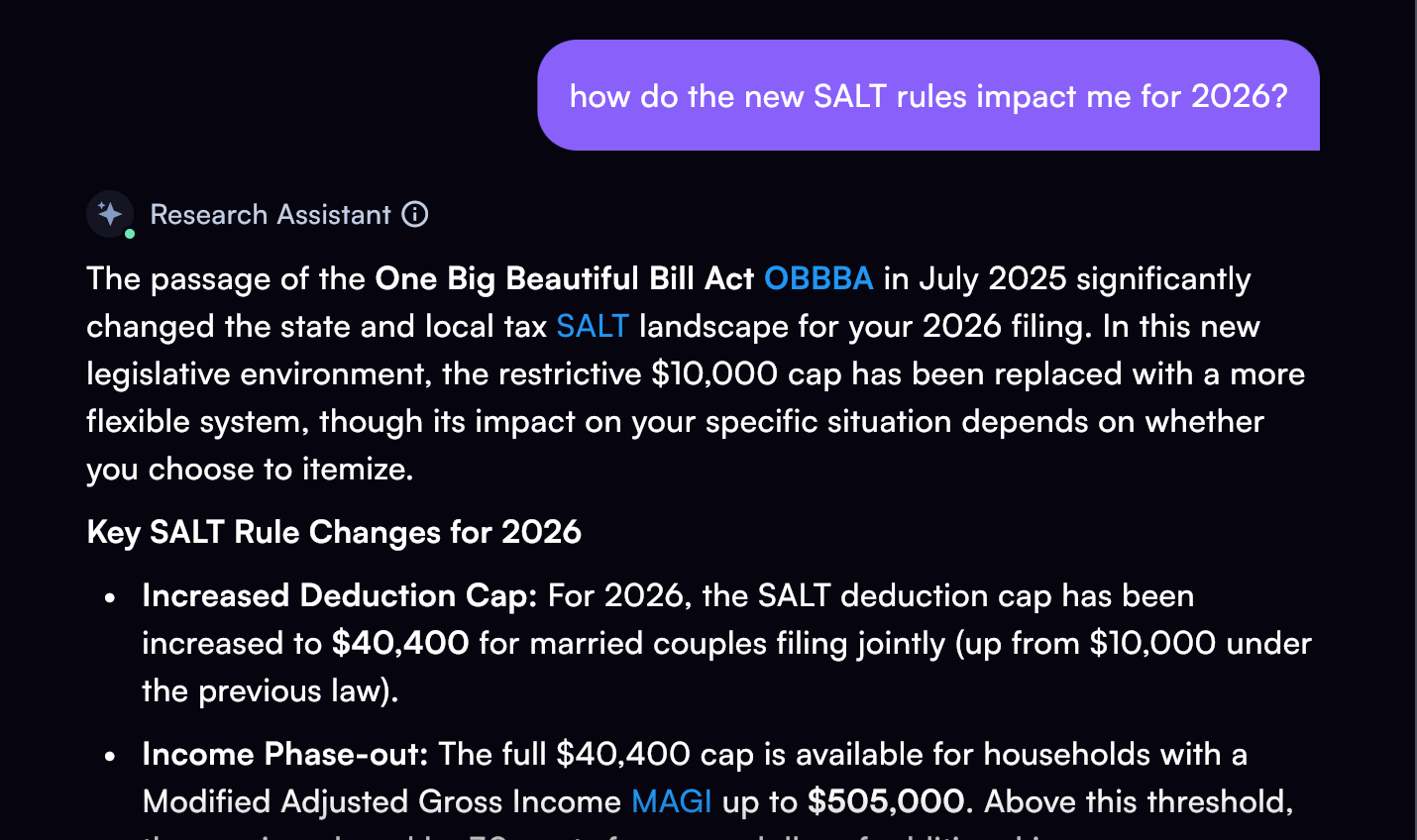
The One Big Beautiful Bill Act was one of the biggest tax law changes in nearly a decade. There's a lot in it, but one provision could directly affect your 2026 tax bill.
**The state and local tax (SALT) deduction cap got a major overhaul.**Yes, taxes are confusing and this one is no exception. That's why we're here!
In short, if you pay state income taxes, property taxes, or both, this matters. The cap on how much you can deduct just *quadrupled* — but a steep income phase-out means some households won't see the full benefit. Here's what you need to know:
What actually changed
For the past seven years, you could only deduct $10,000 in state and local taxes on your federal return, no matter how much you actually paid.
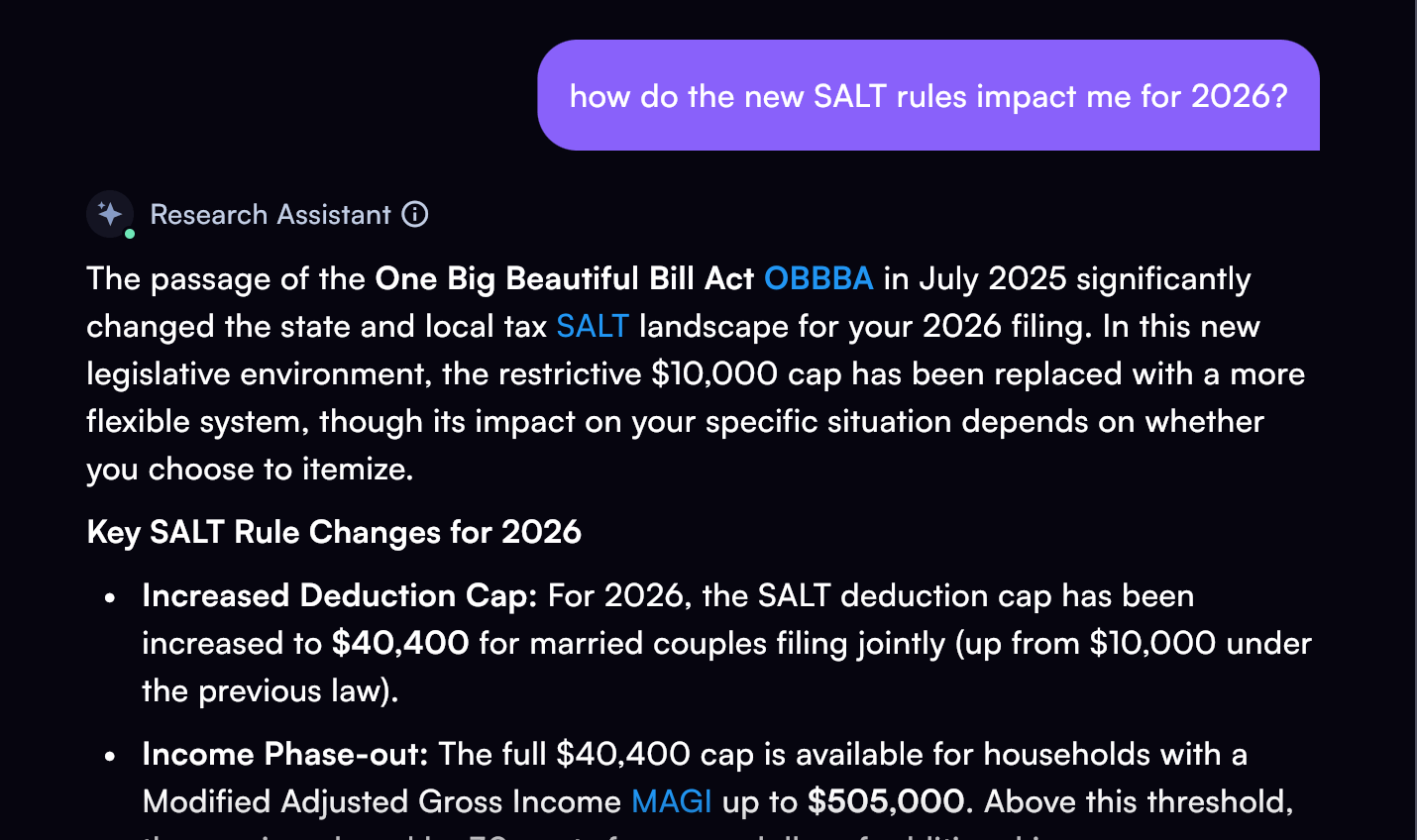
Starting in 2025, that cap quadrupled to $40,000 — and for 2026, it's $40,400 (it increases 1% each year). For most families earning under $505K, this is one of the biggest federal tax cuts in years.
For most households, this is great news. If you pay state income taxes, property taxes, or both, the amount you can deduct on your federal return just quadrupled — from $10,000 to over $40,000. Take a family in New Jersey earning $250,000. Between state income tax and property tax, they're easily paying $20,000–$25,000 a year. Until now, they could only deduct $10,000 of that. Under the new rules, they can deduct all of it. At the 24% tax bracket, that's an extra $2,400–$3,600 back on their federal return.
But there's a catch. If your household income is above $505,000, the new $40,400 cap starts shrinking. For every dollar over $505K, your cap drops by 30 cents. By around $606,000, you're back to the old $10,000 limit.
Here's what that looks like:
• Income of $505,000 → full $40,400 deduction
• Income of $555,000 → deduction isn'tdrops to $25,400
• Income of $605,000 → deduction drops to $10,400
• Income above ~$606,000 → back to $10,000
What makes this painful: every dollar you earn between $505K and $606K doesn't just get taxed at your normal rate. It also shrinks your SALT deduction, so you're effectively paying more than your tax bracket suggests.
Real example: The $505K cliff in action
Two married couples in California, both earning roughly $500,000.
Couple A earns $485,000. They're under the threshold, so they get the full $40,400 SALT deduction. Estimated federal tax savings from itemizing: roughly $14,100.
Couple B earns $565,000, just $80K more. Their SALT deduction drops to $22,400. Estimated federal tax savings from itemizing: roughly $7,800.
Couple B earns more but loses about $6,300 in potential tax savings.
Three moves to consider
**1. Keep income below $505K if you can.**Don't turn down making more money, but max out your 401(k), HSA, and FSA. Push year-end bonuses into next year. Be careful timing large stock sales or option exercises — one event can push you over the cliff.
**2. Use the pass-through business workaround.**If you own an LLC, partnership, or S-corp, most states let your business pay the state tax directly. That counts as a business deduction, not personal SALT — bypassing the cap entirely. For a high-income business owner, this could save $4,000–$10,000+ per year.
**3. Bunch your deductions.**Concentrate charitable giving and elective medical expenses into one year to push your itemized total well above the standard deduction. (Note: Avoid bunching property taxes if your state income taxes already max out your SALT cap anyway).
One important note: these rules sunset after 2029. Don't assume Congress will extend them — plan as if that's the deadline.
How can Mezzi help?
• Mezzi tracks your total income across all sources, such as as salary, bonuses, RSUs, capital gains, dividends, and side income.
• Mezzi can model the SALT cliff alongside your other decisions — Roth conversions, stock sales, charitable giving — so you can see the full picture.
• Mezzi shows you the impact of crossing the $505K line, helping you optimize pre-tax accounts to keep your reportable MAGI as low as possible.
This isn't generic advice. It's your specific income, your specific deductions, your specific state.
IMPORTANT DISCLOSURES
This content is for informational purposes only and does not constitute investment advice or a recommendation to buy or sell any security.
Past performance is not indicative of future results. No guarantee of future performance or outcomes is implied.
Savings and performance examples are hypothetical and for illustrative purposes only. Actual results will vary based on individual circumstances, portfolio composition, market conditions, and fees.