The Mid-Year Contribution Audit
Last week we looked at when to invest. This week is about how much.
The year is half over. It's easy to procrastinate. We're here to make life easier. Use this tear sheet to run your retirement check on time so you don't drift off-target.
Your 401(k): are you on pace?
The 2026 employee limit is $24,500, or $32,500 if you're 50 or older. Most people set their deferral percentage once and never revisit it — and end up quietly behind by midyear without noticing. The reason to check now rather than in November: raising your rate works only if there are enough paychecks left to absorb the increase. Catch a shortfall in June and you've got room to fix it. Catch it in December and the math may not leave you enough runway.
- New for 2026: If you earned more than $150,000 from your employer last year, your catch-up — the extra $8,000, or $11,250 if you're 60 to 63 — now has to go in as Roth, not pre-tax.
- **Mega-backdoor Roth:**And if your employer's 401(k) allows it, this can create tens of thousands more into Roth space each year. The catch is that most plans don't allow it, and most people who could use it have no idea — it's buried in the plan's summary document. Five minutes to check whether yours qualifies.
- **Self-employed or a high earner?**The math changes. A Solo 401(k) lets you add an employer contribution worth up to 25% of your earnings on top of the employee side, up to a combined $72,000 ($80,000 at 50+). You can fund it as late as next year's tax deadline.
The accounts that slip through
**Health savings plan (HSA):**On a high-deductible health plan, the 2026 HSA limit is $4,400 for individual coverage and $8,750 for family, plus $1,000 more at 55+. Fund it through payroll and you also skip the 7.65% FICA tax, which you don't get back if you wait and write a check at year-end.
IRAs: Traditional and Roth IRA contributions ($7,500, or $8,600 at 50+) can be made as late as next year's tax deadline, so there's no rush on the money itself. But if you're eyeing a backdoor Roth, the pro-rata rule looks at the total in your traditional IRAs on December 31. Clearing pre-tax money out — say, by rolling it into a 401(k) — takes weeks. Starting that in June is comfortable. Starting it in late December is not.
None of these moves are dramatic on their own. The hard part is seeing them all in one place, early enough in the year to actually act on them.
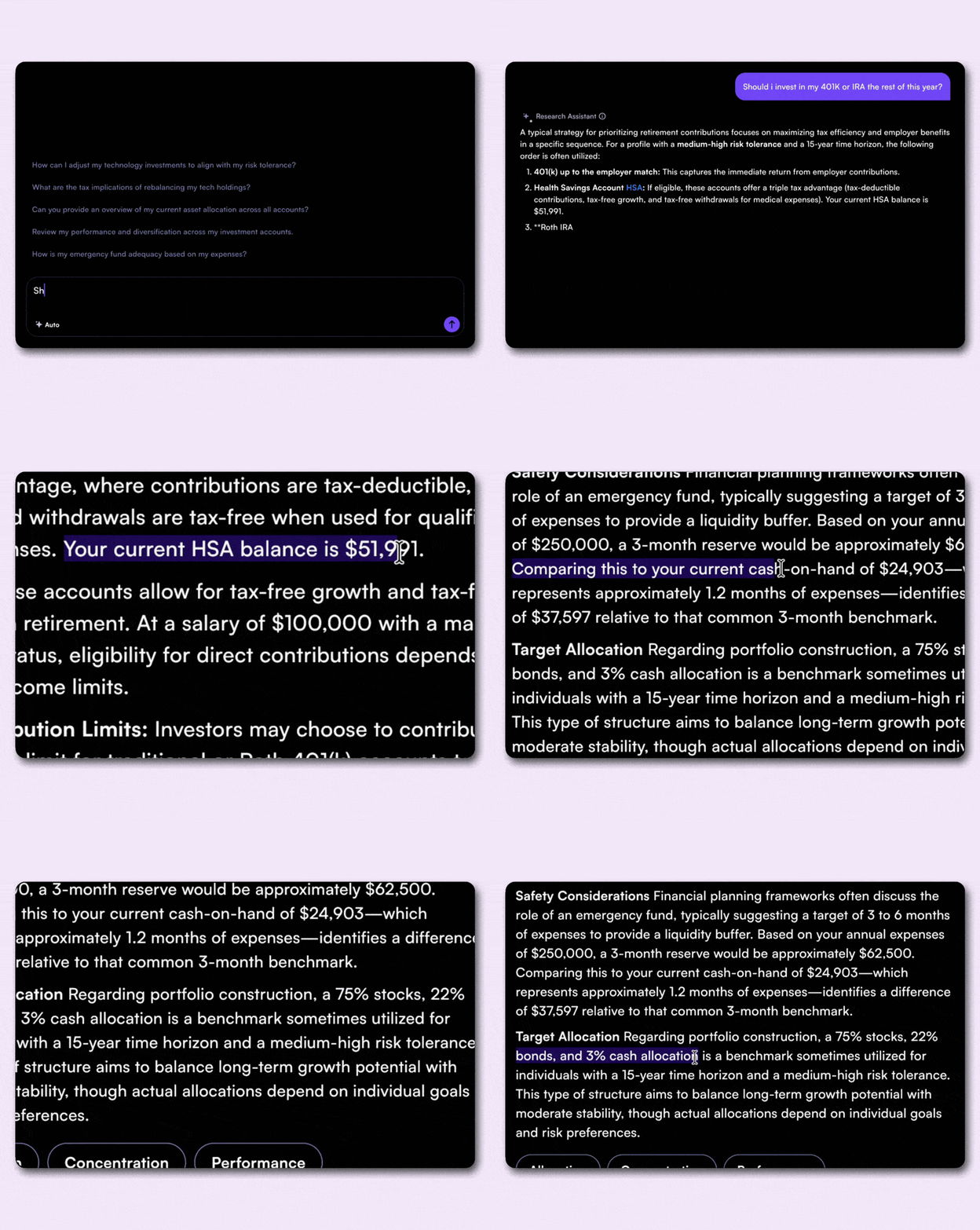
How can Mezzi help?
The mid-year check gets skipped for one reason: logistics.
The accounts live in different portals, the limits live in your head, and "am I on pace?" is a calculation nobody wants to run across four tabs and a spreadsheet.
Mezzi puts every retirement account in one view, so the numbers sit in front of you instead of scattered across logins.
Two simple steps:
- Add your year-to-date retirement contributions to your AI Personalization on the Profile page.
- After that, copy these questions into Mezzi all together or one by one:
The year is half spent. What you do with the other half is still yours to decide — and right now, every move is still cheap.