IPOs and your risk
Three of the largest IPOs in market history are taking shape at once:
SpaceX is on its roadshow now, with a Nasdaq debut targeted for June 12 under the ticker SPCX at a $1.77 trillion valuation.
Anthropic, the maker of Claude, recently filed to go public — no price or date set yet, right after a funding round pinned its private valuation at $965 billion. It's coming.
OpenAI is close behind and could be filing for an IPO soon, likely targeting a valuation that could also cross the $1 trillion mark.
These IPOs matter less for what you should buy and more for what you already own.
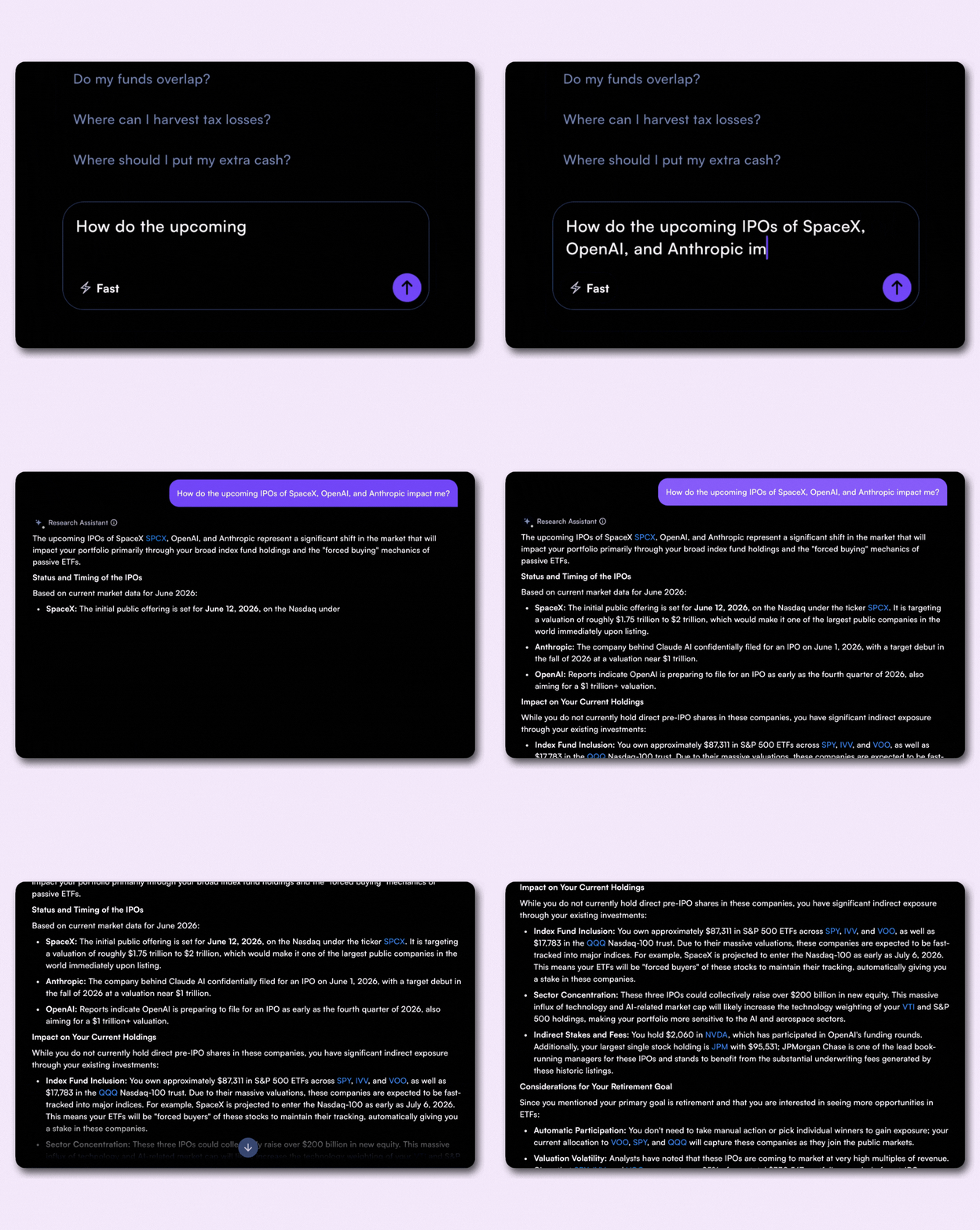
You probably own some already
You don't need to buy a single share for these to reach your portfolio.
Here's what most people miss: the S&P 500 isn't as diversified as it feels. Its ten largest companies now make up more than a third of the entire index — and they're dominated by tech and increasingly one theme: AI. Roughly, that top tier today is:
Nvidia — about 7–8% of the index on its own, bigger than the entire energy or utilities sector
Apple, Microsoft, Alphabet (Google), and Amazon — another ~20% combined
Broadcom — now a top-five holding (~3.5%), even though it isn't one of the "Magnificent Seven"
Meta and Tesla — rounding out the mega-cap group, and that's before counting the chipmakers further down the list
How much do you own?
If you hold VOO, QQQ, or almost any broad U.S. fund, you own all of these — heavily. And because they rise and fall on the same AI story, they tend to move together. A fund that feels diversified can behave like a single concentrated bet on AI.
You may even hold a piece of a soon-to-be-public name already: Microsoft, in nearly every index fund, owns a significant multi-billion dollar stake in OpenAI.
When a new mega-cap lists, index funds have to make room, which can mean:
Forced buying of the new name once it qualifies for an index
Trimming existing holdings to fund it
Short-term volatility around the listing, inclusion dates, and lockup expirations
One nuance worth knowing: a company running a net loss doesn't immediately qualify for the S&P 500, so the near-term effect is mostly a Nasdaq-100 story — its fast-entry rule can pull a large new name in within about 15 trading days. Either way, your allocation can shift without you lifting a finger.
Where Mezzi fits in
These companies aren't public yet — so the move right now isn't to chase them. It's to understand how exposed you already are to the names a big listing would move.
A few questions worth asking Mezzi:
How much of my portfolio is in Nvidia and the other top AI names, across all my accounts?
When you look through my ETFs, which single stock am I most exposed to?
How concentrated am I in tech overall?
Do I have unrealized losses I could harvest if these listings bring volatility?
Once these companies actually list, Exposure X-Ray will show your true exposure to the new names too — looking through every fund and account.
IMPORTANT DISCLOSURES
This content is for informational purposes only and does not constitute investment advice or a recommendation to buy or sell any security.
Past performance is not indicative of future results. No guarantee of future performance or outcomes is implied.
Savings and performance examples are hypothetical and for illustrative purposes only. Actual results will vary based on individual circumstances, portfolio composition, market conditions, and fees.