
AI loan scoring is transforming how lenders evaluate creditworthiness by analyzing over 100 variables, including spending habits and social media activity, using emerging technologies in credit risk mitigation. This has improved accuracy by up to 40%, reduced defaults by 30%, and increased loan approvals for previously “unscorable” individuals by 20–30%. However, these advancements come with ethical challenges:
- Algorithmic Bias: AI can unintentionally reinforce discrimination due to biased training data.
- Transparency Issues: Many AI systems operate as "black boxes", making decisions difficult to understand or explain.
- Regulatory Compliance: Laws like the ECOA and FCRA in the U.S. demand clear, non-discriminatory credit decisions.
Companies like Mezzi are addressing these challenges by focusing on ethical AI practices, including clear decision-making processes, real-time data security safeguards, and human oversight. These steps ensure more equitable and secure lending practices while complying with strict regulations. Ethical AI in lending is not just about compliance but reshaping financial systems to better serve all borrowers.
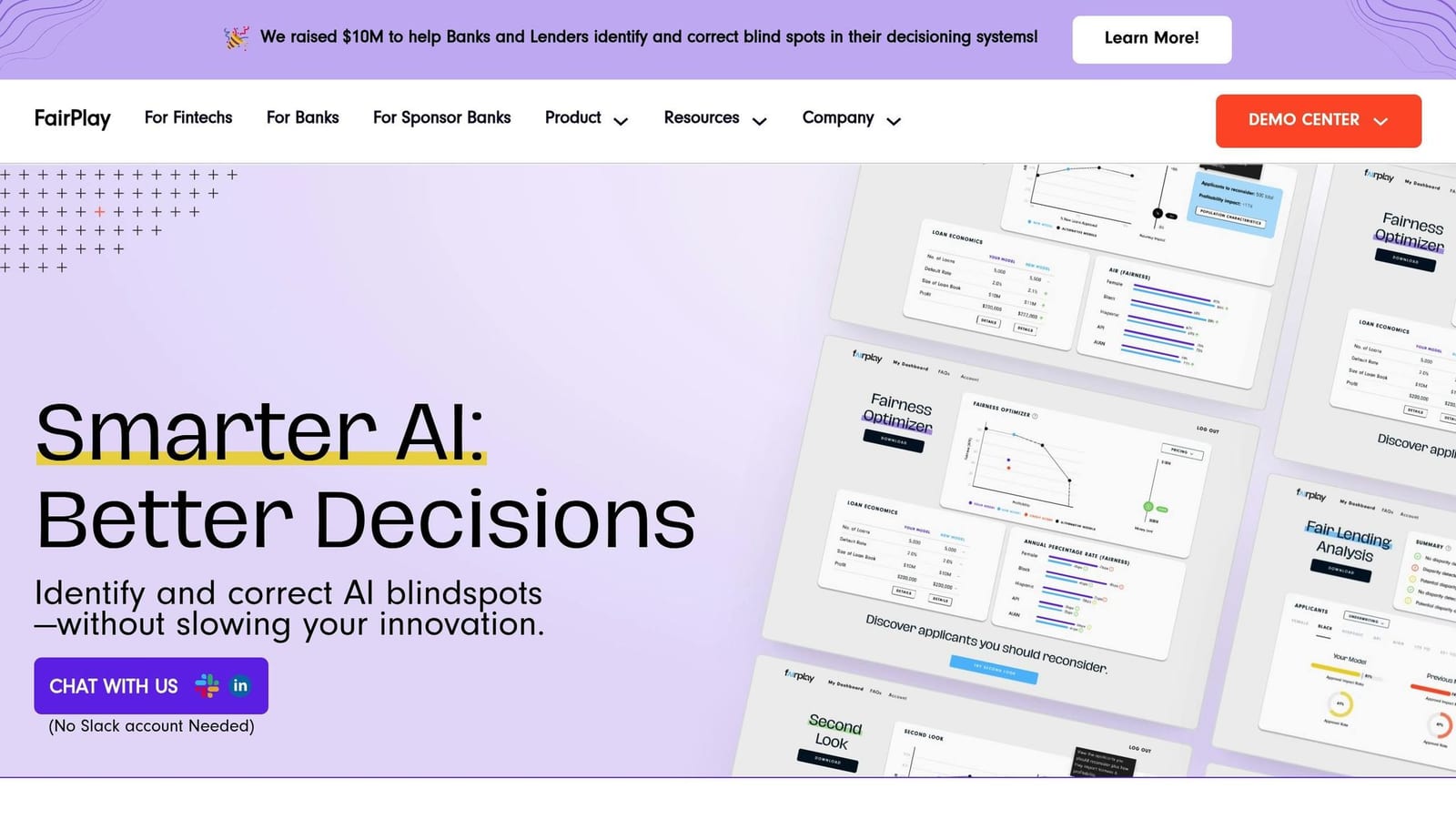
Episode 78 - Teaching financial AI to be ethical and fair, with Fairplay CEO Kareem Saleh
Main Ethical Problems in AI Loan Scoring
AI has brought remarkable precision to loan scoring, but it has also introduced ethical challenges that impact millions of borrowers. These challenges go beyond technical errors - biased algorithms can reinforce discrimination, obscure decision-making, and even violate regulations.
Algorithmic Bias and Its Effects
One of the most pressing issues in AI loan scoring is algorithmic bias. When AI learns from biased historical data, it can unintentionally magnify discriminatory practices.
Here are four common types of bias that affect these systems:
- Historical bias: AI models trained on past data may reflect discriminatory practices, such as redlining.
- Representation bias: When training data lacks diversity, certain communities are underrepresented or overlooked.
- Proxy bias: Algorithms might use variables like zip codes as indirect indicators of protected characteristics, such as race.
- Generalization bias: Models often perform inconsistently across demographic groups, leading to less reliable credit scores for minority and low-income applicants.
For instance, Black homebuyers typically have credit scores that are 57 points lower than their white counterparts. Additionally, over 15% of Black and Hispanic individuals are "credit invisible", and nearly 26 million adults in the U.S. face challenges due to thin or inadequate credit files. Michael Akinwumi, Chief AI Officer at the National Fair Housing Alliance, aptly describes this issue:
AI is like a mirror that reflects what is right in front of it, so all it can do is to reflect the patterns of marginalization that you have in the data.
A 2024 study highlighted this disparity: chatbots were more likely to recommend loan denials for Black applicants than for identical white applicants, with white applicants being 8.5% more likely to receive approval. Similarly, in 2022, Wells Fargo faced accusations of assigning higher risk scores to Black and Latino applicants compared to white applicants with similar financial profiles. As Rice and Swesnik noted:
Our current credit-scoring systems have a disparate impact on people and communities of color.
These examples illustrate the urgent need for ethical AI systems in loan scoring. Tackling these biases requires more transparent and accountable models.
Transparency and Explainability
The lack of transparency in many AI systems - often referred to as the "black box" problem - poses significant challenges in loan scoring. When the reasoning behind an AI's decisions is unclear, it becomes harder to identify discrimination, meet regulatory standards, or build trust with borrowers.
To address this, white box models, which reveal their internal logic, are gaining attention. Techniques like post-hoc explainability tools - such as LIME (Local Interpretable Model-Agnostic Explanations) and SHAP (SHapley Additive exPlanations) - help shed light on the decision-making process of complex AI models.
Regulators are demanding greater transparency. For example, the EU AI Act classifies AI systems used for credit evaluations as "High-Risk." Non-compliance with its standards can result in fines of up to €35 million or 7% of a company’s annual revenue.
U.S. Regulatory Compliance
In the U.S., explainable and transparent AI models are essential to comply with strict lending regulations. Federal laws such as the Equal Credit Opportunity Act (ECOA) and the Fair Credit Reporting Act (FCRA) prohibit discrimination and require fair credit reporting practices.
The Consumer Financial Protection Bureau (CFPB) has emphasized:
A creditor cannot justify noncompliance with the ECOA and Regulation B's [adverse action] requirements based on the mere fact that the technology it employs is too complicated or opaque to understand.
Violating these regulations can lead to severe penalties. Although around 42% of companies now use AI in some form, many are unprepared for the compliance challenges it brings. In recent years, enforcement actions have highlighted the risks:
- In 2022, Hello Digit was fined $2.7 million by the CFPB due to issues with a faulty algorithm.
- In 2023, the EEOC settled an age discrimination case involving AI for $365,000.
- The UK's Financial Conduct Authority censured Amigo Loans in February 2023 for inadequate affordability checks linked to flawed algorithms.
To reduce these risks, financial institutions must adopt thorough compliance measures. These include designing AI models that meet adverse action notification requirements under ECOA and FCRA, conducting regular testing for discriminatory outcomes, and maintaining detailed documentation of AI decision-making. While agencies like the CFPB and FTC provide guidance, the ultimate responsibility for ensuring fairness and transparency lies with lenders themselves.
Best Practices for Ethical AI Implementation
Creating ethical AI systems for loan scoring requires a thoughtful approach. Organizations that excel in this area blend technical know-how with human judgment, resulting in systems that are not only precise but also accountable.
Reducing Bias in AI Models
Addressing bias is the cornerstone of ethical AI development. It starts with using diverse and representative datasets. As Fei-Fei Li, Co-Director of Stanford's Human-Centered AI Institute, aptly states:
If your data isn't diverse, your AI won't be either.
The data collection and preparation phase is crucial. Financial institutions must ensure their datasets reflect all relevant groups, going beyond traditional credit bureau data to capture a fuller picture of borrowers.
During model training, fairness metrics play a vital role in spotting and reducing bias early. These metrics offer different ways to evaluate fairness:
Fairness MetricPurposeEqualized OddsEnsures consistent false-positive and false-negative rates across groups Demographic ParityGuarantees equal distribution of positive outcomes Counterfactual FairnessVerifies decisions remain stable when sensitive attributes change
Testing with synthetic data is another effective way to uncover bias, as it pushes the model to handle diverse, hypothetical scenarios.
Once deployed, continuous monitoring becomes essential. Regular audits of AI algorithms help identify and address any biases that might develop over time.
Reducing bias is just one piece of the puzzle. Transparency is another critical factor in building ethical AI systems.
Building Transparency and Explainability
Bias reduction is vital, but understanding how AI models make decisions is equally important. Transparency transforms a complex system into one that stakeholders can trust. The challenge lies in balancing high performance with clear explanations.
Interpretable models like decision trees and logistic regression naturally provide clarity, making them ideal for high-stakes decisions. These models allow regulators, loan officers, and borrowers to easily follow the reasoning behind decisions.
For more complex models, post-hoc explainability tools such as SHAP (SHapley Additive exPlanations) and LIME (Local Interpretable Model-Agnostic Explanations) can help. These tools highlight the factors that most influenced a specific decision, aiding both regulatory compliance and borrower communication.
AI systems should also provide actionable explanations. Instead of merely stating that a credit score is insufficient, these systems should guide borrowers on how to improve their creditworthiness. Paired with thorough documentation and audit trails, this approach ensures decisions are both transparent and defensible over time.
As one industry expert notes:
Explainable AI reshapes credit risk assessment by making advanced models more transparent and fair. Balancing performance with clarity presents challenges, but the ethical and practical benefits make it a worthy pursuit for any financial institution.
Adding Human Oversight
Human oversight is the glue that binds AI capabilities to an organization’s ethical principles and goals, ensuring automated decisions align with broader values.
Human-in-the-Loop (HITL) systems involve human reviewers at critical decision points, especially for borderline cases or applications that raise red flags. These reviewers provide context that AI might overlook, such as temporary financial setbacks or unique circumstances.
Human-on-the-Loop (HOTL) systems, on the other hand, focus on ongoing monitoring. Trained staff review AI outputs regularly, looking for patterns that could indicate bias or errors. This enables swift action when problems arise.
Effective human oversight requires robust training and protocols. Staff must know how to evaluate AI outputs, spot potential biases, and decide when to intervene. Tools designed to detect bias can also flag decisions for further review.
As one expert puts it:
Human oversight is the bridge that connects AI capabilities with the organization's broader mission and values, ensuring that AI-driven innovations do not come at the expense of fairness, accountability, and trust.
Finally, organizations must establish clear accountability structures. Defining roles and responsibilities for AI decision-making ensures that ethical concerns are addressed promptly. Empowered individuals should have the authority to override automated systems when necessary. This kind of accountability fosters a culture where ethics are deeply embedded in decision-making, ultimately leading to more trustworthy and equitable lending practices.
Mezzi's Approach to Ethical AI in Loan Scoring

Mezzi combines all financial accounts into a single, unified view to create a fair and accurate approach to loan scoring, ensuring ethical AI practices.
Comprehensive Financial Data Collection
One of the biggest hurdles in ethical AI for loan scoring is the risk of incomplete or biased data. Mezzi addresses this by gathering financial information across all accounts, offering a more complete picture of financial behavior. This cross-account tracking reduces reliance on proxy variables, which can often introduce bias into algorithms. By capturing a diverse range of financial activities, Mezzi works to minimize these risks.
Research supports this method, emphasizing that understanding correlations within proxy variables and carefully selecting features can reduce algorithmic bias. Mezzi's approach also allows for targeted data enrichment, helping to balance datasets by ensuring underrepresented groups are properly included during model training.
This thorough data collection forms the backbone for generating insights that are both accurate and actionable.
Transparent and Actionable AI Insights
Transparency is key when it comes to ethical AI in loan scoring, and Mezzi prioritizes this through its focus on explainable AI (XAI). The platform provides clear, personalized insights that explain both a user’s financial status and the reasoning behind AI-driven recommendations.
Mezzi adheres to XAI standards, ensuring fairness and compliance with regulatory requirements. A standout feature is the platform's X-Ray tool, which reveals hidden stock exposures and portfolio overlaps, demonstrating its dedication to clarity. This level of transparency promotes ethical lending by making AI decisions understandable.
Amyn Dhala, Chief Product Officer at Brighterion and Mastercard's Global Head of Product for AI Express, highlights the importance of explainability:
Good explainable AI is simple to understand yet highly personalized for each given event. It must operate in a highly scalable environment processing potentially billions of events while satisfying the needs of the model custodians (developers) and the customers who are impacted. At the same time, the model must comply with regulatory and privacy requirements as per the use case and country.
Mezzi goes beyond just explaining decisions - it also provides actionable recommendations. This is critical, especially since 32% of financial executives cite the lack of explainability as a major concern with AI, second only to regulatory compliance. Features like real-time AI prompts and unlimited AI chat (available with the Advisory) ensure users receive immediate, tailored advice.
Privacy and Security as Cornerstones
In addition to transparency, Mezzi emphasizes user trust through strong privacy and security practices. Safeguarding data is central to ethical AI and ensures users feel confident about their financial decisions. Mezzi’s commitment to privacy and data security is evident in its careful handling of user information.
The platform partners with trusted aggregators like Plaid and Finicity, adhering to strict security standards. It also incorporates privacy-focused features, such as Apple login for anonymized email access, aligning with privacy-by-design principles.
Mezzi further builds trust by maintaining an ad-free experience, eliminating any incentive to monetize user data. This approach encourages users to share their data without fear of exploitation. Additionally, the platform removes personally identifiable information (PII) from datasets, allowing AI models to learn from user patterns while protecting individual privacy.
Rohit Chauhan, Executive Vice President of Artificial Intelligence at Mastercard, underscores the importance of governance in AI:
When AI algorithms are implemented, we need to implement certain governance to ensure compliance. Responsible AI algorithms minimize bias and are understandable, so people feel comfortable that AI is deployed responsibly, and that they understand it.
With these measures in place, Mezzi creates an environment where users can confidently share their financial data, knowing it will be handled ethically and securely.
The Future of Ethical AI in Lending
The landscape of ethical AI in lending is evolving quickly, driven by advances in technology and stricter regulatory measures. The financial services industry is undergoing a major transformation, with AI investments reaching an estimated $35 billion in 2023, including $21 billion specifically in banking. This shift is prompting a reevaluation of ethical standards in lending practices.
Core Ethical Principles
As the challenges facing the industry grow, the focus on fairness, transparency, and regulatory compliance in AI-driven lending continues to sharpen. Machine learning in credit scoring has achieved up to 85% higher accuracy, while explainable AI is meeting the increasing demand for clarity in decision-making. The European Union has classified credit scoring as a "high-risk" application, and the number of legislative proposals on AI surged from 191 in 2023 to 700 in 2024. These trends highlight the importance of embedding ethical principles - not just to comply with regulations but to gain a competitive edge.
Ethics in AI is becoming more than a regulatory checkbox; it’s turning into a core design philosophy. As Medha Rashmi explains:
The future of ethical AI in financial services lies not in resisting technology - but in re-shaping it thoughtfully. This means embedding ethics not as a compliance box, but as a design principle. It means moving from 'can we do it?' to 'should we do it - and how?'
Platforms Like Mezzi: A Model for Ethical AI
Platforms like Mezzi are setting the standard for ethical AI in financial services. By combining comprehensive data aggregation, transparent insights, and stringent privacy measures, Mezzi addresses challenges like incomplete or biased datasets that can lead to unfair lending practices. This approach not only builds trust but also delivers more sophisticated, reliable insights.
This is especially critical as nearly three-quarters of consumers express concerns about certain AI technologies, and 46% of UK financial firms using AI admit to having only a partial understanding of the tools they deploy. Mezzi’s model demonstrates how advanced AI capabilities can be deployed responsibly, with a focus on fairness and privacy.
By integrating such ethical frameworks, platforms like Mezzi are paving the way for the next generation of AI tools that prioritize both financial inclusion and accountability.
What's Next for Ethical AI
Looking ahead, new practices and technologies are poised to enhance ethical lending even further. AI governance is becoming more structured, with institutions forming AI Ethics Boards or AI Risk Committees to oversee use cases, assess impacts, and establish guidelines for fairness and explainability. Human-in-the-Loop (HITL) systems are also gaining traction, allowing AI to make recommendations that are reviewed and approved by humans, ensuring accountability without sacrificing efficiency.
Emerging technologies like synthetic and federated data are addressing privacy concerns by enabling AI models to learn patterns without exposing individual user data. Additionally, ethical AI certifications and audits are likely to become standard for credit risk models, robo-advisors, and insurance algorithms, further solidifying consumer trust.
The financial potential of AI in lending is enormous. Credit scoring services are projected to grow by 67% to $44 billion by 2028, and AI could save the banking sector over $1 trillion by 2030. Advanced AI vs. traditional risk models comparison shows that modern systems analyze ten times more credit variables, improving loan approval rates by 20% to 30% while maintaining risk controls.
Beyond efficiency, ethical AI is opening doors for financial inclusion. By reducing false positives in credit decisions by up to 95% in some sectors, AI systems are helping to identify qualified borrowers who might otherwise be overlooked. With 1.4 billion adults worldwide - 24% of the global population - lacking access to a transaction account, these advancements represent a significant opportunity to extend financial services to underserved populations.
The future of ethical AI in lending isn’t just about embracing better tools; it’s about designing financial systems that are fair, transparent, and accessible to everyone. This commitment to ethics has the potential to redefine both the industry and the lives of those it serves.
FAQs
How do AI-powered loan scoring systems promote fairness and prevent bias in credit decisions?
AI-driven loan scoring systems aim to create more equitable outcomes by relying on diverse and representative datasets during their training process. This approach helps minimize systemic inaccuracies that might otherwise creep into the decision-making process. Additionally, these systems use bias mitigation techniques, such as reweighting or adversarial training, to address and reduce disparities in their evaluations.
Transparency is another key focus. These systems are subjected to routine fairness audits and operate under governance frameworks designed to align with ethical standards and regulatory requirements. Regular monitoring and updates are critical to ensuring they remain accurate and fair as conditions evolve.
How can transparency and explainability be improved in AI-powered loan scoring models?
Improving transparency and making AI-driven loan scoring models easier to understand requires a few essential steps. Leveraging tools like explainable AI (XAI) methods - such as LIME or SHAP - can simplify complex model outputs into insights that people can actually grasp. These tools help translate the "why" behind a model's decisions in a way that's much more digestible.
Another approach is to design transparent 'white box' models that make the decision-making process clear and straightforward. When models are easier to interpret, it becomes simpler to explain why certain loan decisions are made.
On top of that, openly sharing the key factors that influence loan decisions builds trust and shows accountability. Following best practices from the start - especially those that meet regulatory requirements and ethical guidelines - helps ensure fairness while boosting consumer confidence in the system.
What role do regulatory compliance requirements play in creating ethical AI for lending?
Regulatory compliance is essential in guiding the development of ethical AI in lending, ensuring that these systems meet legal, ethical, and operational benchmarks. These standards play a key role in promoting fairness, transparency, and accountability, helping to minimize risks like bias and discrimination in lending decisions.
By adhering to laws such as the Equal Credit Opportunity Act (ECOA) and international regulations, compliance ensures that AI-powered loan scoring systems function responsibly. This not only safeguards consumers and financial institutions but also builds trust, advancing the broader mission of ethical AI in financial services.
Mezzi is free to get started. Choose Advisory for unlimited advice and advanced features at $39/month or $399/year. Concierge includes the same, plus hands-on support, at $99/month or $999/year.