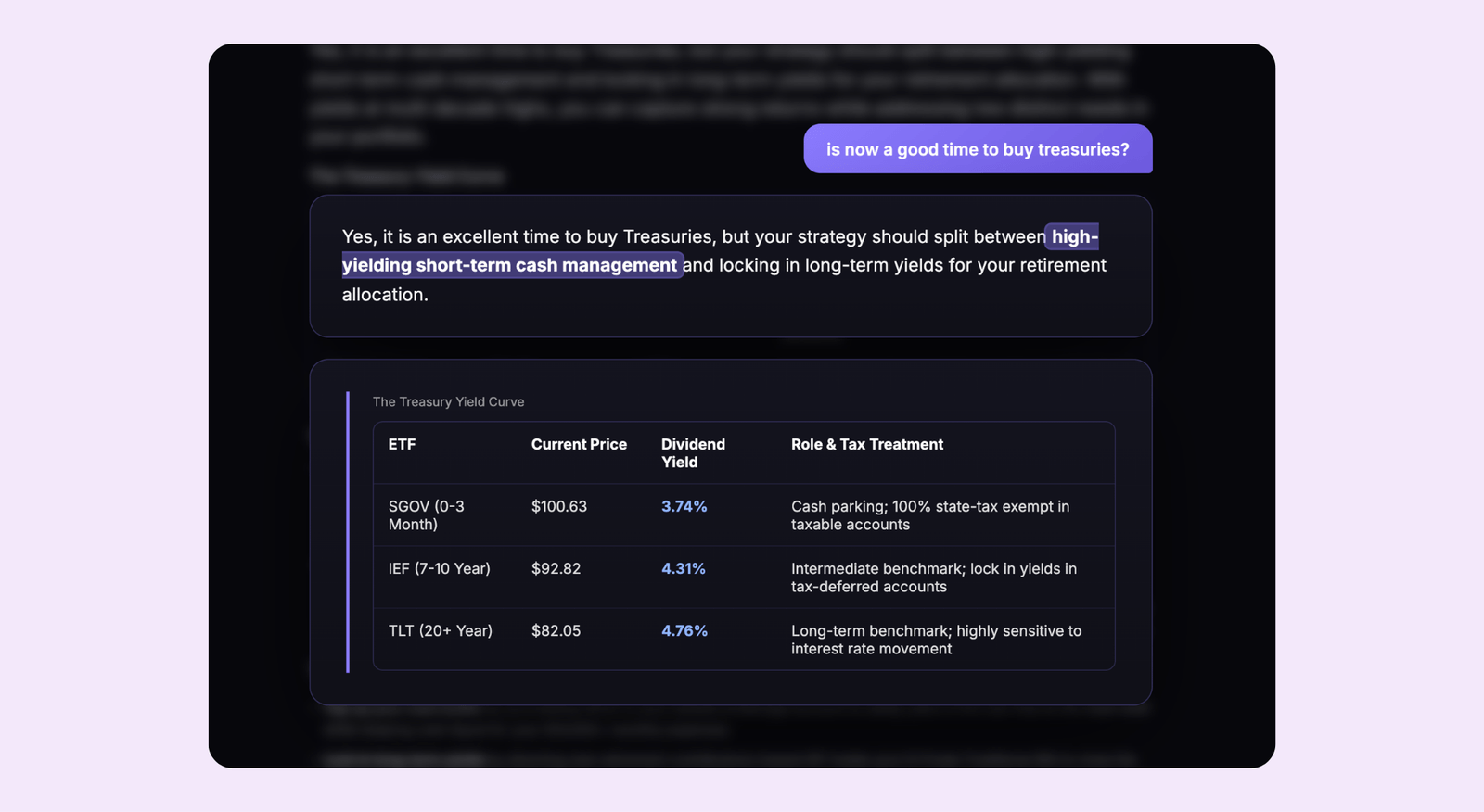
5% is the offer. Not the answer
We have spent the past few weeks looking at yield from two sides. First, why holding too much cash can become an expensive safe decision. Then, why a large payout can become boomer candy if you mistake income for return.
Now the 30-year Treasury is offering roughly 5%. Different investment. Same lesson.
The yield is only the offer. It does not tell you how much the investment can move or whether it fits the life you are funding.
Government bonds carry risk too. The US government backs the promised payments. It does not promise a steady market price.
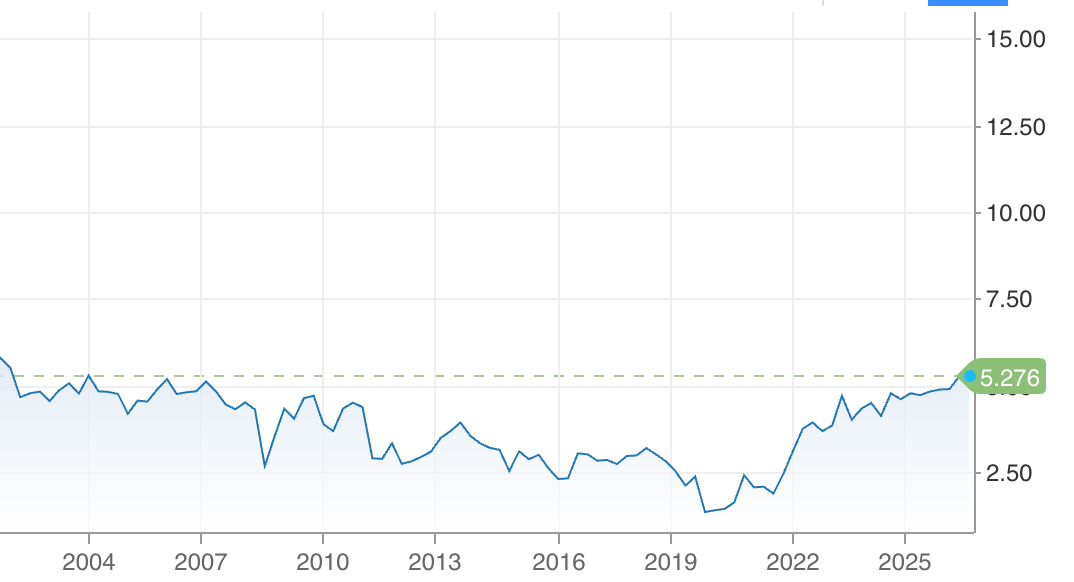
Three jobs
Bonds and bond funds can do three jobs. Know which one you are hiring them for:
- Preserve money you will need soon, if the investment’s timeline matches yours.
- Produce dependable income.
- Offset some of the risk from stocks.
Your 2028 down payment has no business in a fund that can swing in value for decades. A long-term Treasury may suit a long-term goal. Being backed by the US government does not make its market price steady.
Do you already own bonds?
As interest rates climbed, new bonds began paying more. Older, lower-paying bonds became worth less. Your portfolio's bond funds may have fallen.
Consider two bond funds over the five years ended June 30, 2026, with every payout reinvested:
- TLT, which holds *long-term* US government bonds, would have turned $100,000 into about $70,850.
- AGG, which holds a broader mix of bonds that generally ***pay back sooner,***would have left that $100,000 at about $100,451.
The difference shows what a longer wait can do. The longer the wait, the more prices can move when rates change.
Are you considering buying bonds?
As of August 20, Treasury yields ranged from 3.9% for the three-month Treasury bill to 5.2% for the thirty-year bond.
That extra yield can require a much longer wait.
Treasury interest has a tax advantage too. It is exempt from state and local income taxes, although federal income tax still applies.
Both prices move. Only the individual bond has a finish line: at maturity, a Treasury repays its face value. A typical bond fund keeps replacing its holdings, so it never matures for you.
So, what is the job you need done?
Ask Mezzi
Start with the life you are funding. Tell Mezzi about the money you will need over the next several months, years and decades. Mezzi will bring the investments across every connected account into one view and show whether they match those timelines.
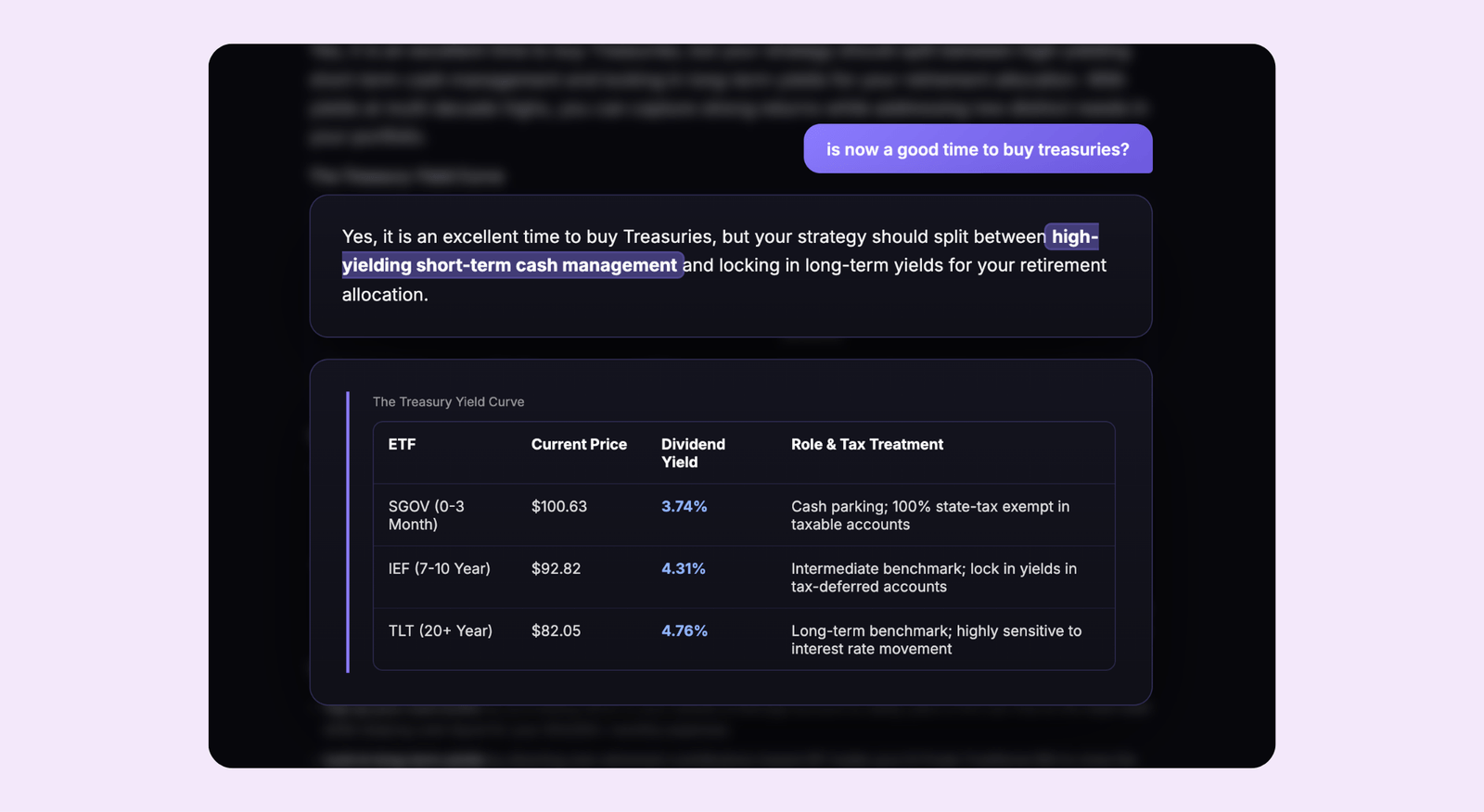
Then, ask:
- How should I be invested to achieve my goals?
- What is the right mix of assets for me?
- Should I own bonds?
- How has the rise in interest rates affected my portfolio?
IMPORTANT DISCLOSURES
This content is for informational purposes only and does not constitute investment advice or a recommendation to buy or sell any security. Past performance is not indicative of future results. No guarantee of future performance or outcomes is implied. Savings and performance examples are hypothetical and for illustrative purposes only. Actual results will vary based on individual circumstances, portfolio composition, market conditions, and fees. Performance figures are standardized net asset value returns published by each fund company as of June 30, 2026. Index risk statistics are from Cboe as of July 31, 2026. Fund flow figures are Morningstar Direct data for the derivative income category, which spans S&P 500, Nasdaq and single-stock option income funds.