What is this money actually for?
American households are sitting on $10+ trillion in checkable and savings accounts. Add in money market funds, and cash tops $15 trillion.
The money underachieving relative to its potential. Most of it earns almost nothing. The average savings account pays 0.38%. Checking pays 0.07%.
The best savings accounts pay around 4.5%. On $50,000, that's about $2,000 a year. For doing nothing but moving the money.
This is the easy choice. But is it the right one?
The silent drain: inflation + taxes
The real return on funds sitting in checking and savings accounts is negative for most people.
Inflation was 3.5% as of last month.
So even if your high yield savings account offer 4.5%, between taxes of 20% + and inflation, your underwater. You just don't see it immediately.
The question isn't "am I earning a good rate?" It's "what is this money actually for?" What the money is for decides everything.
The fix: Simple planning and taking action
You can't predict the future, but at least you can have a plan.
Money you might need this year: emergency fund, a down payment. Keep it in cash. Just make it the 4.5% kind, not the 0.38% kind.
Money you need in one to three years: a wedding, a renovation. You want it there on the date you need it, without giving up too much along the way. Maximize your yield, but don't forget about taxes!
The highest advertised rate is often not the one you keep the most of. Here's what most people miss. Money market funds, Treasuries, CDs and savings accounts are all taxed differently.
You pay full federal and state tax on high yield savings accounts.
Treasury bills and bonds interest is exempt from state tax. Some money market funds are exempt from federal tax.
Money you won't touch for several years: won't touch for seven years or more: this is where cash really hurts. Earning zero after taxes and inflation, versus 5 to 6% in the market, is the difference between two completely different retirements. Over twenty years it's not a small gap. It's the whole outcome.
The mistake isn't holding cash. It's holding long-term money in cash because the headlines are loud.
How can Mezzi help?
I get it. It's hard to stay on top of these decisions. To feel like you are endlessly optimizing.
The beauty of having a financial advisor at your fingertips with Mezzi is that you can delegate the work. I personally love delegating to Mezzi for things like:
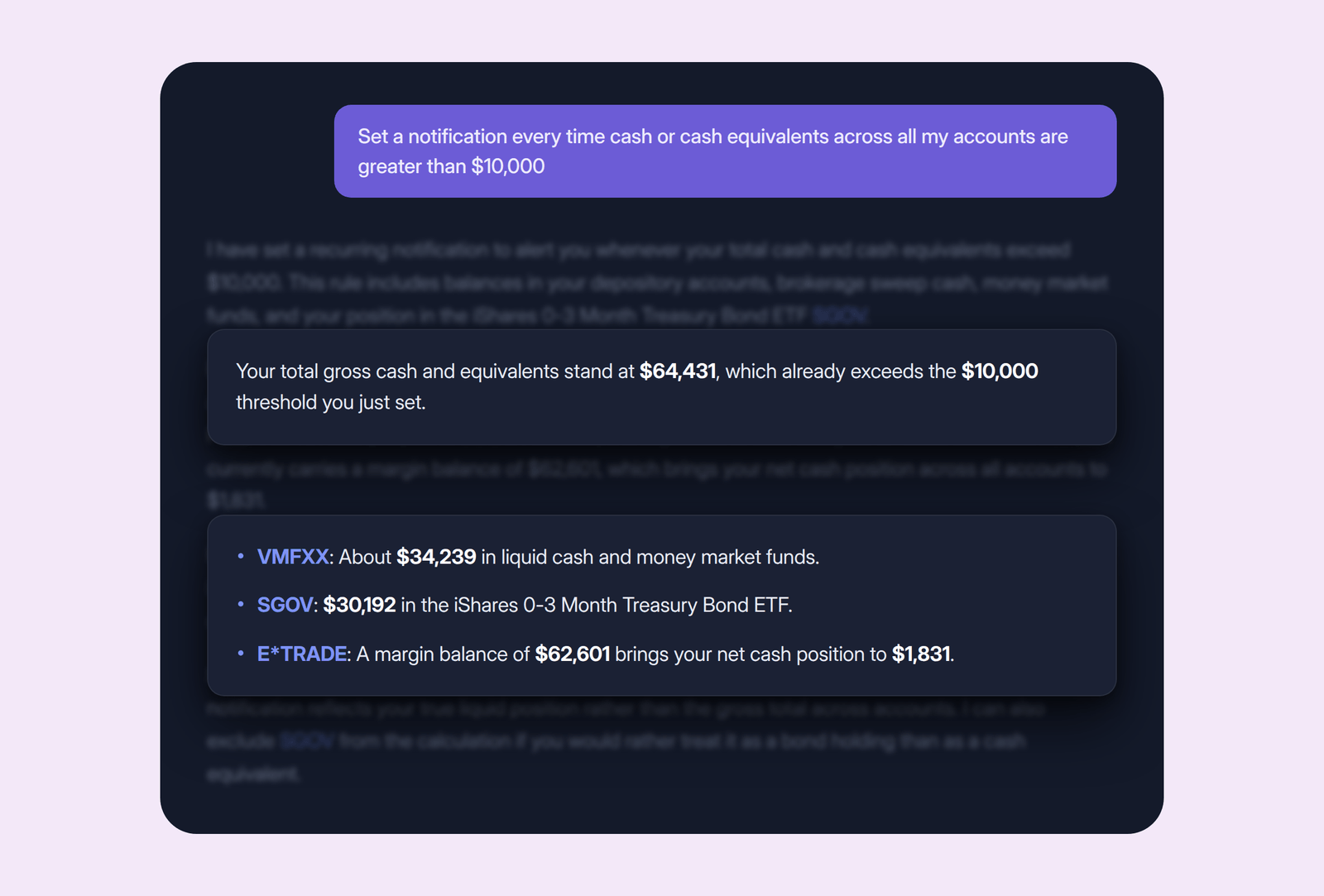
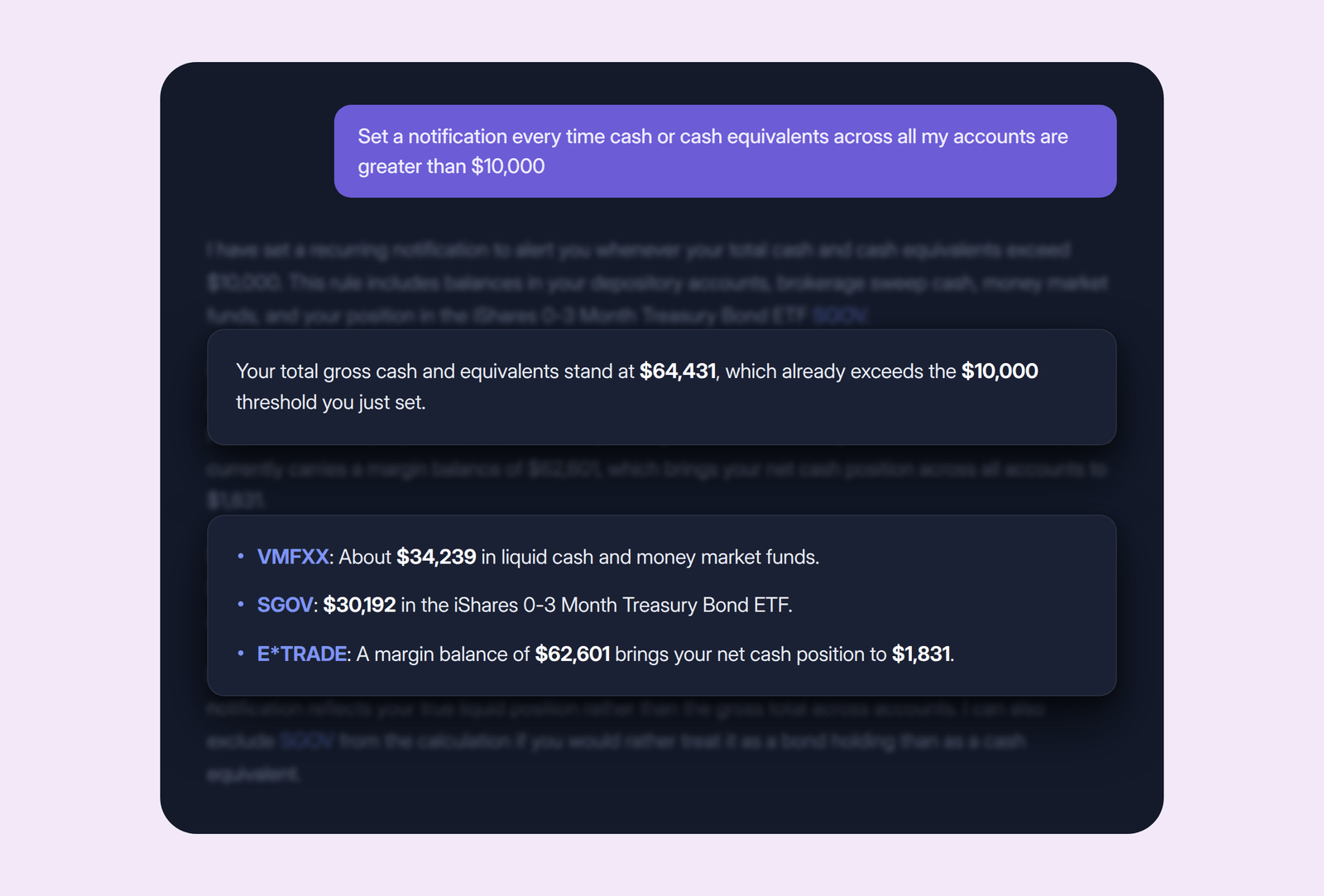
Notify me whenever cash is above $10,000." Or, "notify me when there isn't enough cash to cover my credit card bills.
I also use AI Personalization to feed Mezzi's brain with what matters to me, including my cash needs over many years. Tell Mezzi that $40,000 is your emergency fund, that $80,000 is a down payment in 2028, that the rest is retirement. The guidance changes to match. Same balances, different advice, because the purpose is different. Revisit when things change.
Your cash shouldn't depend on what the Fed does this week. It should depend on what the money is for. And you can now get started with Mezzi for free, no credit card required.
IMPORTANT DISCLOSURES
This content is for informational purposes only and does not constitute investment advice or a recommendation to buy or sell any security.
Past performance is not indicative of future results. No guarantee of future performance or outcomes is implied.
Savings and performance examples are hypothetical and for illustrative purposes only. Actual results will vary based on individual circumstances, portfolio composition, market conditions, and fees.