Changing your portfolio to fit life
Deciding when to retire is stressful. Do I have enough? Can I do everything I want? Will I have to go back to work?
Every week I speak to customers who are going through some version of this. One recent story: a new Mezzi member with two adult children now working and making good salaries. So retirement is now on the horizon for her and her husband. Her focus is on shifting her investment strategy. As she put it: "I have to move into safer territory before I retire, and more into income."
Underneath it, she's asking the two questions this Boost is about: is it time to change your strategy, and how do you make the change?

Deciding: How to know it's time
**Your timeline crossed a line.**A hard fall in stocks can take years to climb back. When retirement is decades away, that's fine: you have time to wait it out. Once you're roughly ten years from living off the money, you may not. You don't need an exact date, just a rough sense of when. If "about ten years, give or take" sounds like you, this signal is yours, even if markets are calm.
**The job of the money is changing.**If you'll soon be taking money out instead of putting money in, the strategy that got you here may not be the one that gets you through.
**A bad year would change your plans, not just your balance.**Run the test: if stocks fell 30% next year, would anything real move? Your retirement date, a house purchase, your sleep? If yes, you're likely taking more risk than your plans can handle.
You can't state your strategy in one sentence."70% stocks, 30% bonds, reset back to that mix once a year, because I won't touch this money for a decade" is a strategy. A collection of stocks and funds you bought for reasons you half remember is not. If there's nothing to stay consistent with, that's the clearest signal of all.
Not on the list: anything the market did this month.
Acting: Making the shift
Say you and your spouse are 63, retiring in two years. You have $900K in a taxable brokerage account, mostly an S&P 500 index fund you've held for years, and $600K across IRAs and an old 401(k). You want to move about $400K from stocks into bonds and income.
Sell $400K of that index fund in a single year and much of it is profit: the growth since you bought, which is what the IRS taxes. Say $200K is profit. Stacked on top of your salary and everything else you earned that year, it can push your total past $250,000, the line for a married couple ($200,000 if you're single), and past it the IRS adds an extra 3.8% tax on investment income.
The goal isn't to avoid the shift. It's to make it in the right order:
**Start inside your IRA and 401(k).**The IRS doesn't tax trades inside retirement accounts, only the money you eventually take out. For the couple above, the $600K in retirement accounts can cover the whole $400K shift, with no tax bill today.
**Spread the selling across tax years.**If you do need to sell in the brokerage account, break it into pieces. All the profit in one year piles into that year's taxes and can push you into higher rates. Smaller slices can stay at lower rates and under that $250,000 line.
**Use your losers to cancel your winners.**At tax time, losses cancel profits dollar for dollar. Sell $30K of profit and $30K of losses in the same year and the taxable profit is zero.
Done in that order, changing strategy stops being one big, expensive decision and becomes a glide you control: same destination, often a smaller tax bill, and no single day where everything rides on your nerve.
How Mezzi helps
Mezzi is built around the same test: your strategy should track your life, not just the market. It sees everything you and your family hold—brokerage, retirement, banking, and loans in one picture, so you can check whether the portfolio still fits the job ahead of it.
And when it's time to shift, you can see what a change would cost before you make it, not after the bill arrives.
First, explain your rough plan or goals to Mezzi.
Then, ask:
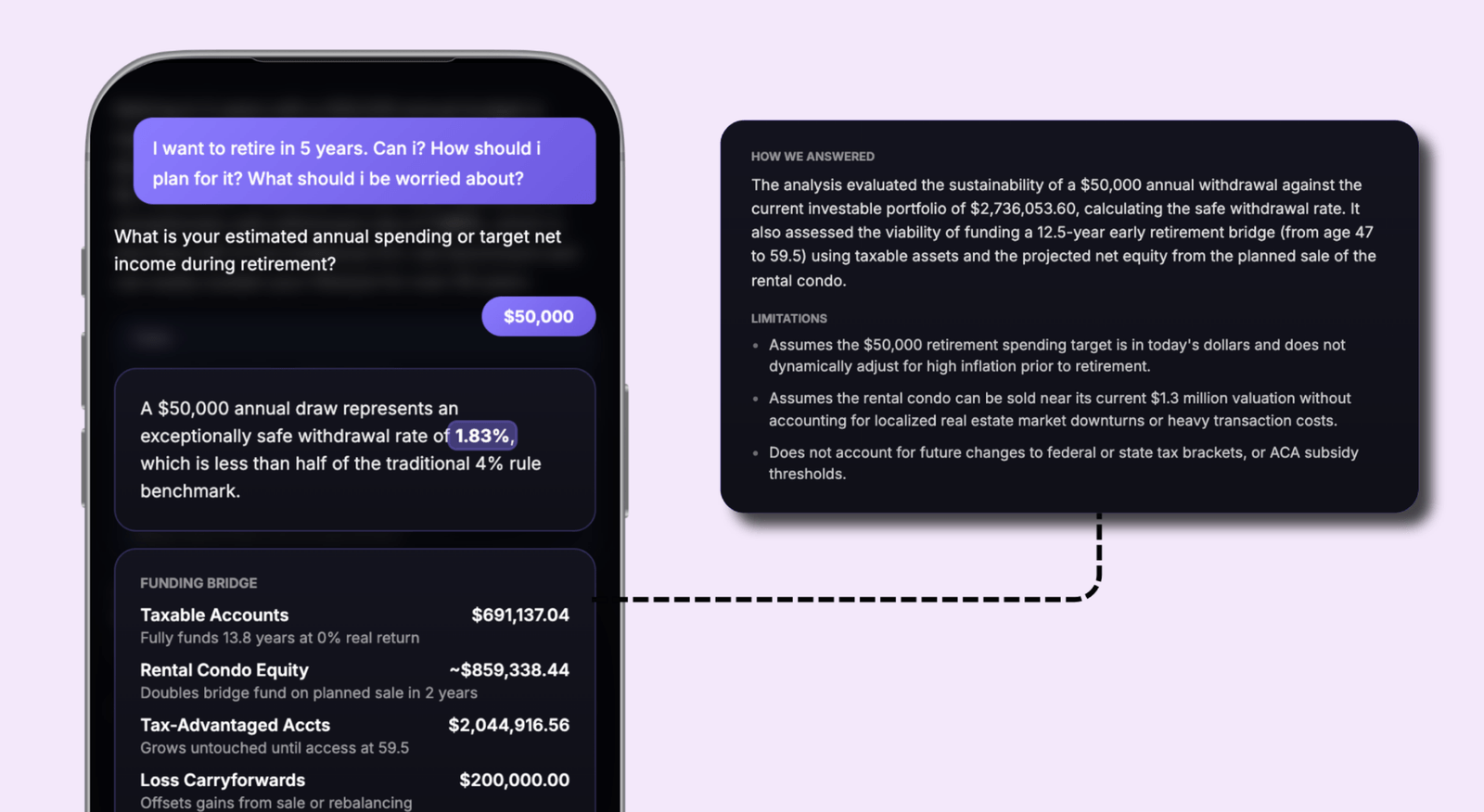
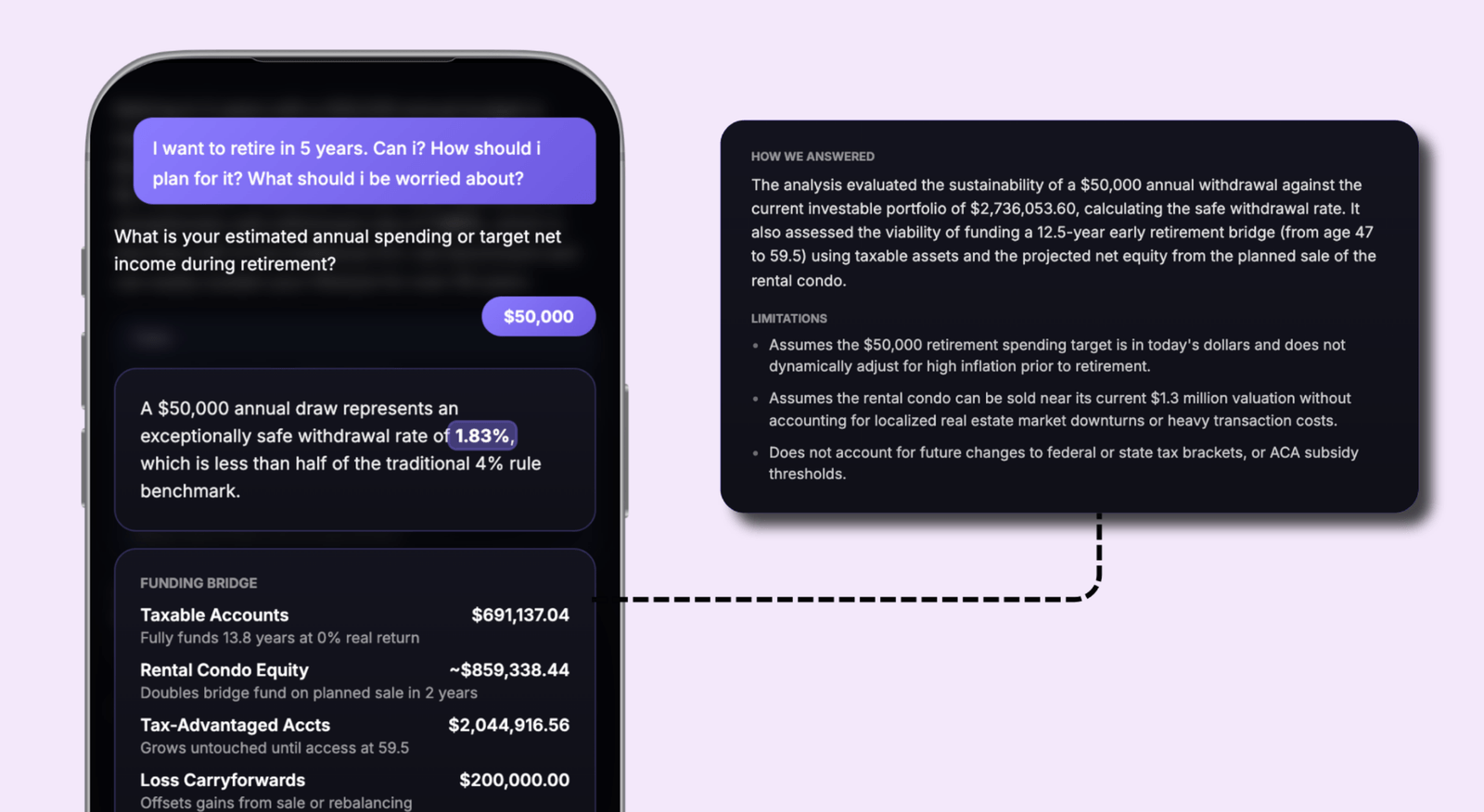
- "I want to retire in five years. What do I need to do to achieve that plan?"
- "If stocks fell 30% next year, what would it mean for my plan?"
- "What's the cheapest way, tax-wise, to shift 20% of my portfolio from stocks to income?"
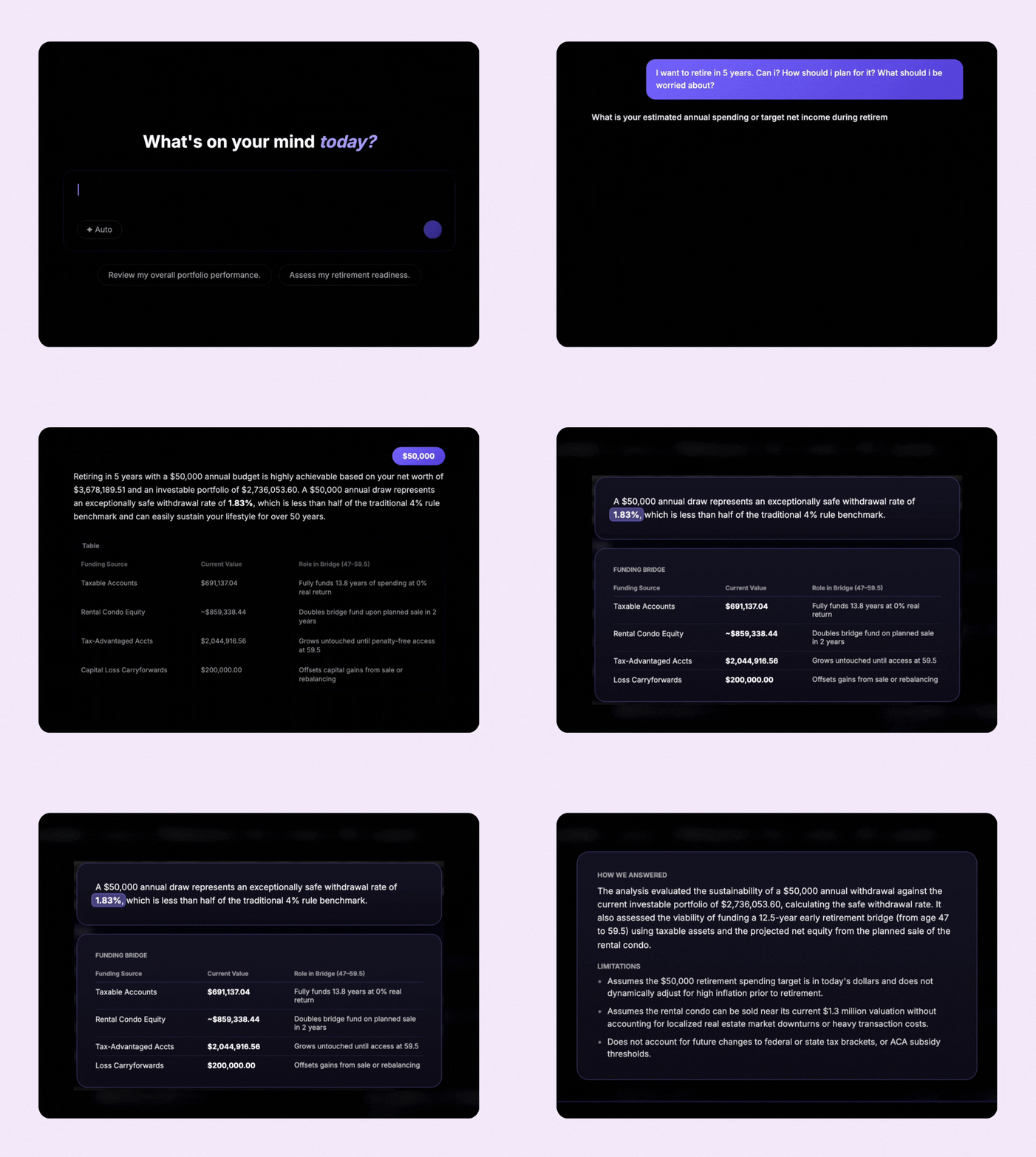
Get advice that shows its work, across all your accounts—for free. No appointment needed.
IMPORTANT DISCLOSURES
This content is for informational purposes only and does not constitute investment advice or a recommendation to buy or sell any security.
Past performance is not indicative of future results. No guarantee of future performance or outcomes is implied.
Savings and performance examples are hypothetical and for illustrative purposes only. Actual results will vary based on individual circumstances, portfolio composition, market conditions, and fees.