Even if you didn't make this bet, you're in it
You’ve seen the headlines about an AI-fueled frenzy. If your accounts have felt unsteady lately, the two are connected. You never had to buy anything risky for this to reach you.
Roughly $198 billion now sits in leveraged exchange-traded funds (ETFs): funds that borrow money to double or triple an index's daily move. For example, if the Nasdaq rises 1% in a day, a 3x fund aims to rise 3%. If it falls 1%, the fund falls 3%. That promise resets every morning, which is why these funds can never sit still.
About 85% of that money is riding on tech, AI, and chip stocks. You will probably never own one. It doesn't matter.

Money that never asks the price
To return two or three times the market's move every day, a leveraged ETF must buy more as prices rise and sell more as they fall. It's automatic. No human deciding, no waiting for a better price. Last month alone, these funds bought more than $100 billion of stock, much of it in chipmakers.
It buys what you already own
All that buying lands on the same few giants that already dominate the funds you hold. The ten largest companies now make up nearly 40% of the S&P 500, almost double their share a decade ago. They are the top holdings in your index fund, your Nasdaq fund, and the target-date fund in your 401(k).
So borrowed money is pressing on the exact stocks you own. It works in both directions. Rising prices bring more buying. Falling prices force selling, which drives prices down faster. The same names that carried your fund up will carry it down.
Korea has already run the experiment. In late June, leveraged bets on two chip stocks unwound so fast the funds dumped billions in a single day. Their market fell about 10% before trading was halted.
The swings aren't yours
If your balance has moved more than usual, this is much of the reason. The swings are not random, and they are not about you. They are borrowed money moving through a handful of stocks you happen to own.
This isn't an argument for selling. Staying invested is how wealth compounds. It's an argument for knowing exactly how much of your money sits in those few names.
How can Mezzi help?
When your portfolio moves and you want to know why, you can just ask Mezzi. It sweeps every account into one view (brokerage, 401(k), IRA, crypto, bank), so the answer is about what you own, not the market in general. Try asking:
- "Has my portfolio gotten more volatile recently?"
- “How exposed am I to AI and chip stocks across all my accounts?”
- “Do my funds overlap in the same handful of top holdings?”
- “If chip stocks fell 20%, how much would my portfolio move?”
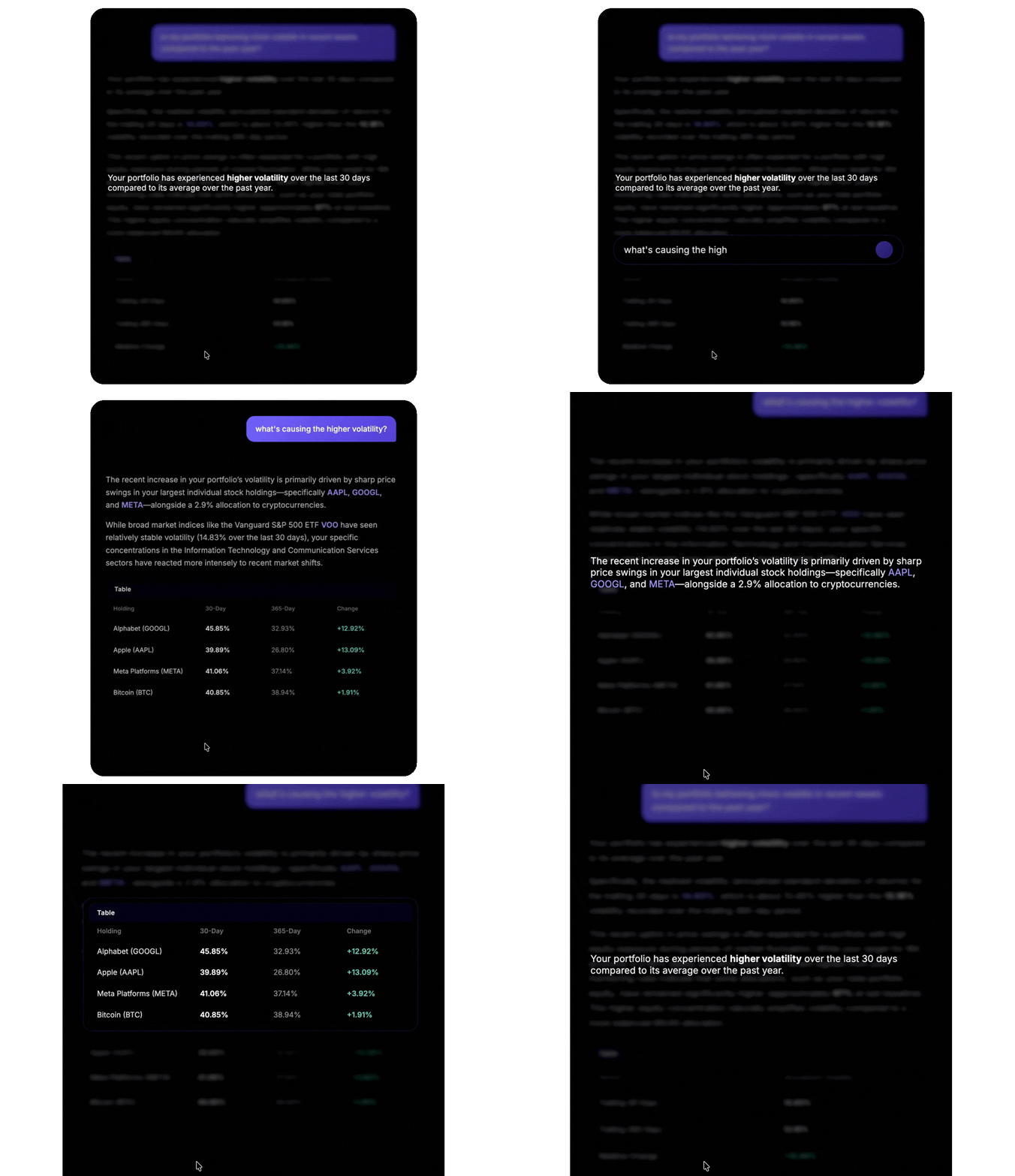
And if the answer changes how much risk you want to carry, update your risk tolerance on your profile page. Mezzi weighs it against your age, your retirement timeline, and your goals, and adjusts what it tells you.
Mezzi doesn't sell you anything or take a cut of your assets. Its only product is an honest answer.
You can ask every one of those questions today, for free.
IMPORTANT DISCLOSURES
This content is for informational purposes only and does not constitute investment advice or a recommendation to buy or sell any security.
Past performance is not indicative of future results. No guarantee of future performance or outcomes is implied.
Savings and performance examples are hypothetical and for illustrative purposes only. Actual results will vary based on individual circumstances, portfolio composition, market conditions, and fees.