
The BoostMezzi’s Sunday email about one decision shaping your wealth.
An election can change the headlines overnight. Your portfolio still has to serve your own deadlines.
Midterm elections bring two prediction contests: who wins in November, and what stocks do next. You do not need to win either one to prepare your finances.
What does midterm history say about stocks?
First Trust’s study of the 19 midterm elections from 1950 through 2022 reports these S&P 500 figures:
| Measure | Historical result |
|---|---|
| Average maximum drop from the start of the midterm year to Election Day | 16.2% |
| Positive returns in the 12 months after Election Day | 19 of 19 elections |
| Average return in those 12 months | 18.8% |
The 16.2% figure measures the largest decline during each pre-election period, then averages those declines. The return figures measure the following year; they are not returns on Election Day. The study uses index total returns and does not account for an investor’s taxes or trading costs.
Nineteen elections do not guarantee a twentieth result, and they do not show that elections caused the returns. The ride can remain rough after voting. In 2018, for example, the year’s market low arrived on December 24, after the midterms, as First Trust’s historical table shows.
Four decisions you control
Keep long-term money working. Election headlines may change daily without changing your long-term goals. If your diversified plan still fits your finances and tolerance for risk, keep following it and making contributions you can afford. Investor.gov explains why your time horizon and risk tolerance should shape your mix of stocks, bonds and cash.
Cover upcoming expenses. Tuition, taxes and retirement withdrawals still come due if stocks fall. Identify the money you need soon and where it will come from so those bills do not depend on a quick market recovery.
Check investment overlap. A policy surprise can affect an industry, but the risk to your portfolio depends on what you own. Look across funds, retirement accounts and employer shares for the same companies. Several funds can still leave you concentrated in a few holdings. Mezzi’s Exposure X-Ray can help reveal holdings inside funds.
Review taxable losses before trading. A pullback may leave losses in a taxable account. Realizing a capital loss may help offset gains, but check your cost basis, holding period and replacement purchases first. The IRS rules on capital losses and wash sales can affect whether and when a loss is deductible. Discuss a trade’s tax consequences with a qualified professional.
Put your plan on a schedule
If you do not have an investment plan, start with your goals, finances, upcoming cash needs and comfort with risk. If you already have one, check whether those inputs changed before you change your investments. Then ask Mezzi for a Delegation: a scheduled check-in on your progress and next steps.
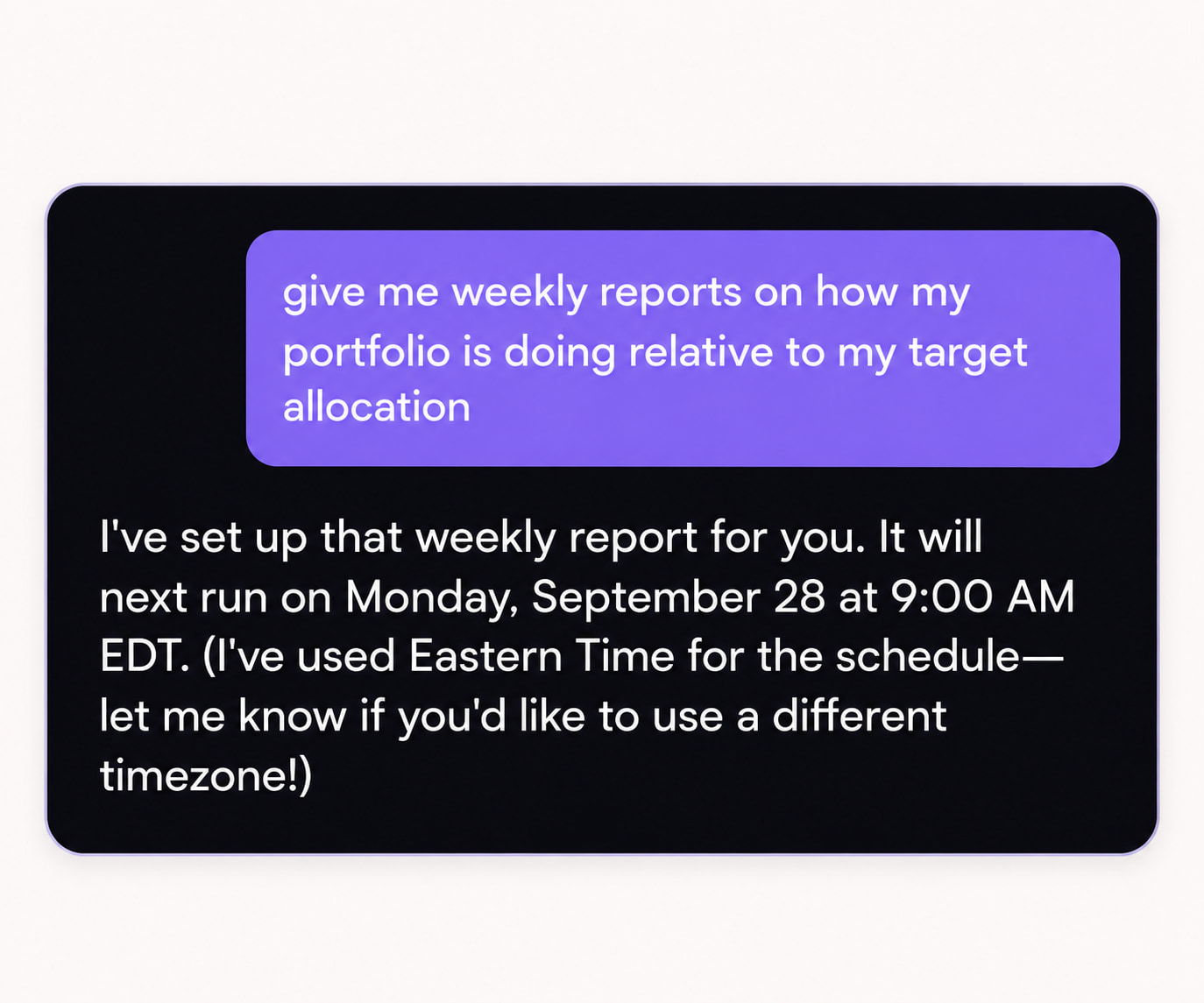
Ask Mezzi
Does my investment plan still fit my goals and upcoming cash needs? Where might my holdings overlap, and what should I review before making a tax-related trade?
Build your plan. Stay on track.You cannot choose the election outcome or the market’s next move. You can decide what your money needs to do, and keep checking that your plan still fits.