Updated September 26, 2026.
The Boost · Mezzi’s Sunday email
Archived article dated November 4, 2024. This page preserves the founder story and historical images, with September 26, 2026 corrections to product risks and comparison methods. See current membership options and the Mezzi help center for today’s product details.
Just the other day, two friends reached out with an investment question, sparking the perfect inspiration for this week’s edition of The Boost.

Remember, when it comes to investing, nobody's a "dummy." Finance is a big, complicated, ever-changing world, and we’re all continuously learning together. I personally learned something new from this question and even made some of my own moves with my cash while writing this.
Historical background: The original issue discussed late-2023 interest rates. The chart below is retained for that context and is not a current rate quote.
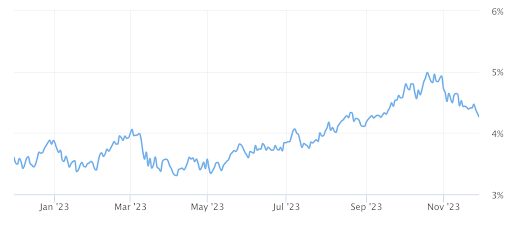
The durable question is how to earn income without taking risks that conflict with when you need the money. Deposits, investment funds, and long-term bonds are not interchangeable forms of cash.
What you need to know
There's a multitude of paths to earn passive income or 'yield.' These options vary in terms of principal risk - the likelihood of your initial investment (say, $100) depreciating even as you earn, for example, a 5% annual yield.
Five income options with different risks
Compare access, principal risk, insurance, and the measurement used for yield before choosing by the highest advertised number.
| Option | Main job | Risk or access detail to check |
|---|---|---|
| High-yield savings | Accessible bank savings | Variable rate, account terms, and deposit-insurance coverage |
| Money market deposit account | Bank savings with account-specific payment features | Minimums, transaction terms, and insurance coverage |
| Money market fund | Short-term investments through a fund | No FDIC insurance; value and yield are not guaranteed |
| Bank CD | Money committed for a defined term | Early-withdrawal terms, insurance limits, and renewal rate |
| Treasury security | Government debt with a specified maturity | Market value can fall before maturity; match term to cash needs |
Savings and money market deposit accounts: At an FDIC-insured bank, eligible deposits are insured within applicable limits. The standard limit is $250,000 per depositor, per insured bank, per ownership category, not automatically for each separate account. Check payment features and rate terms rather than assuming every account of one type works identically. FDIC coverage
Money market funds: These are investments in short-term instruments, not insured bank deposits. A government fund, prime fund, and tax-exempt fund have different holdings and risks. Review the prospectus and dated yield definition; do not subtract an expense ratio again from a yield already reported net of expenses. SEC money market fund guide
CDs: Compare maturity, withdrawal penalties, whether a CD is callable, and how you would access money early. A brokered CD may require a secondary-market sale at a price below its purchase value. A fixed rate is useful only if the timing and terms suit your need.
Treasuries: Bills and long-term bonds serve different time horizons. Treasury bonds are issued for 20 or 30 years and pay fixed interest every six months. Selling before maturity exposes you to the market price; low credit risk does not mean stable resale value. A long-term bond is not automatically a suitable substitute for an emergency reserve. TreasuryDirect bond terms
An equity fund such as the Vanguard High Dividend Yield ETF (VYM) exposes your principal to market fluctuations. The following simplified example compares hypothetical cash income and capital appreciation; it is not a reconstruction of VYM’s historical performance.
| Assumption | Cash income | Capital appreciation | Ending value including cash income |
|---|---|---|---|
| Savings: constant 5% annual simple interest | $1,500 | $0 | $11,500 |
| Equity fund: $350 annual cash distributions (3.5% of the initial $10,000) and 18% total price appreciation | $1,050 | $1,800 | $12,850 |
This illustration is not a forecast or a verified historical return for VYM. Actual savings rates, dividends, and share prices vary; an equity fund can lose principal.
Note, this is a very simplistic comparison. A few issues to keep in mind:
- Timing can highly influence returns.
- Actual interest rates can change, so the constant-rate savings assumption is not a historical result.
- The dividends paid could also fluctuate based on the dividends paid by the underlying holdings.
Check out this prior edition of The Boost for insights on returns from investing in the stock market versus earning interest from the above-mentioned types of investments, as well as the tax implications of generating interest from passive income. Rates can rise or fall, changing reinvestment income.
Disclaimer: Mezzi doesn't endorse any specific offerings from American Express, Ally, or Vanguard. These examples are merely for illustrative purposes.
Match the money to the deadline
Editorial update, September 26, 2026. Suppose a household has $50,000 in cash: $15,000 for bills, $20,000 for a known expense in six months, and a $15,000 reserve. Those labels account for the full balance. A higher-yielding product does not make any of it automatically available for long-term investing.
For the six-month expense, first establish access and principal needs. If two otherwise suitable options differed by a hypothetical 0.50 percentage point annually, the simple six-month difference on $20,000 would be about $50 before tax. Compare that amount with the inconvenience, transfer timing, or risk you would accept. This is a calculation, not a current rate comparison.
For an emergency reserve, ready access may matter more than that small yield difference. For money with a genuinely longer horizon, a separate investment decision can consider price volatility and total return. A dividend or interest payment alone does not describe the total result.
How Mezzi can help
In the original issue, I described using Mezzi to:
- Manage my cash balance
- Optimize my passive income in taxable and tax-advantaged accounts like my IRA
- Compare my returns from passive income to appreciation in my investments
- Compare fund costs when reviewing yield opportunities
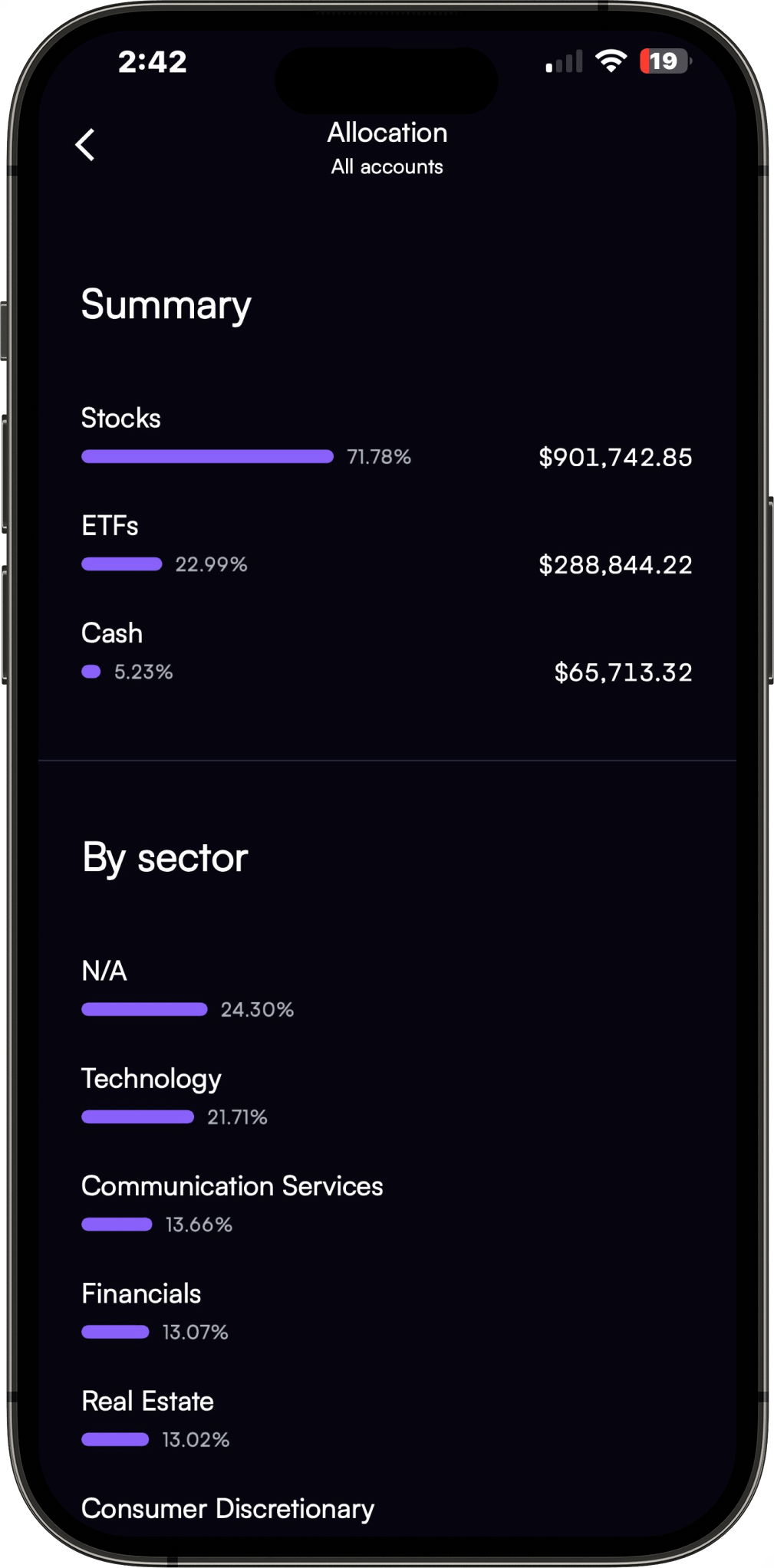
Explore Mezzi today. See how your available accounts and personal goals fit together.
Explore MezziFor current product details, visit the Mezzi help center.
This archived newsletter is educational and is not personalized investment, tax, or legal advice. Historical product descriptions, prices, and market examples may no longer apply. Investing involves risk, including loss of principal.