Updated September 26, 2026.
The Boost · Mezzi’s Sunday email
Archived article dated November 4, 2024. This page preserves the founder story and historical interface images, with a September 26, 2026 explanation of account and provider restrictions. See current membership options and the Mezzi help center for today’s product details.
In response to last week’s Boost, I got this question from my friend Josh.
"Hey! This made me think about my self-directed 401K and IRA. I don't think most of those
investment ideas are available except for YVM, right?"
Josh was wondering if the high-yield investment options we highlighted were available in his investment accounts. I can sympathize. Investment options across the different platforms and account types are quite confusing. Just the other day, I set up a 529 account for my son with Vanguard. These are accounts with special tax benefits designed to save for your child’s education. They also come with a limited selection of investment options. Here's what I see in the account: No tickers. I can’t even click on “Vanguard 500 Index” to learn more about what it is!
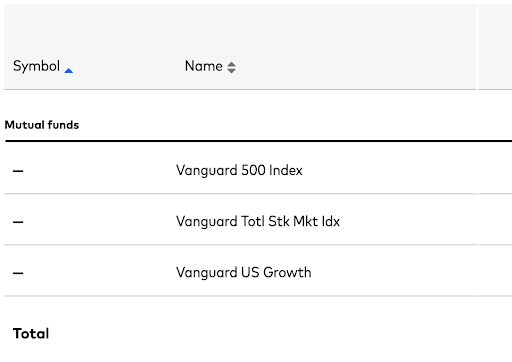
As someone who has a lot of different investment accounts, this is so frustrating. I can’t even figure out how to make a new investment in the account. I may have to pick up the phone and call Vanguard to figure this out 🤯.
What you need to know
Tax benefits and regulatory requirements will impact your flexibility with your accounts.
Account rules and provider menus are different restrictions. A Roth IRA does not automatically have more investment choice than a traditional IRA. At the same provider, their available investments can be similar even though their tax rules differ. Approval, account agreements, and the institution's offering still matter.
| Account | What usually determines available choices | What to check |
|---|---|---|
| Taxable brokerage | Broker offering and account approvals | Product availability, trading permissions, and costs |
| Traditional or Roth IRA | IRA rules plus the custodian's menu | Permitted assets, provider restrictions, and tax treatment |
| Traditional or Roth 401(k) | Employer plan menu and any brokerage window | Plan terms rather than an assumed universal fund list |
| 529 | The specific education-savings plan | Portfolio options, charges, and permitted changes |
| Investment HSA | Provider arrangement and any investment platform | Cash requirements, investment menu, and account fees |
The useful comparison is the actual account you have. “Tax advantaged” does not mean that every provider offers the same menu, and a broader menu is not proof that a transfer improves the outcome.
The HSA and 529 interfaces described in this original issue are historical experiences. Do not use them as current availability instructions for every customer of those firms.
Broker-specific challenges:
Even in taxable brokerage accounts, brokers might restrict certain investment options. This isn’t usually the case for most stocks, but it can happen with certain funds. For example, you can buy Apple in a Fidelity or Vanguard account, but you might not be able to purchase specific money market funds in different brokerage accounts. Last week we referenced SPAXX, a Fidelity money market fund. At the time of the original issue, I could not find that fund in my Vanguard taxable brokerage account. The screenshot records that historical search, not current availability for all investors.
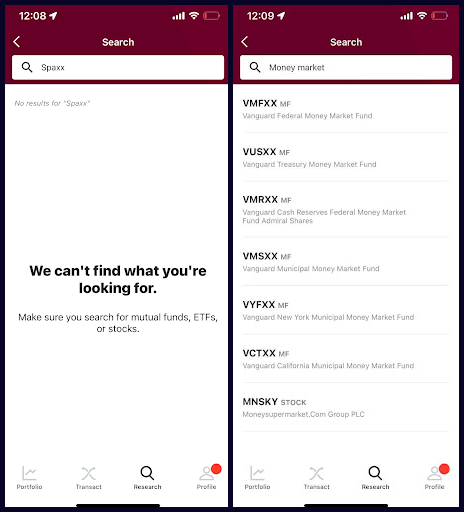
The challenges in dealing with a limited number of investment options becomes more significant in highly regulated accounts like 401Ks, 529s, and health savings accounts.
Evaluate the restriction before moving money
Editorial update, September 26, 2026. Start with the unavailable investment's purpose. If the goal is broad US-stock exposure, another documented plan option may already do the job. If you require a specific security, ask whether the plan has an applicable brokerage window, what it costs, and what restrictions apply.
For a hypothetical $80,000 balance, a 0.20% expense ratio is about $160 annually at a constant value. An alternative costing 0.05% is about $40, a $120 difference. If accessing that alternative costs an extra $150 a year, the combined cost is $190. More choice would not produce a saving in this simplified example.
Before a rollover or transfer, compare total costs, protections, withdrawal rules, services, and investment needs. An eligible direct rollover can avoid mandatory withholding that generally applies to a taxable eligible distribution paid to you. Moving pre-tax money to Roth generally involves taxable income; it is not simply changing the investment menu. IRS rollover guidance
Use a written record: current account, required exposure, available substitute, added costs, tax consequences to verify, and person responsible for the transaction. Check the plan's own documents before acting. Mezzi does not execute the transfer.
If flexibility isn’t important to you and you just want to stay in an index fund that tracks the market, then a limited set of options may be OK. For example, in my son’s 529 account because of the tax advantages of the account, I’ve accepted the fact that I’ll have to use whatever Vanguard gives me. But we also set up a custodial brokerage account with E*Trade where we have bought a mix of individual stocks and ETFs for him, giving us more flexibility. We plan to contribute to both over time, rather than just putting everything into the 529.
How Mezzi can help
As you build wealth, change jobs, have kids, and live life, managing a variety of investment accounts is inevitable. It may seem overwhelming, but it doesn’t have to be. Mezzi can help you manage that complexity and stay organized among the different investment types.
- Review supported family accounts in one place, with missing accounts identified
- Review available individual investments together and confirm data completeness
- Understand your asset allocation within an individual account and across accounts
- Understand how much you have in taxable and tax-advantaged accounts
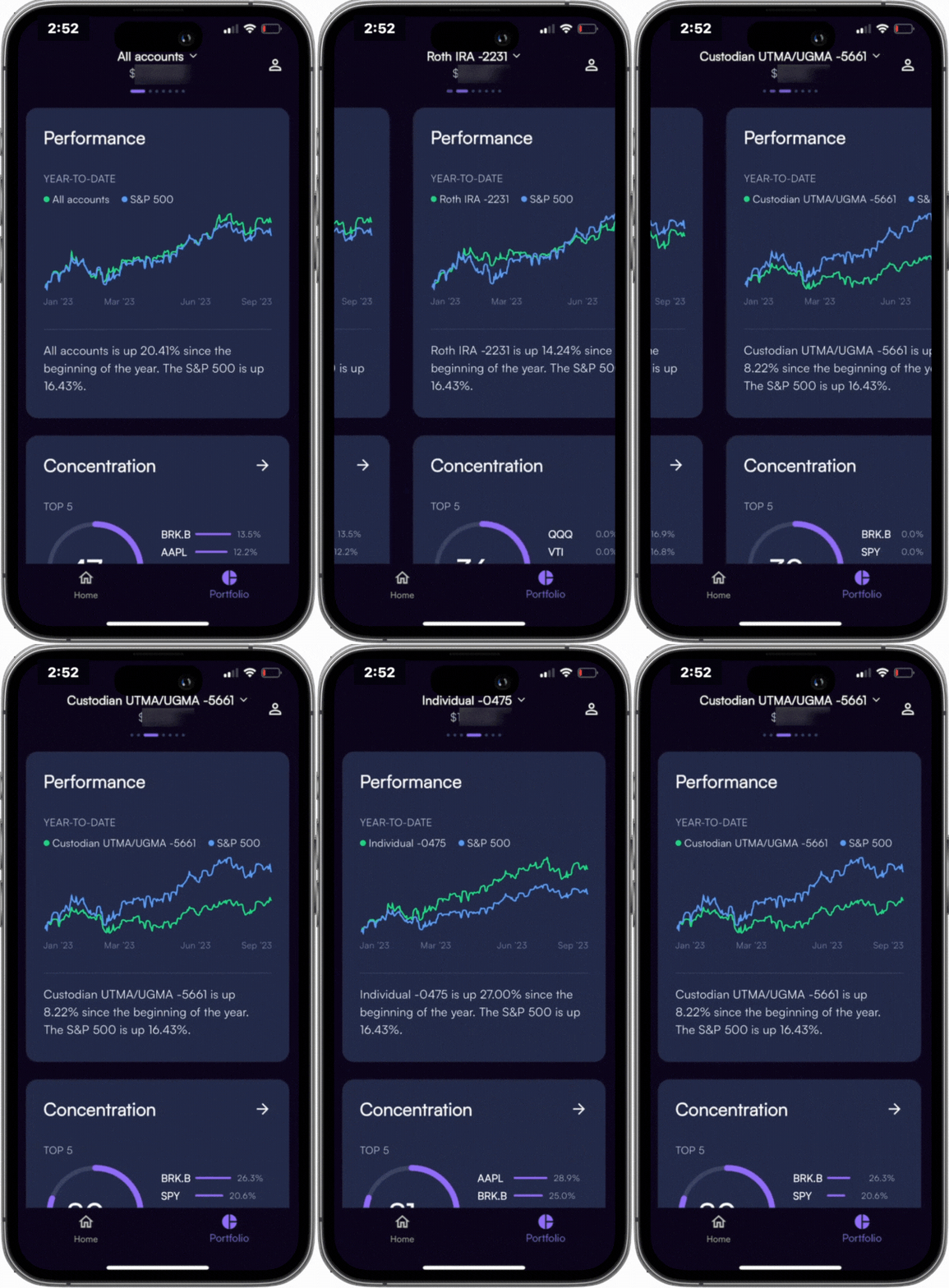
Explore Mezzi today. See how your available accounts and personal goals fit together.
Explore MezziFor current product details, visit the Mezzi help center.
This archived newsletter is educational and is not personalized investment, tax, or legal advice. Historical product descriptions, prices, and market examples may no longer apply. Investing involves risk, including loss of principal.