Updated September 26, 2026.
The Boost · Mezzi’s Sunday email
Archived article dated November 4, 2024. This page retains the original newsletter with a separately dated editorial update and corrected product wording. See current membership options and the Mezzi help center for today’s product details.
This is the fourth in our series covering the process of choosing a financial advisor. Recently, we've covered the types of advisors, background questions to ask, and advisor compensation models.
In this edition of The Boost, we focus on investment management. What should you evaluate when handing over the reins to your portfolio to an advisor?
What you need to know
Investment management can be one part of a broader advisory engagement. Ask which responsibilities the firm handles itself, which it delegates, and which remain yours. An advice-only engagement may provide recommendations without placing trades. Registration or a job title does not establish the complete service scope. SEC relationship-summary guide

The questions to ask
Ask your prospective advisor these questions to make sure their approach to investment management aligns with your expectations.
Will you directly manage my investments, including making trades, or will that be managed by someone else at your firm or outside your firm?
How do you construct my portfolio? Do you invest according to specific models or strategies? Robo-advisors, such as Wealthfront, also follow specific models.
Will you actively manage my portfolio to outperform the market, passively invest, or some combination?
How will you determine and adjust the right portfolio for me? How will you determine my risk tolerance?
Should I expect my portfolio to beat the S&P 500? This is a common source of disappointment with advisors, so it's important to understand how they benchmark your portfolio.
What differences in strategy will you take across my taxable brokerage, retirement, and children's accounts?
How will you measure and report on performance of my investments?
How will you adapt my portfolio as my goals or market conditions change?
How involved can I be in setting portfolio allocation and decisions?
Will you only use low-cost funds and how will you report any fund fees to me?
How will you optimize my portfolio for taxes?
Agree on the handover before moving an account
Editorial update, September 26, 2026. Prepare a written transition record before authorizing implementation. For a hypothetical household with a $400,000 taxable account, a $300,000 workplace plan, and a $50,000 cash reserve, the advisor may manage only the taxable account. The other balances can inform advice without falling under the same trading authority.
| Record | What the household and advisor should establish |
|---|---|
| Covered accounts | Which accounts are managed, advised on, or outside the engagement |
| Existing positions | Holdings, acquisition records, restrictions, and planned treatment |
| Transition | What transfers as holdings, what may need selling, and who approves |
| Cash needs | Purpose and timing of the $50,000 reserve; avoid assuming it is investable |
| Measurement | Comparable dates, cash flows, fees, and an agreed risk-appropriate benchmark |
| Coordination | Who communicates relevant activity in the outside workplace plan |
A handover is incomplete if each side assumes the other monitors an account. It is also incomplete if the proposed model ignores a holding that cannot be sold immediately or a tax cost that has not been estimated.
If the managed portfolio contains stocks and bonds, comparing it only with the S&P 500 can obscure its purpose. Ask the advisor to explain a benchmark consistent with the agreed allocation and to report results with fees and cash flows treated consistently. Beating an index is not the only service objective, and no benchmark promises a future result.
Mezzi can help organize questions across available accounts while you retain the institution's statements and the advisor's written plan. It does not assume the advisor's execution responsibilities or establish that a transition is tax-free.
How can Mezzi help?
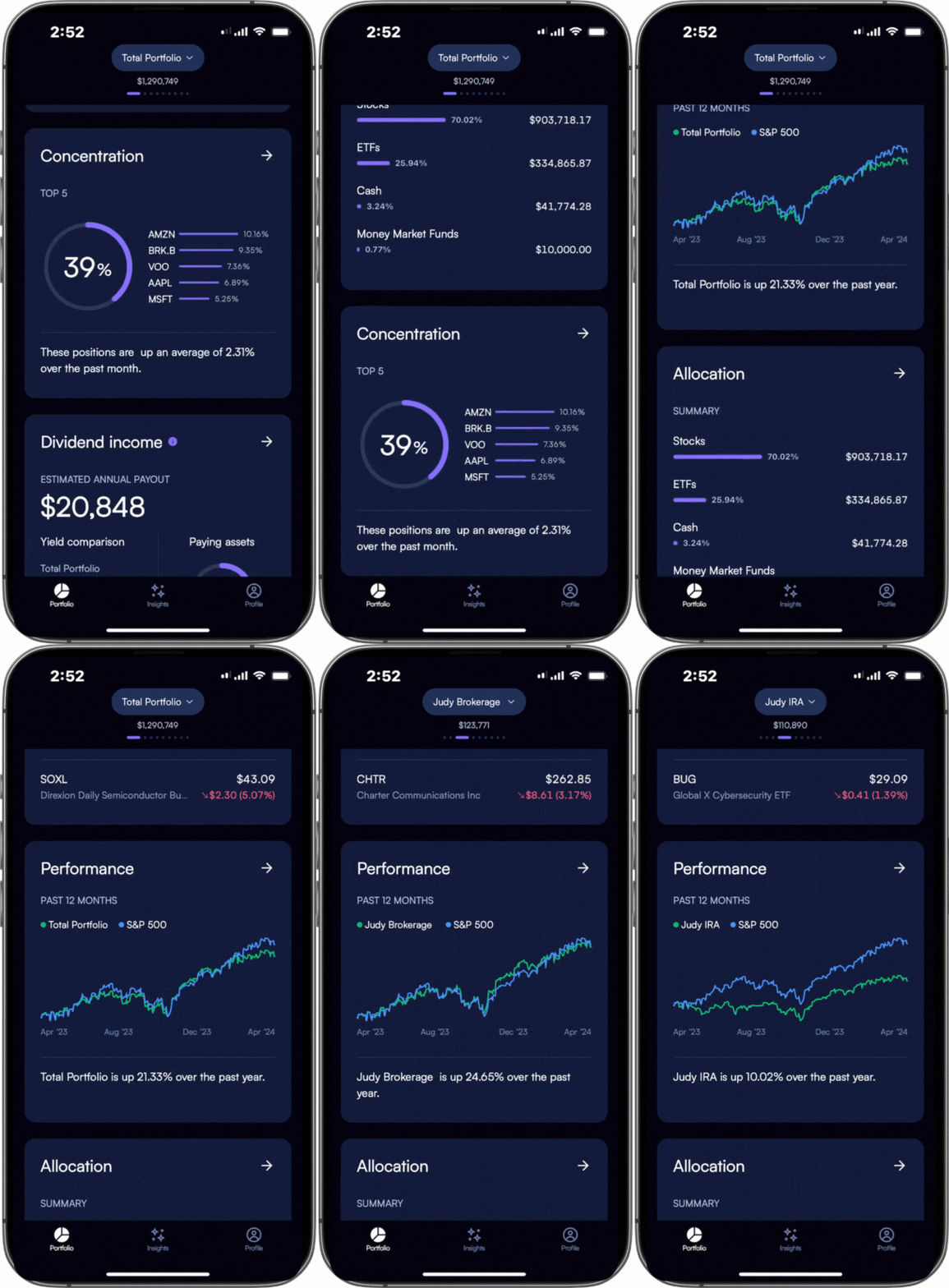
Monitor and track performance of self-managed and advisor-managed accounts against key benchmarks
Explore potential tax-saving opportunities across self-managed and advisor-managed accounts
Review fund costs and possible lower-cost alternatives
Review investments that may conflict with the goals of your advisor-managed accounts, or vice versa
Easily share the allocations and holdings in your personally managed accounts with your financial and tax advisors - you can even invite them to collaborate
Review possible wash-sale issues using available records; missing accounts and transactions can limit detection
Explore Mezzi today. See how your available accounts and personal goals fit together.
Explore MezziFor current product details, visit the Mezzi help center.
This archived newsletter is educational and is not personalized investment, tax, or legal advice. Historical product descriptions, prices, and market examples may no longer apply. Investing involves risk, including loss of principal.