Updated September 26, 2026.
The Boost · Mezzi’s Sunday email
Archived article dated November 4, 2024. This page retains the original newsletter with a separately dated editorial update and corrected product wording. See current membership options and the Mezzi help center for today’s product details.
This is the third in a multi-part series where we evaluate the process of choosing a financial advisor. We’ve already covered the types and background questions you should ask.
For many, a big deterrent to using an advisor is the perceived cost. This week’s edition of The Boost will help you ask the right questions upfront so that you get value out of an advisory relationship.
What you need to know
Advisor fees reduce the money available to remain invested. The relevant question is whether the services solve needs you cannot adequately meet yourself, at a cost you understand. Lower fees do not automatically mean better value, and higher fees do not establish better results.
The three most popular advisor compensation models are:
Fee-only advisors
They charge a flat fee, hourly rate, or percentage of assets under management (AUM). They do not receive compensation from product sales. NAPFA explains the fee-only standard.
Ask for the actual quote and scope. A planning project, recurring retainer, hourly engagement, and asset-based arrangement can assign different responsibilities. Historical price ranges do not tell you what a specific firm will charge today.
Commission-based advisors
They receive commissions from the sale of financial products, such as certain mutual funds, insurance policies, and annuities; the actual product and arrangement determine compensation.
Advisors might be incentivized to recommend products that generate higher commissions, creating potential conflicts of interest.
Fee-based model
Fee-based advisors combine aspects of both fee-only and commission-based models.
They charge clients a fee for their services but may also receive commissions from the sale of certain financial products.
Keep in mind that the type of advisor will also likely influence the compensation model.
The questions to ask:
Avoid surprises and ensure their fees are worth it to you with these questions:
Are you compensated with a salary, client fees, commissions, or a combination? It’s important to understand how much their compensation is driven by serving you. Advisors at larger firms are more likely to have a salary component.
What services do you offer and how much time do you spend in each of those areas? Typical advisor services include investments, retirement, estate planning, building a financial plan, tax, education savings, and insurance.
How much time do you spend on investment management each year? Investment management is just one aspect of an advisor's job. Ask who performs the analysis, monitors the account, and implements changes; hours alone are not a measure of value.
Are you a fiduciary advisor? Ask the professional to explain the standard of conduct for the specific service and any conflicts in writing. The SEC relationship-summary guide explains how to review services, fees, and conflicts.
How many meetings are included in your fees?
Can I reach out to you whenever I have a question? How quickly do you respond?
If fee-based, what is the breakdown of your compensation between fees and commissions?
If fee-based, how do you determine which products or services fall under the fee-based model and which ones generate commissions? Can you provide examples of situations where you might recommend commission-based products over fee-based services, and vice versa?
Put the annual cost beside the work
Editorial update, September 26, 2026. Use the same household and year when comparing proposals. The figures below are hypothetical quotes and a constant balance, not an industry average.
| Proposal | Calculation | Annual quoted fee | Work to confirm |
|---|---|---|---|
| Asset-based service | $800,000 × 1% | $8,000 | Planning, trading, monitoring, and outside accounts |
| Planning retainer | $400 × 12 | $4,800 | Deliverables, meetings, and implementation support |
| Project | One quoted assignment | $3,000 | Scope, revisions, and when the engagement ends |
The $5,000 difference between the first and third quotes is not a saving from equivalent services unless the responsibilities match. Add fund expenses, platform or custody charges where applicable, and professional work excluded from the proposal. Ask how fees change with account value or a new assignment.
For compounding context, a hypothetical $100,000 growing at 6% for 20 years reaches about $320,714. At 5%, it reaches about $265,330, a difference of about $55,384. This simplified one-percentage-point comparison excludes contributions and taxes, assumes constant returns, and is not a forecast or measurement of an advisor's net value. Its purpose is to show why recurring costs deserve attention.
The decision is whether the agreed work is worth its complete cost to you. Record the specific deliverables and review them at renewal instead of judging the relationship only against a market index.
What's next
In the next issues of The Boost, we’ll dig into how advisors manage your investments. If there is a question you’d like us to address, reply to this email and let us know!
How can Mezzi help?
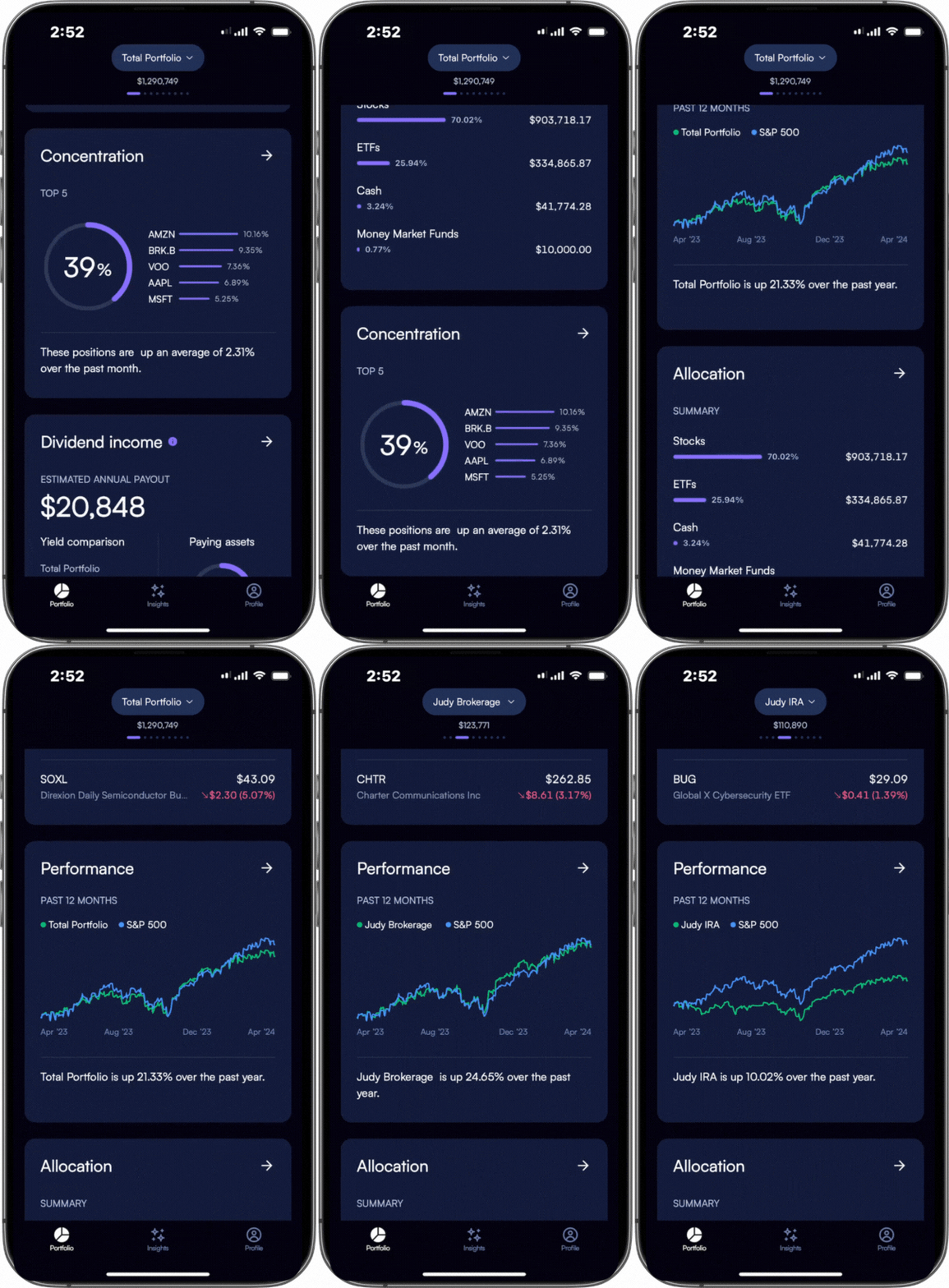
Whether or not you work with an advisor, Mezzi can help review your available investment information alongside your goals; outcomes are not guaranteed. Specifically, use Mezzi to:
- Explore potential tax-saving opportunities across self-managed and advisor-managed accounts
- Monitor and track performance of self-managed and advisor-managed accounts against key benchmarks
- Review investments that may conflict with the goals of your advisor-managed accounts, or vice versa
- Easily share the allocations and holdings in your personally managed accounts with your financial and tax advisors - you can even invite them to collaborate
- Review possible wash-sale issues using available records; missing accounts and transactions can limit detection
Explore Mezzi today. See how your available accounts and personal goals fit together.
Explore MezziFor current product details, visit the Mezzi help center.
This archived newsletter is educational and is not personalized investment, tax, or legal advice. Historical product descriptions, prices, and market examples may no longer apply. Investing involves risk, including loss of principal.